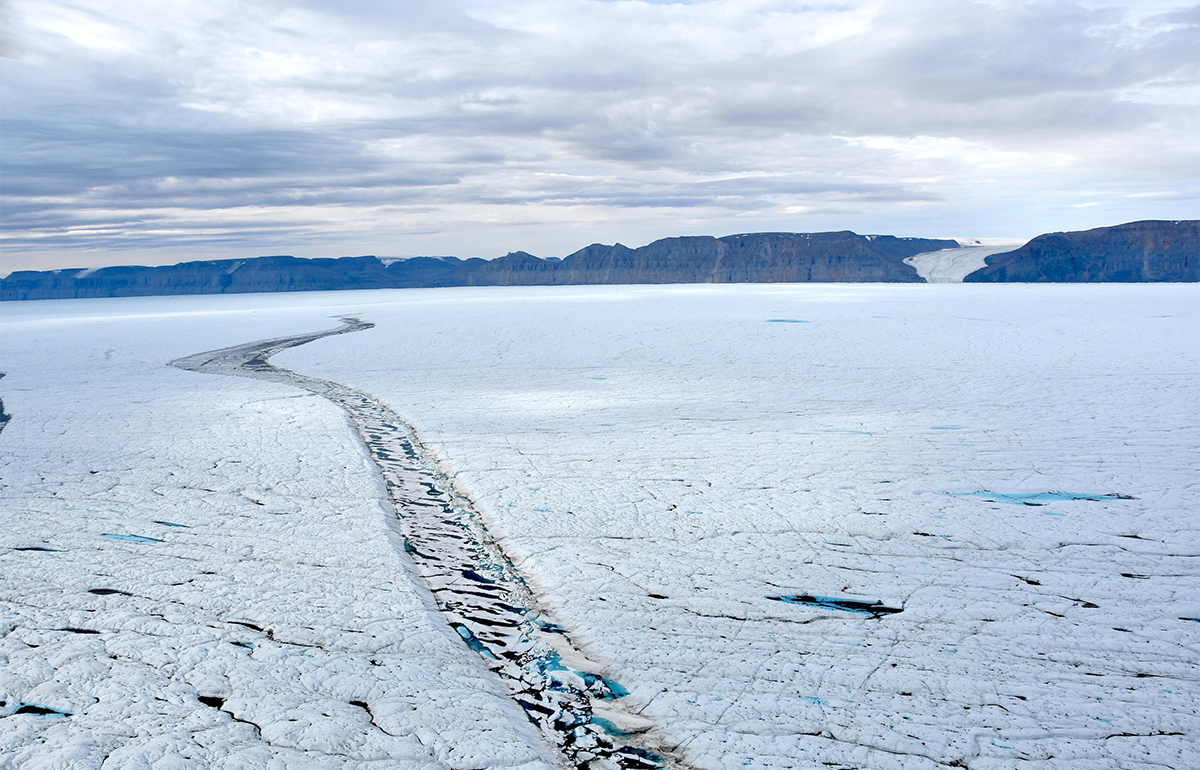
An international team of researchers has been monitoring the Petermann Glacier in northwest Greenland and its extended “ice tongue”—a narrow platform of ice extending into the ocean—for several years now. But while calving events are expected there, the size of this most recent one is still something to behold. At an area of nearly 30 square miles and a thickness of around 492 feet, it’s the largest Arctic calving since 2020, and the biggest floating ice loss from this particular glacier in 14 years.
“Petermann Glacier has long been one of Greenland’s largest remaining ice tongues,” glaciologist Adam Garbo from the University of Ottawa said in a statement. “We’ve anticipated this break for years, and seeing it finally happen is remarkable.”
That doesn’t mean, however, Garbo and his team are done monitoring it. The researchers now want to keep track of the newly detached iceberg to see what they can learn about how these drifting sheets move through the Arctic and ultimately break apart.
Read more: “A Dying Glacier Harbors Mysterious Species and Ecosystems Yet to Be Understood”
Given the long-developing rifts across the Petermann Glacier and its ice tongue, two more ice islands are expected to break clear before too long as well—at sizes even larger than this latest one. All three combined would mean an estimated loss of ice from the glacier of around 22 percent.
Ice loss in the Arctic over recent years is thought to have triggered a chemical tipping point in the region, with disappearing glaciers meaning the water beneath receives more sunlight, accelerating warming and fundamentally changing the balance of ecosystems.
Beyond the implications for climate change, there’s another consideration, too: this loose ice shelf hitting marine vessels and infrastructure. “These are thick blocks of ice that can drift for years,” explained glaciologist Abigail Dalton of the Canadian Ice Service, part of Environment and Climate Change Canada. “Over time, they fracture into smaller, harder-to-track pieces that pose hazards to vessels and resource operations.”
So this new floating ice island is both spectacular in size and a warning of the potential dangers to come. 
Enjoying Nautilus? Subscribe to our free newsletter.
Lead photo by Adam Garbo