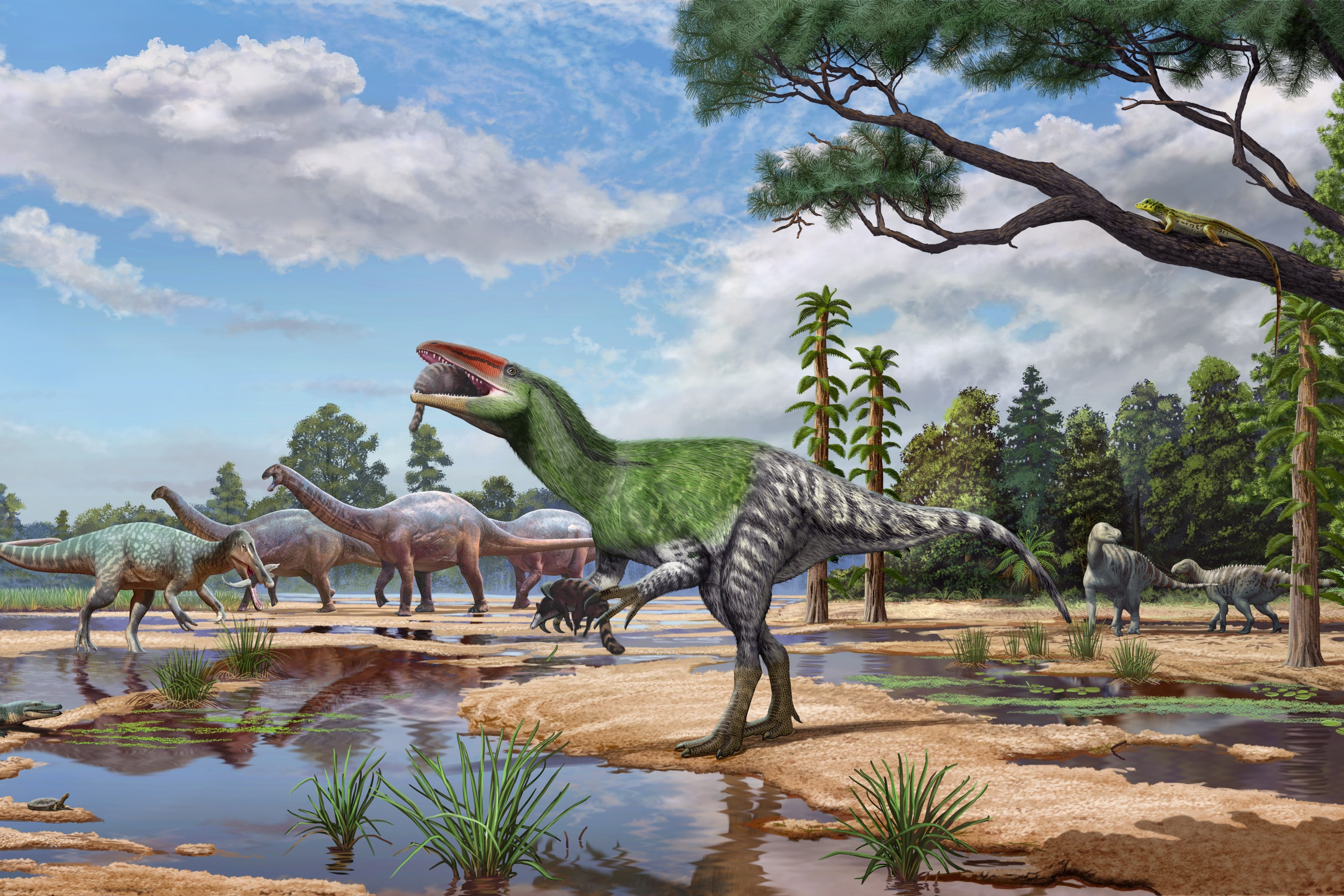

If you’ve got an escape trick that works, stick with it: A lizard tail trapped in amber reveals that these reptiles were using the same evasion tactic—lose the tail, regrow it later—almost 100 million years ago.
Many species of modern lizard will detach their own tails if they get grabbed by a bird, snake, or other predator. The tail can keep wriggling as a distraction once it's been shed, allowing the lizard to make a clean getaway—with a replacement tail eventually growing back.
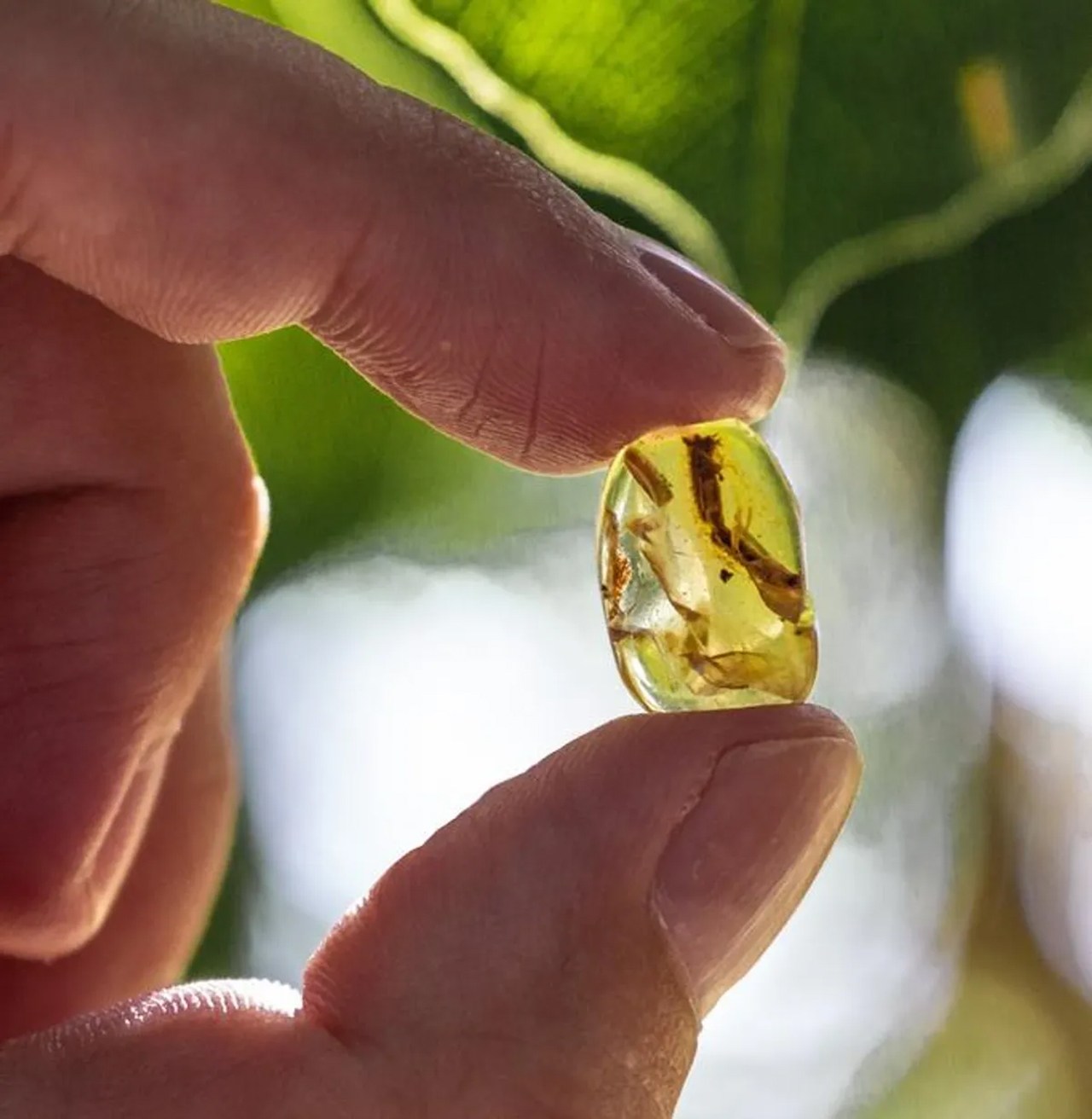
Now, researchers have found a discarded tail in a block of amber that dates back 98.8 million years, to the time of the Late Cretaceous when dinosaurs roamed the Earth. The piece of amber analyzed by researchers measures just 18 millimeters (0.7 inches) across, so we’re talking fingertip size. The artifact has been in the Steinhardt Museum of Natural History in Israel since 2022, but has only just been described in a newly published study.
“I realized that what seemed to be a twig was covered in tiny scales,” study author Dolev Fabrikant said in a statement.
The next step was to grab high-resolution, microscopic images of the tail and compare its features to modern lizards. This revealed the muscle tissue structure characteristic of tail autotomy, with no signs of the damage that would come with an injury.
These detachments work via fracture planes in the vertebrae, weak points that can be pushed loose through muscle contractions. However, with only the tail to analyze, it’s not clear what precise prehistoric species lost this particular appendage.
“Although we can securely identify this specimen as a lizard, we lack the skull and other skeletal features that would allow a more secure identification,” Apostolos Christopoulos, one of the study authors, explained in a statement. “Possible affinities include the groups containing today’s wall lizards or, alternatively, slow worms and monitor lizards.”
We also don’t know if the lizard actually made its escape all those millions of years ago—only that it shed a part of itself in a bid for freedom. 
Enjoying Nautilus? Subscribe to our free newsletter.
Lead Image: Dolev Fabrikant