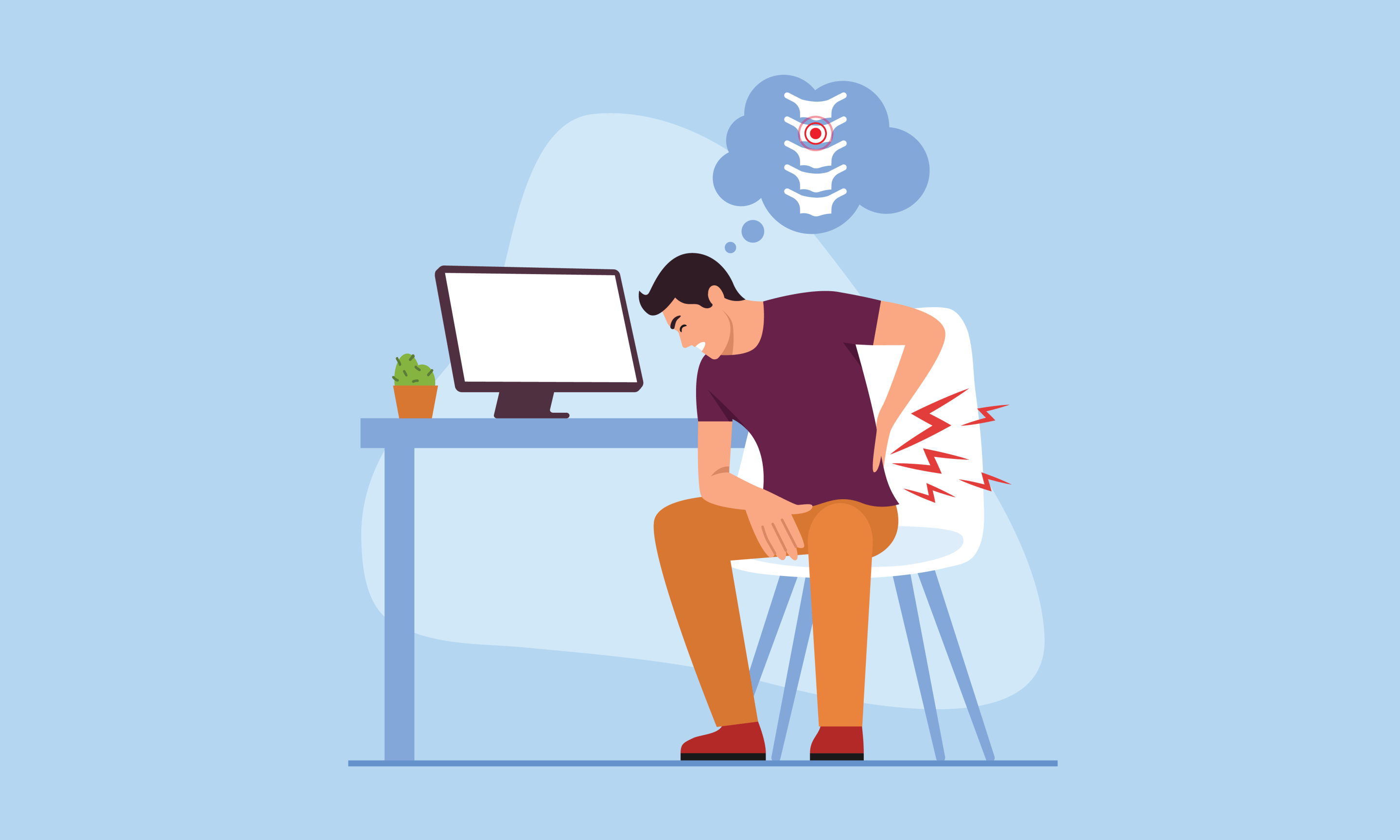
How’s your posture?
If reading that sentence made you sit up a little straighter, we can probably pencil you in for “needs improvement” at the very least. But don’t worry, you’re not alone. Studies have shown that the vast majority of people who use digital devices (like the one you’re using to read this) have less-than-ideal posture that can result in musculoskeletal pain. According to a new study published in the British Journal of Psychology, poor posture can affect your decision making, too.
Like all good psychological experiments, this one involved a bit of trickery, but for good reasons. Previous studies have shown more “expansive” posture can influence behavior and moods, but many of these involved experimenters prompting the participants to adopt the postures, which means they could be responding to the prompts, rather than the postures. So what happens when subjects adopt expansive or contractive postures on their own?
Read more: “Watch My Skeleton Dance for Science”
To find out, psychologists from McGill University recruited almost 200 (mostly female) college students, and tasked them with completing a risk-taking test on a tablet. The subjects had to inflate a virtual balloon to receive a dollar, but if the balloon popped, they lost everything. For some, the tablet was placed flat on a tabletop, forcing them to hunch over (the contractive group). For others, it was placed on a stand that required them to take a more upright posture (the expansive group). They also completed a questionnaire asking about their mood.
How did they do?
The researchers found that those who were forced to sit upright took bigger risks and reaped bigger rewards. “This suggests they weren’t acting more impulsively but rather were engaging in more effective risk-taking,” study author Jorge Armony said in a statement. In their questionnaires, the expansive posture group reported feeling more pride than the contractive group as well.
Still, there are a couple caveats. For starters, the experimental group was composed almost entirely of young women (there were only 26 men). The researchers also stress that these findings don’t mean adopting a new posture can transform your personality or your life. It can, however, have subtle effects on your mood and behavior.
Better yet, it might spare you some back pain. 
Enjoying Nautilus? Subscribe to our free newsletter.
Lead image: MVshop / Adobe Stock