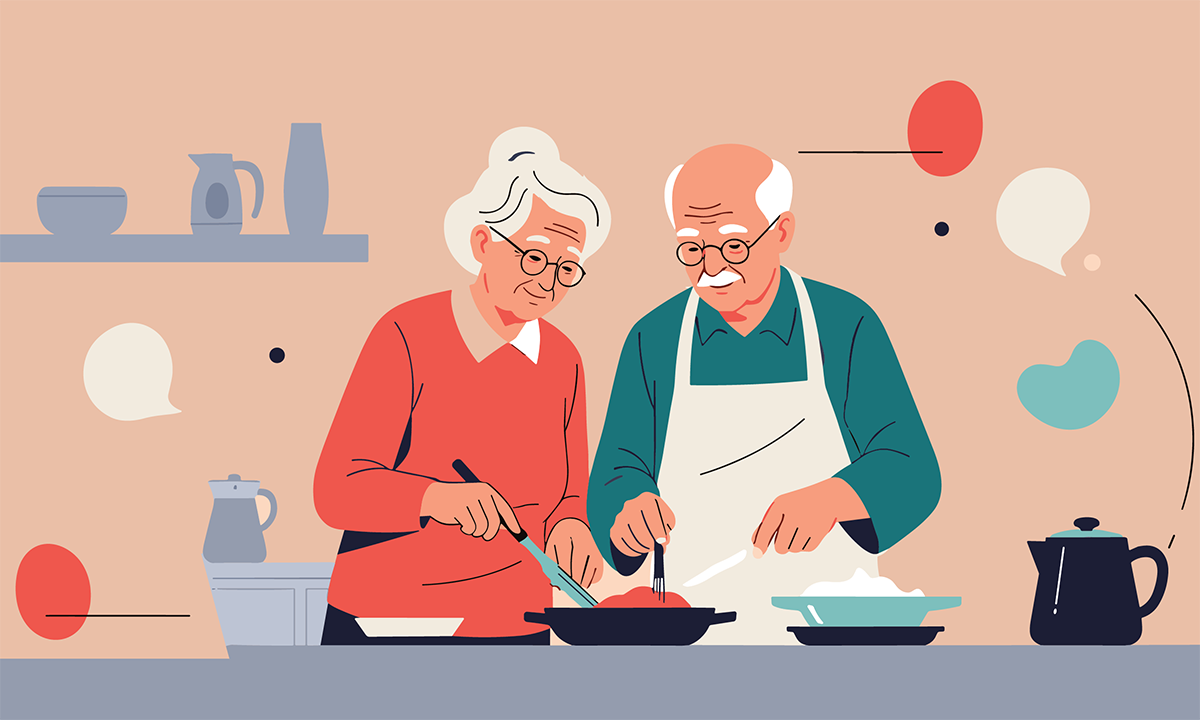
While treatments for dementia are few and far between, there are a multitude of steps you can take to lower your risk of developing the disease. Maintaining a healthy lifestyle, exercising, and connecting with loved ones are just a few of the things experts recommend if you’re worried about your risk factors. Now, new research published in the Journal of Epidemiology & Community Health suggests cooking at home can also reduce your chance of developing dementia.
Researchers from the Tokyo Institute of Science followed almost 11,000 people aged 65 and older for six years who were part of the Japan Gerontological Evaluation Study. Participants in the study reported how often they cooked at home, ranging from never to more than five times a week, as well as the extent of their culinary skills. These skills included everything from the ability to peel fruit to making more complicated stews and stir-fry dishes.
Read more: “Why Revolutionaries Love Spicy Food”
Researchers found that those who cooked at home more frequently had a reduced risk of developing dementia, with up to a 30 percent reduction. Even cooking from scratch as rarely as once a week showed a decrease—23 percent in men and 27 percent in women, compared to those who never cooked at home. Interestingly, those who were less adept at cooking showed an even greater reduction in dementia risk—nearly 70 percent.
As for why, the researchers believe the physical and cognitive activity surrounding cooking could be helping elderly people stave off dementia. Beyond the physical demands of preparing a meal, cooking involves going out to shop for groceries, long periods of standing up, and washing dishes. It also involves mental operations like meal planning, making purchasing decisions, navigating expiration dates, and following a recipe. In fact, researchers say the greater reduction in risk for low-skill cooks could be because cooking is a more cognitively novel activity for them.
In other words, cooking at home is a lot more than the sum of its parts—just like a good meal, prepared with care, is more than just its ingredients. 
Enjoying Nautilus? Subscribe to our free newsletter.
Lead image: Talukdar / Adobe Stock