In 1984, Swedish healthcare design pioneer Roger Ulrich published one of the first landmark studies to suggest that nature can make people feel better. Ulrich’s study, which appeared in Science, found that hospital patients recovering from gall bladder surgery healed a day faster, needed less pain medication, and had fewer postsurgical complications if they could look out a window at a garden instead of at a brick wall.
The idea that humans are adapted to nature was in the zeitgeist at the time. That same year, biologist E.O. Wilson published his influential book Biophilia, which proposed that humans have an innate, evolutionarily-derived tendency to seek out connections with nature and other forms of life.
Read more: “Are We Wired to Be Outside?”
Ulrich would spend the next 40 years turning his finding into a formal theory about stress recovery and building a body of work that not only changed how hospitals are designed, but also helped to spawn a new field of science. Today, there are dozens of papers devoted to the health benefits of touching grass, taking forest walks, and listening to bird calls.
Recently, a team of neuroscientists from Berlin devoted to researching how physical environments impact our well-being noticed that most of this literature appears to be limited to what nature can do for people who are stressed out or sick. What about people who are healthy and happy, they wondered. Could interacting with nature actually improve well-being for these people, too? The team, led by Simone Kühn at the Center for Environmental Neuroscience at the Max Planck Institute for Human Development, set out to review the literature. The result is a new paper in the Journal of Environmental Psychology.
I spoke with study coauthor and neuroscientist Johanna Prugger, who was working with the Max Planck Institute at the time the study was conducted, about why nature might make us feel better, if one can ever have too much nature, and whether the placebo effect might play a role.
What inspired you to look into this question of how nature might not just restore us when we’re depleted, but improve our well-being when we’re healthy?
I was working at the Center for Environmental Neuroscience at the Max Planck Institute for Human Development in Berlin, studying how nature influences us and what benefits it can give us. We realized that there were so many studies in this field, but they all were looking at minds that were fatigued or stressed or emotionally depleted. We thought, why hasn’t any research looked at the more fundamental question of what nature can make us feel and how can it improve our lives? We felt there was a research gap in the field.
You found just eight studies that looked at the benefits of nature for people who were already healthy, versus 45 studies of the restorative effects for people who were stressed. What specific kinds of improvements did those eight studies find?
There may be more studies that look at pre- and post-effects of exposure to nature, but we were interested in focusing narrowly on studies that compare the benefits of nature versus urban exposure. We found benefits to cognition as well as mostly positive effects on mood, emotion, and affect, but the studies all used different tests, which made it more difficult to compare effect sizes.
Why did you want specifically to look at the influence of natural versus urban environments?
Maybe it comes from the fact that we the researchers are usually working at universities in cities. Cities are our baseline, even if they don’t represent a true neutral baseline because it’s so stressful and hectic out there—there’s light pollution, noise pollution, particle pollution. There are also good sides to living in a city, of course. But we wanted to see how going for a walk in the city compares to going for a walk in a park.
You write in the abstract that some of the studies you reviewed, the ones that focus on restoration, suggest a dose response. Did you get a sense of what kind of dose is optimal either for restoration or fortification?
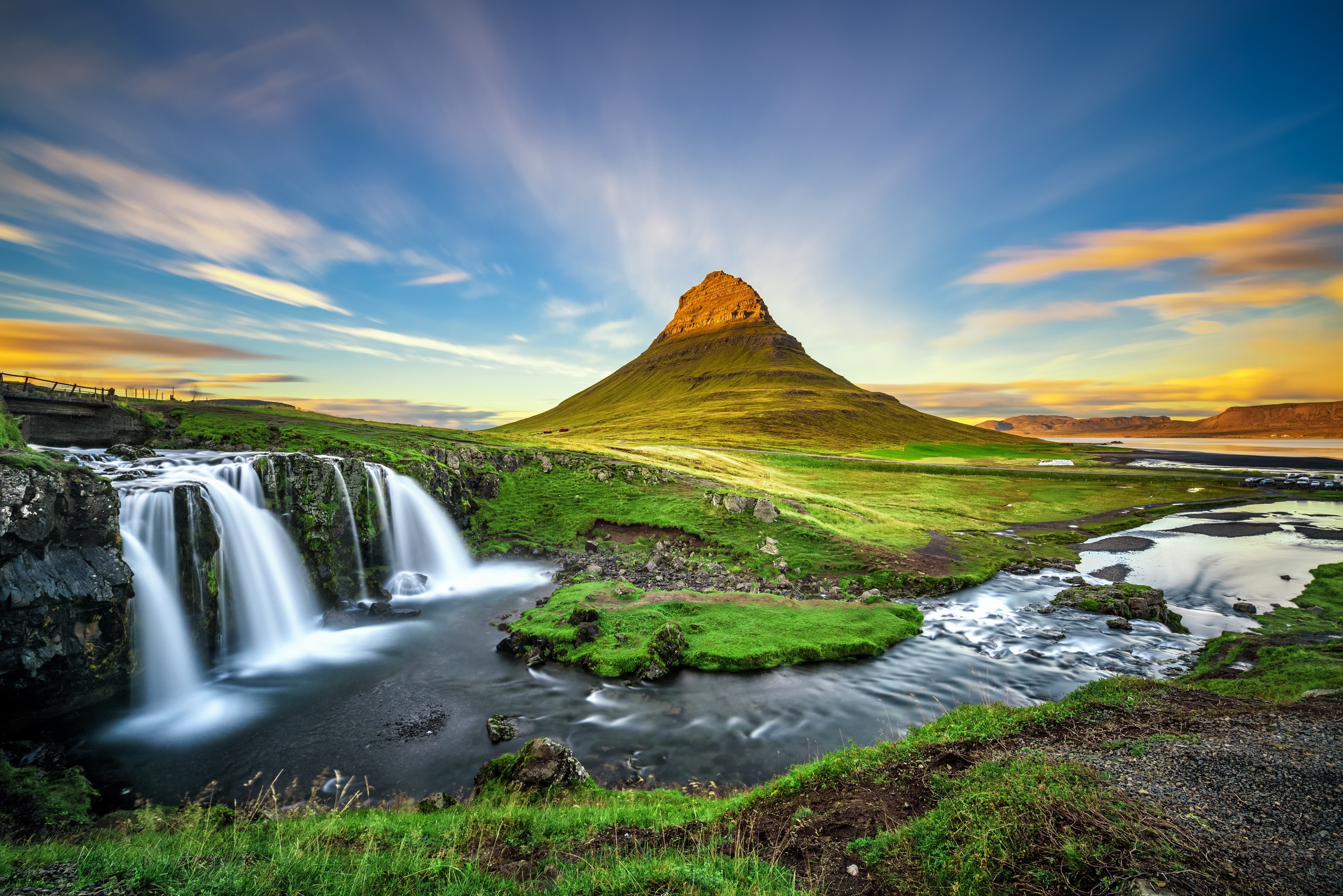
As little as 10 minutes in the park or outside in a forest can have benefits. Just looking at a picture of nature can even make tiny improvements, according to some studies. Because of that, since I worked on this study, I made the background on my phone a forest. Research has also shown that the more depleted you are, the more stressed, the easier it is to get benefits from a walk in nature.
On the fortification side, the buffering capacity of exposure to nature may be something that builds with time. This is an idea that we had about how it could work, so we believe future studies could try looking at longer-term comparisons of exposure to nature in a controlled way. People would have to go at specific hours for a walk in the forest so that it’s not something they do only when they feel the need. Otherwise, it might address the more restorative side of nature benefits as opposed to measuring any enhancements that occur when one is already relaxed.
Has anyone determined whether there is a maximum time one should spend in nature? Can you have too much?
Of course, living in a city and being surrounded by humans can also have beneficial effects, especially if you belong to a minority group that might suffer a little bit more in a rural area where there might be less acceptance for difference. Now I’m speculating, but perhaps at some point the benefits would level out, where you would get more benefits from being in a city, participating in cultural activities. But I don’t know if there is a maximum when it comes to nature benefits.
As you note in the study, a picture of nature, even the sounds of nature like bird song, have been found to have beneficial effects on well-being in adults. What other general parameters have researchers set for the kinds of “nature” that provide benefits?
There is some literature on where the benefits come from. Some say it has some evolutionary aspects. The idea is that our species grew up in nature, and this is where we feel comfortable and normal and engaged and where all our attention mechanisms and neurobiology fits. We’re less well-adapted to lights at night and loud sounds and traffic. There is also some literature on how humans respond to shapes with sharp edges versus rounded ones. Some literature suggests that rounded shapes help to restore depleted attention. When you’re actually in nature itself, not just looking at a picture, there are all of the olfactory stimuli, the sounds. It’s a multisensory experience.
Has anyone looked at whether the same benefits would come from a manicured garden, say something with a geometric design and sharp corners and a giant man-made fountain at the center, versus an old growth forest?
I think that planned nature has been shown to provide benefits. There’s even some research by a group from Italy who studied built environments. They were looking at modern cities with hectic streets full of cars and comparing them to classic Italy—old buildings and churches and cobblestones and pedestrians. They found that even the older built environments had more restorative effects than the more modern ones. It seems as though there is a gradient.
Some research suggests that certain kinds of exposure to nature—early morning blue light, for instance—can help regulate your circadian rhythms. At least one study has found that even being closer to the actual surface of the Earth as opposed to up in a high rise when you sleep helps your body sync with circadian rhythms and supports lower cortisol, possibly through the Earth’s magnetic fields. Are you familiar with this research?
Yes. Some research shows that contact with nature not only helps with circadian rhythms and sleep, but with immune function and even the composition of the microbiome.
Is there any chance that the placebo effect plays a role here? There has been quite a bit of media coverage about the benefits of nature over the past 10 years or so. The studies you were looking at were comparing how people respond to urban versus natural environments, but it’s probably very difficult to blind and control these experiments.
Yes. But the positive benefits of nature in these kinds of experiments were found 40 years ago, or possibly even earlier.* Maybe now if you read a news article about it and then go for your walk, it would have additional placebo effects.
Another problem with this review, which is true of many reviews, is that so many studies are from the global north, from Europe and the U.S., which is why we shouldn’t generalize from these studies or findings. They represent just a sub-sample of the world.
Also, nature is so different in different countries. Going out to a forest in Berlin is very different from walking into the Sahara, or going to the beach where you have the nice ocean, but it’s also a barrier that most people can’t cross. Because the studies were done mostly in Europe and the US and Canada, and because the global north dominates this field, we’re usually talking about a similar kind of forest or park.
And it’s probably often manicured with paths and trails, or managed. It’s not untamed wilderness.
Yeah. If you go into wilderness spots such as mountains and there are places where you can fall off a cliff, or there are other kinds of threats, maybe that’s something that affects you negatively.
You suggested that some of the theoretical frameworks that have been used to study the benefits of nature are a little bit rigid or potentially outdated. Can you tell me more about that?
When we were doing the literature review at the beginning of our study, we found that in every paper on this topic, there were these two main theories cited: the attention restoration theory and the stress reduction theory. Both of them come from a restorative framework, which is good and great and nothing against that. But it made us think that it’s interesting we don’t have something similar on the fundamental benefits from a more neutral baseline, which came to us intuitively: How can nature affect a healthy brain and how can nature improve an already happy person? The theories are both from the 1980s, so we were just thinking that it’s maybe time to address not only how to fix a broken mind but how to buffer against or even prevent future stress or illness.
Is there a future study you would design to test your hypothesis that nature can provide benefits to healthy people?
Some of my colleagues have designed an experiment that uses something called the ecological momentary assessment, where people have an app on a smartphone or a watch. The whole study will last probably four to six years and the app would collect real-time data from people during the day, periodically asking them how they’re feeling, whether they are stressed. It would then correlate those self-reports with satellite data showing how much green space surrounds them in the moment.
When was the last time you had an experience in nature that you felt was really fortifying?
I live in Berlin, which is quite a green city. There is an old airport field out here, with grass and trees. It’s not as curated as a park. So I go for a run there every day, even if it’s for 10 minutes. Every time I walk somewhere, even if it takes two more minutes, I try to go through a little patch of green grass or some trees. I grew up in northern Italy in a more rural area in the mountains. It’s just part of who I am to like trees and nature and to go camping in the summer. I don’t even have to do an activity. For people who live in big cities, nature often means you go for a specific activity—for a picnic or a walk or a hike to the top of the mountain or skiing. For me, the best is just to be there, to sit down and chill in the grass. I don’t have to go to the top of the mountain if I don’t want. 
Enjoying Nautilus? Subscribe to our free newsletter.
Lead Image: Nick Fox / Adobe Stock
*Editor’s Note: Recently, a team of researchers attempted to replicate a 1991 study by Roger Ulrich that showed that videos of nature were better than videos of urban scenes at soothing the psychological and physiological impacts of stress. The replication was partially successful, supporting the psychological effects but showing mixed results on the physiological ones.