

Physics
Physics Nobel Awarded for Black Hole Breakthroughs
Roger Penrose, Reinhard Genzel and Andrea Ghez were awarded the Nobel Prize in Physics for their studies of black holes.

Some Physicists See Signs of Cosmic Strings From the Big Bang
Subtle aberrations in the clockwork blinking of stars could become “the result of the century.” That’s if the distortions are produced by a network of giant filaments left over from the birth of the universe.

How Mathematical “Hocus-Pocus” Saved Particle Physics
Renormalization has become perhaps the single most important advance in theoretical physics in 50 years.

A New Cosmic Tension: The Universe Might Be Too Thin
Cosmologists have concluded that the universe doesn’t appear to clump as much as it should. Could both of cosmology’s big puzzles share a single fix?

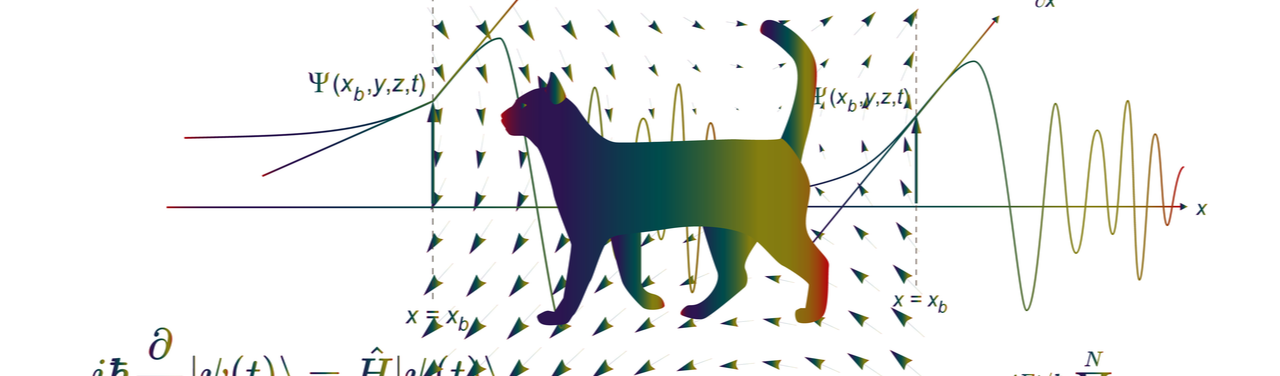
Schrödinger’s Cat When Nobody Is Looking
A solution to the measurement problem, black hole paradox, and other quantum puzzles.
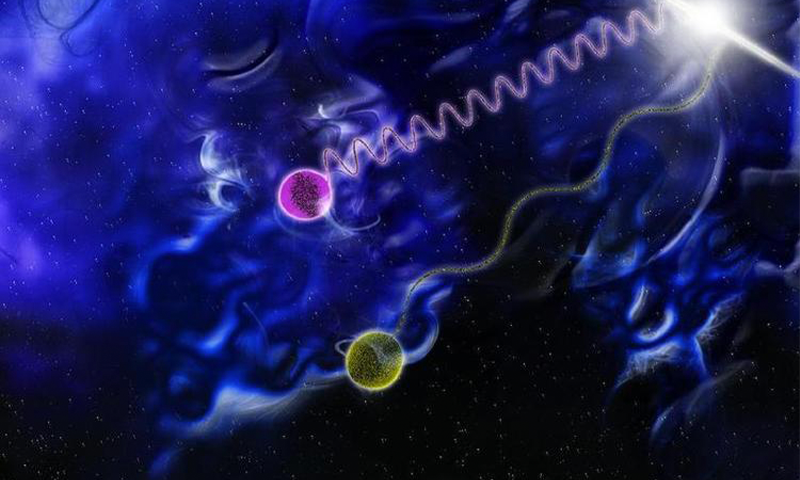
The Mathematical Structure of Particle Collisions Comes Into View
Physicists have identified an algebraic structure underlying the messy mathematics of particle collisions. Some hope it will lead to a more elegant theory of the natural world.

Big Bounce Simulations Challenge the Big Bang
Detailed computer simulations have found that a cosmic contraction can generate features of the universe that we observe today.

How Physics Found a Geometric Structure for Math to Play With
Symplectic geometry is a relatively new field with implications for much of modern mathematics. Here’s what it’s all about.

An Alternative to Dark Matter Passes Critical Test
Modified gravity theories have never been able to describe the universe’s first light. A new formulation does.

Why Is Glass Rigid? Signs of Its Secret Structure Emerge.
At the molecular level, glass looks like a liquid. But an artificial neural network has picked up on hidden structure in its molecules that may explain why glass is rigid like a solid.
