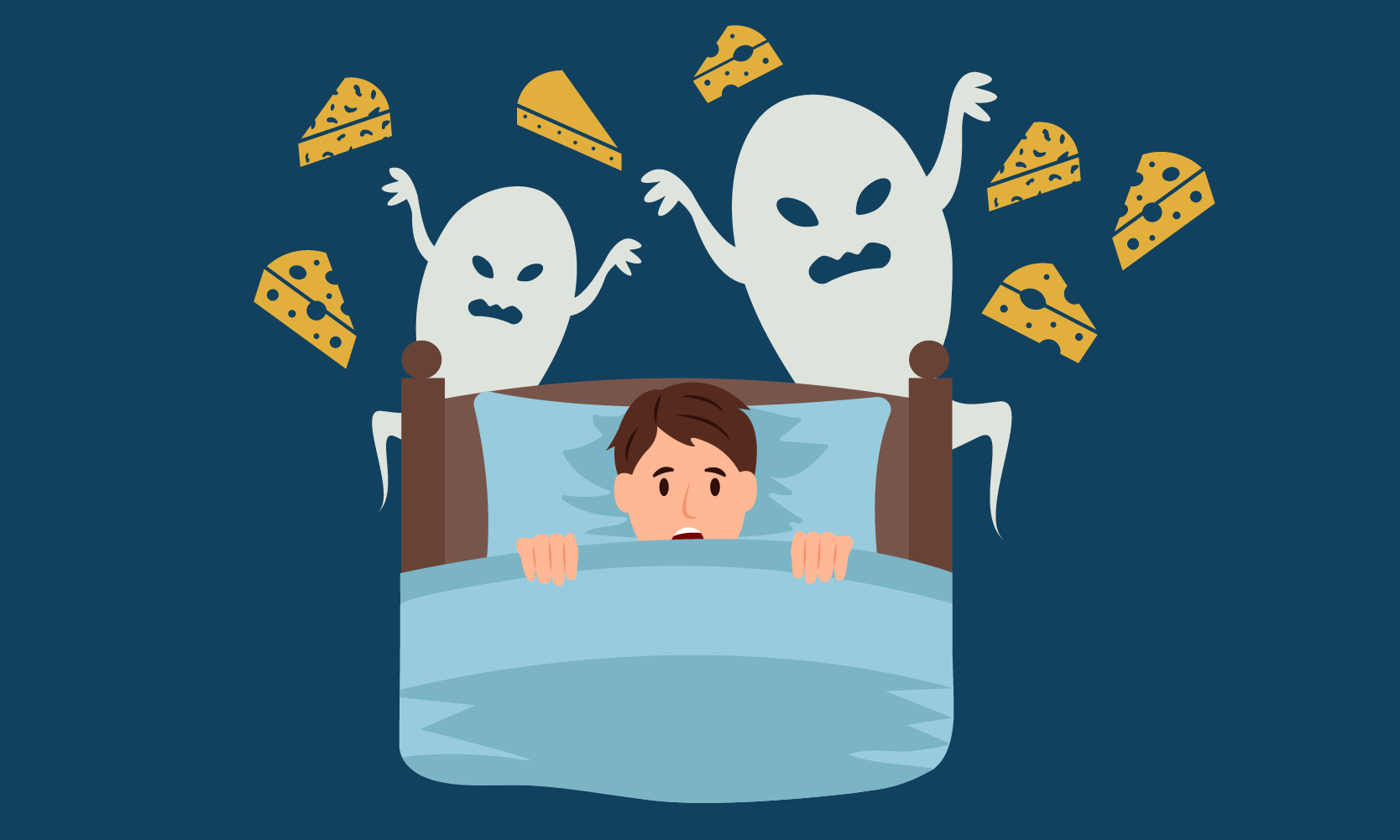
Ebenezer Scrooge might have been onto something about cheese and nightmares. In Charles Dickens’ A Christmas Carol, the grump attributed his ghost sighting, in part, to a “a crumb of cheese” that upset his stomach and deranged his thoughts. It turns out he isn’t alone in such thinking.
A new survey of more than 1,000 undergraduate students at MacEwan University in Canada found that the students commonly attributed sweets and dairy products to bad dreams. The findings were recently reported in Frontiers in Psychology.
After crunching the data, the team found that people with food allergies and lactose intolerance reported higher scores on an assessment known as a Nightmare Disorder Index than those without them. And among lactose-intolerant participants, gastrointestinal distress may exacerbate nightmares.
But what comes first, the diet-induced discomforts or the nighttime demons? Research has found that physiological phenomena such as pain can impact dreams. A stomachache or gas, for instance, can lead to disrupted sleep, which is commonly coupled with nightmares. The new paper echoes findings from past research, but it’s the largest study of its kind yet to connect food and bad dreams.
We aren’t all doomed to cheese-induced terrors, though. The scientists suggest adopting a diet that’s low on “foods that cause gastric distress,” especially for those with lactose intolerance. They also point to the connection between the gut microbiome and the central nervous system, which indicates that our meals can influence our mental well-being—and thus perhaps also our nightly visions. 
Lead image by Tasnuva Elahi; with images by Sunbeam_ks and Nadiinko / Shutterstock