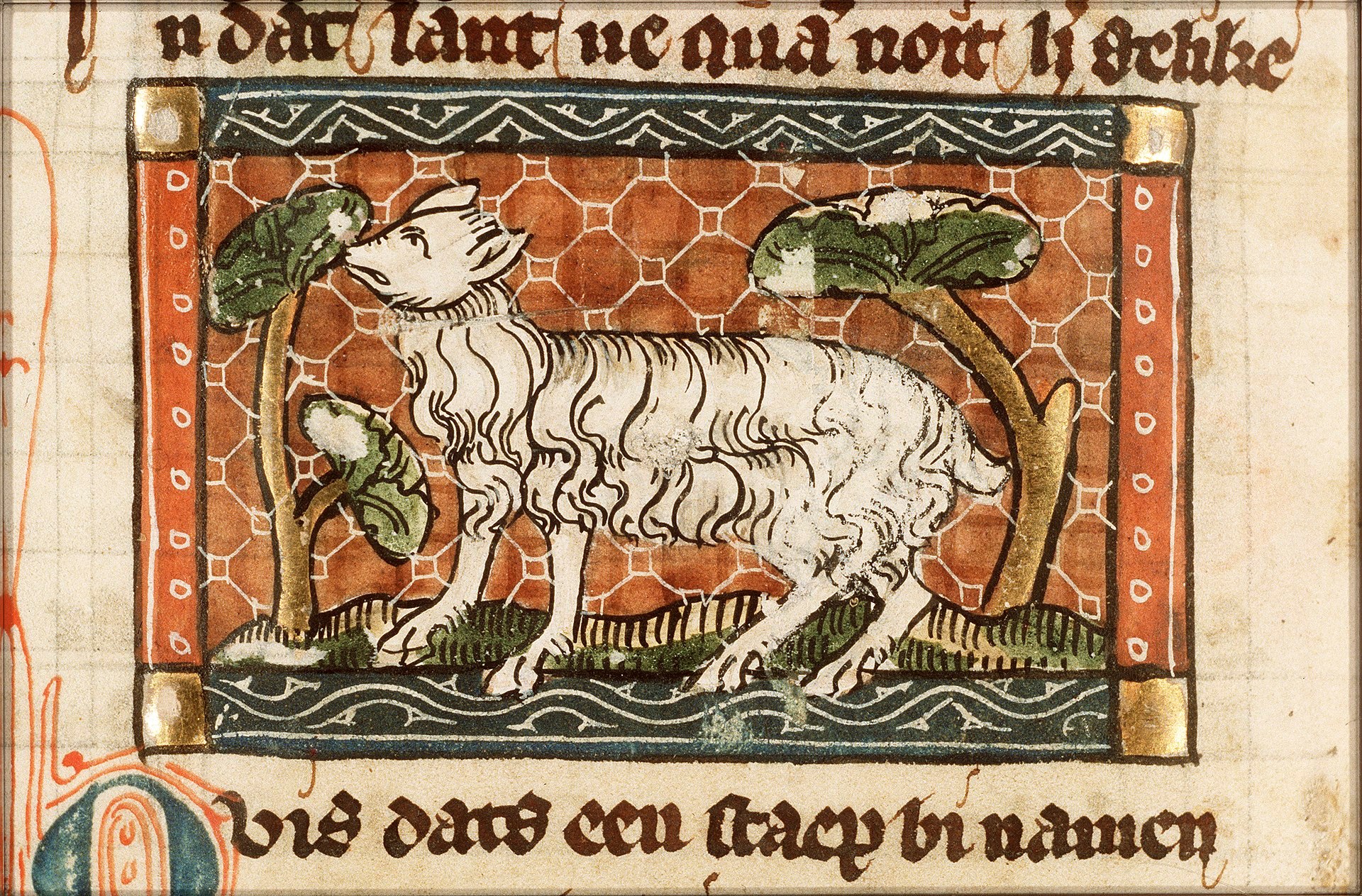
There was a time, long ago, when we used to write things down on paper. Before that, in the Middle Ages, the few people who could write copied things down on animal skin. After these skins had been washed, stretched, and scraped, they proved to be remarkably resilient, lasting for centuries. Now a new study into medieval codices finds they recorded a lot more than beautifully illuminated words—they’re riddled with viruses, too.
A team of international researchers led by agricultural scientists from the University College Dublin extracted DNA from the animal-skin pages of a series of archaic manuscripts. The texts they surveyed came from across Europe and included notable works like the thousand-year-old York Gospels, which were used in prior DNA studies, and the Corpus Christi College Cambridge, one of the earliest surviving English dictionaries.
Read more: “Medieval Medical Misinformation Persists”
But it wasn’t the words they were interested in. In some of these codices, they found multiple pages containing genetic material from the sheeppox virus (likely because an infected animal made the ultimate sacrifice for medieval literacy). By examining the viral sequences from different manuscripts throughout time, the team was able to reconstruct its past. For example, in addition to sheep skin, some goat and calf skins were also infected with sheeppox, a sign of possible crossover infection events. To fill in the gaps bookending the study period, they compared the manuscript sequences to sheeppox virus DNA extracted from the teeth of Bronze Age sheep and modern viruses circulating today.
The result was a comprehensive history of the sheeppox virus. The team discovered it diverged from the lineage of capripoxviruses (sheeppox virus, goatpox virus, and lumpy skin disease virus) somewhere around 11,500 and 3,700 years ago. It’s a time period that just happens to coincide with the rise of animal domestication in Europe.
“We find that unlike the smallpox virus, the sheeppox virus genome was very stable over the last few millennia,” study author Louis L’Hôte explained in a statement. “This might mean that genetic changes before this point were very important to how the sheeppox virus evolved to infect its host, which may help us fight the pathogen in the future.”
You never know what you’re gonna find when you crack a book. 
Enjoying Nautilus? Subscribe to our free newsletter.
Lead Image: Jacob van Maerlant / Wikimedia Commons