Predators can have big impacts on the landscape, and not just by doing what they do best—killing and eating their prey. The mere presence of a predator can alter the behavior of animals further down the food chain, causing cascading changes to the ecosystem. It’s a phenomenon known as the “ecology of fear,” and according to a new study published in the Journal of Helminthology, even the lowly mussel lives in fear of the tiniest predators.
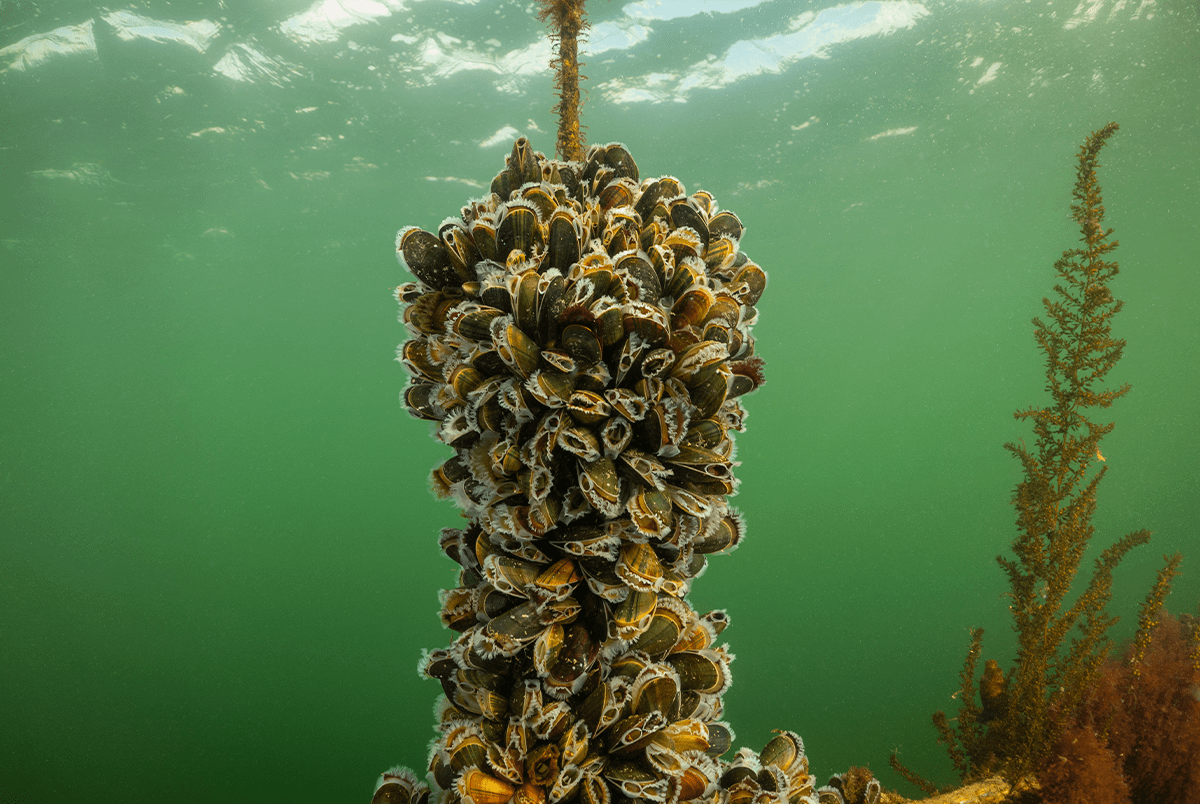
Marine biologists from Denmark’s Aarhus University put blue mussels (the same ones you might cook up with white wine, garlic, and linguini) in a tank with one of its most common micropredators, the parasitic flatworm Himasthla elongata. These tiny worms enter the mussels through the bivalve’s inhalant siphon, which they use to suck in water and filter out the algae they feed on. In the presence of the worm, the mussels narrowed their tubes, reducing their filtering activity by more than a third. When the team introduced a second species of parasitic flatworm (Renicola roscovita), filtration fell by more than half.
In the next experiment, the researchers put the mussels in a tank with chemical signals taken from the common periwinkle. These harmless marine snails don’t pose any direct threat to the mussels, but they are important hosts for H. elongata. Surprisingly, the mussels responded the same way, trimming their filtration activity by 42 percent.
Read more: “Mussels Are Devastating a Unique Ecosystem”
“The snail itself doesn’t harm the mussel, but its presence can be a sign that parasites are nearby,” study author Pernille Kibak said in a statement. “It may almost work like a warning sign in the water: There is reason to be on your guard.”
Still, the researchers aren’t sure which chemical cues the mussels are responding to—introducing compounds from both infected and uninfected periwinkles had the same effect. Snail juice in general, it seems, is enough to make a mussel clam up.
According to the team, these findings could have important ecological implications. A single blue mussel can filter over 25 gallons of water a day, and mussel banks can contain millions of them. If they get spooked and turn off their filtration en masse, it could lead to overgrowths of algae, reduced nutrient cycling, and murky waters that may become inhospitable to other critters. Additionally, cooler waters tend to kill parasites off, so this dynamic could present a problem as warming oceans become more flatworm-friendly.
“That’s what makes this response so interesting,” Kibak said. “We’re looking at something that happens in an individual mussel, but because blue mussels play such an important role in coastal ecosystems, even small changes in their behavior could potentially matter on a much larger scale.”
And all from a tiny little worm. 
Enjoying Nautilus? Subscribe to our free newsletter.
Lead image: drew / Adobe Stock