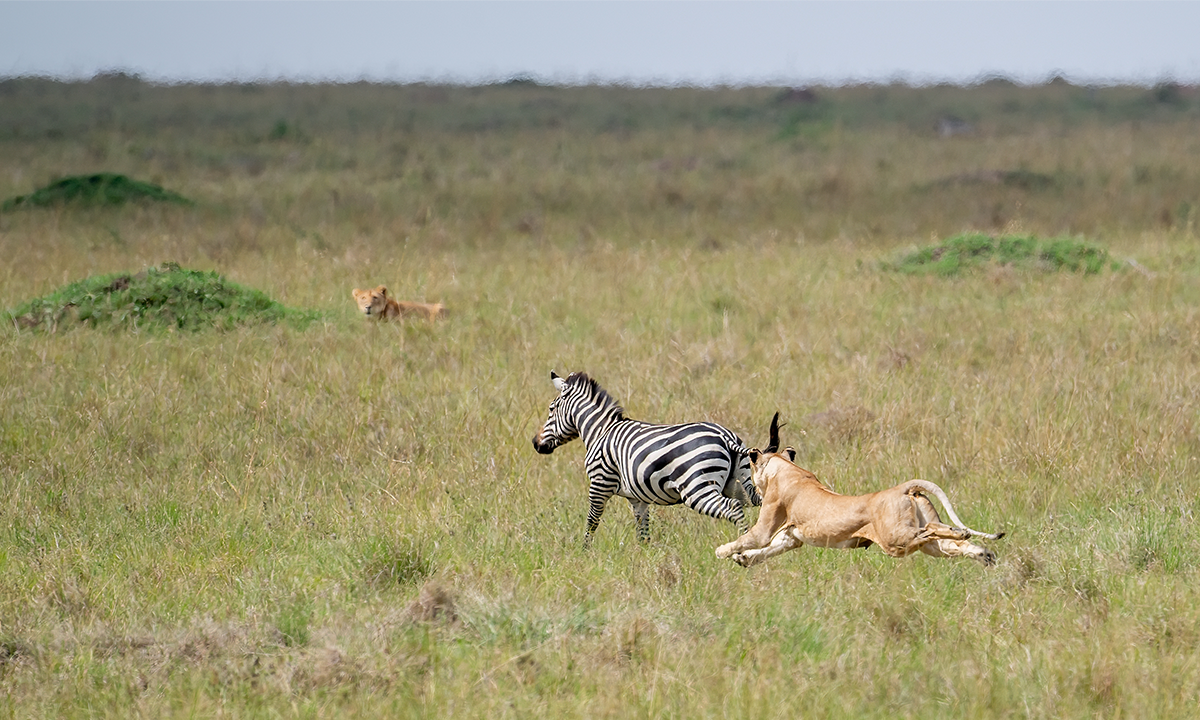
When you’re watching a nature documentary and a lioness is stalking an unaware zebra from the tall grass, who do you root for?
Part of you might want to see this powerful apex predator perform the task nature has designed her to do—mercilessly drag down her prey in a storm of claws and teeth. Still, another part of you wants to see the harmless zebra escape and live to fight another day.
It’s natural to feel conflicted. After all, apex predators—typically large, carnivorous mammals—also pose threats to humans and livestock. But in doing their grisly duty they also offer plenty of benefits to the ecosystems they’re a part of, beyond just feeding their young.
In the Arctic, polar bears sit atop the food chain eating primarily seals, but the bounty of their hunts trickles down. Instead of staying in the ocean out of reach, the seals they kill wind up on the ice, where a whole host of scavengers can pick through the carcasses. When food resources are low, Arctic foxes, ravens, gulls, and other animals lower down the totem pole can rely on polar bear leftovers for a convenient meal.
Read more: “The Ecologist Who Threw Starfish”
Of course, the main role of apex predators isn’t to feed the animals lower on the food chain, but to feed on them. When their populations decline, the top-down pressure apex predators exert on mesopredators—or carnivores in the middle of the food chain—disappears.
Without apex predators to keep their numbers in check, mesopredator populations explode until resources are exhausted, which can be devastating for ecosystems. In an ironic twist, this can actually result in even more predation. That’s because apex predators have large territories, slower life cycles, and sparser populations than the more numerous mesopredators.
And the benefits of apex predators don’t stop there. Studies have found that the reintroduction of wolves to Yellowstone National Park has had cascading effects down the food chain. Because the wolves feed on grazing animals like elk and deer, more apex predators means more trees reaching maturity, resulting in denser forests for all animals to live in.
So the next time you’re watching a nature documentary, go ahead and root for the apex predator—even if you have to look away when they’re finally victorious. 
Enjoying Nautilus? Subscribe to our free newsletter.
Lead image: Reto Buehler / Shutterstock