Ailing coral reefs may have an unlikely chum: giant, jelly-like plankton called pyrosomes. Which turn out to be excellent fuel in the face of intensifying climate change.
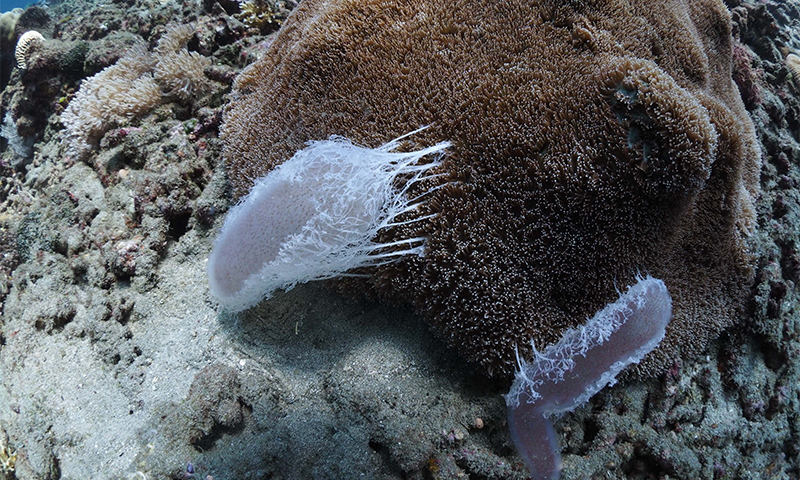
Several years ago, researchers spotted blooms of a particular pyrosome cropping up along the northern coast of the country Timor-Leste in Southeast Asia. Like other types of plankton, they’re carried by currents and tides and don’t tend to be skilled swimmers. “The water was filled with spiky, white and red pyrosomes … as far as the eye could see,” according to a paper recently published in Ecology. And the corals appeared to be eating them.
“Corals are often seen as passive feeders reliant on sunlight and algae, but in reality, they’re much more opportunistic—capable of catching and digesting larger plankton when conditions allow,” said study author Catherine Kim, a marine scientist at Queensland University of Technology in Australia, in a statement.
The corals digest food both inside and outside of their bodies. Here, they were photographed affixing stringy bits from their guts, called mesenterial filaments, to the pyrosomes. These mesenterial filaments help them break down food and, in some cases, attack their foes.
Although plankton are typically thought of as tiny specks—and many are—these pyrosomes can grow up to almost 8 inches long. The especially meaty ones found to be feeding the coral, Pyrosoma atlanticum, seemed to have arrived in this spot off of Timor-Leste’s coast thanks to a major ocean current that shepherds water from the Pacific to the Indian Ocean via the Indonesian Seas (which may also help keep the corals slightly cooler than others that have borne the brunt of harsher marine heatwaves recently).
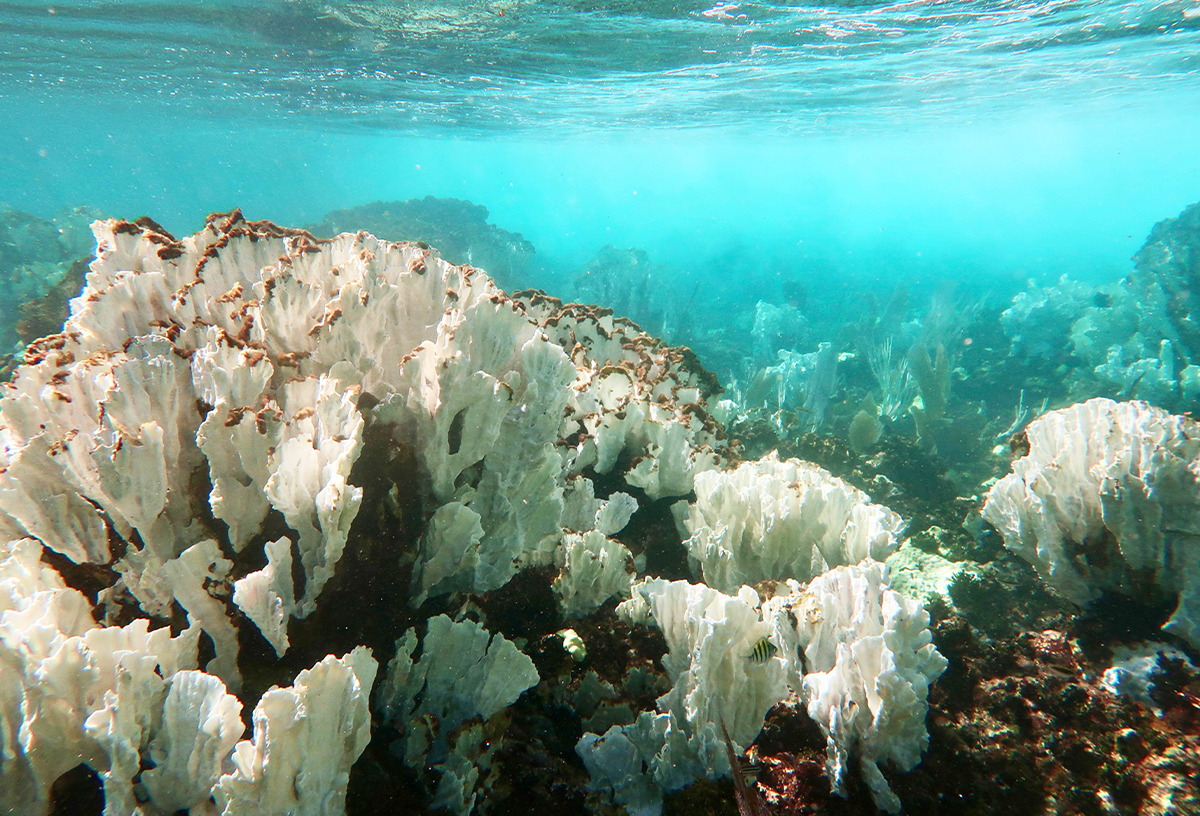
By keeping corals fat and happy, pyrosomes could help them grow faster, become more efficient at photosynthesis, and thus bounce back from bleaching more quickly, the researchers suggest. In fact, Timor-Leste’s reefs seem to have mostly dodged mass bleaching events over the past decade.
The researchers hope that more of these ecosystems can be identified and properly protected. As Kim said, “Timor-Leste’s reefs could offer a blueprint for coral resilience in a warming world.” 
Photo by Catherine J. S. Kim