Thomas Edison used to break through creative blocks by napping. The inventor would settle in with a heavy steel ball in one hand, doze off, and awaken when it fell, just after dipping his toes into slumberland. Since then, both scientific research and anecdotal reports have supported Edison’s nap strategy, demonstrating that our brains can make novel connections when we slip into the “twilight zone” between sleep and wakefulness. Now, new research published in Cell Reports suggests we can access these dream-like states when we’re awake, too.
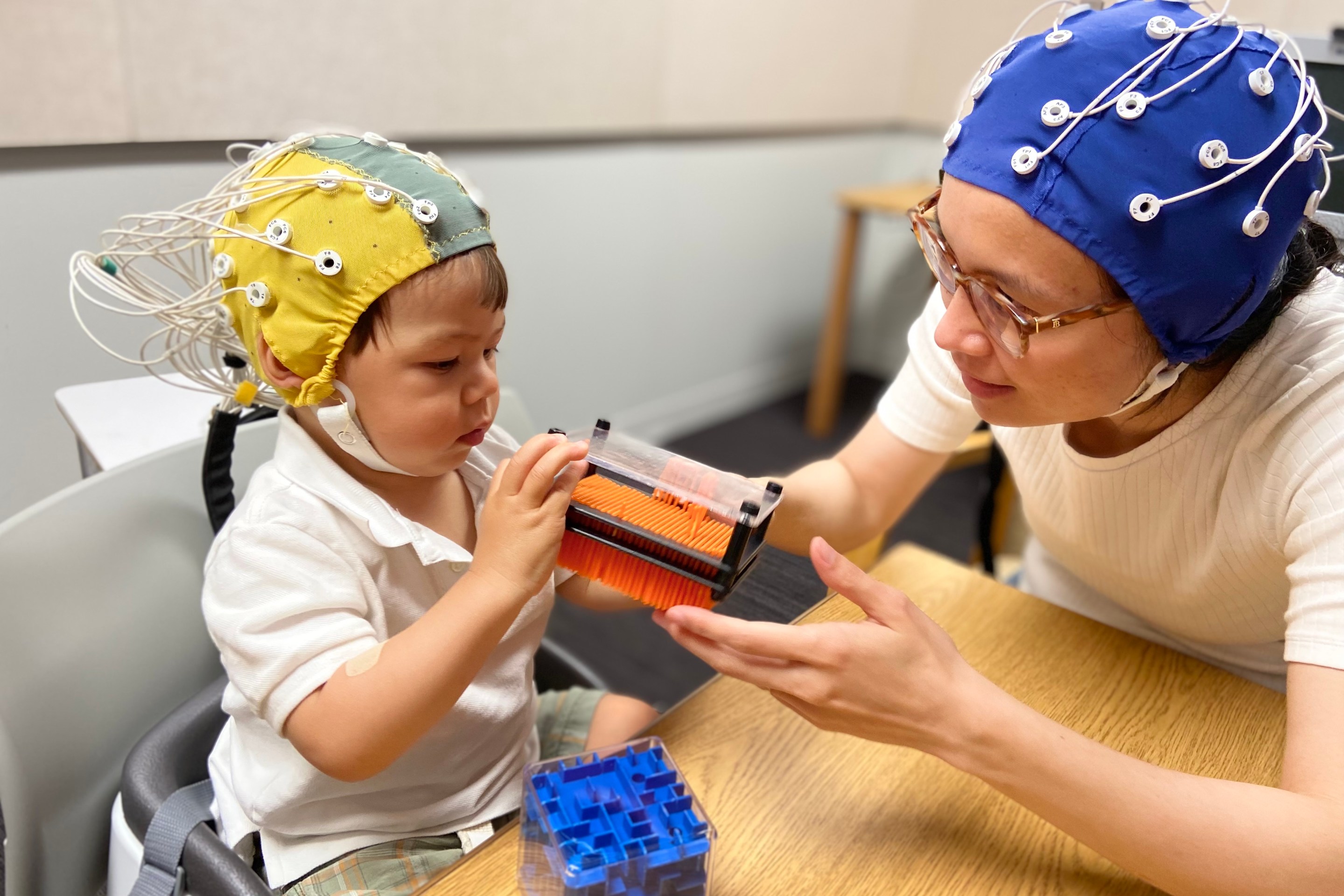
To explore the nether realm between sleep and wakefulness, neuroscientists from the Paris Brain Institute took a page out of Edison’s book. They recruited 92 subjects accustomed to napping and describing their experiences (the very definition of a dream job), to nod off while wearing an EEG net and holding a bottle in one hand. After they were roused from their slumber by the falling bottle, they rated their mental experience for bizarreness, fluidity, spontaneity, and perceived level of wakefulness. Meanwhile, the EEG recorded how deeply into sleep they had ventured.
Analyzing the reports revealed the participants’ thoughts clustered around four distinct experiences: fleeting recollections (“an image of my dad crossed my mind”); an alert connection to the surrounding environment (“I was listening to the street sounds”); bizarreness (“I saw images of small aliens”); and a high level of voluntary control (“I was thinking about what I would do tomorrow”).
Read more: “The Creative Sweet Spot of Dreaming”
These experiences seemed to occur independently of sleep state—and even while the subjects were awake. “This is the major finding of our study. The mental states traditionally associated with dreaming can arise just as well when we are asleep as when we are awake,” study author Nicolas Decat said in a statement. “In other words, the content of our thoughts does not follow the boundaries between waking and sleep! One of our participants, while awake, reported seeing ants crawling on her body against a backdrop of crossword puzzles.”
An analysis of the EEG data revealed a specific brain signature for strange dreamlike experiences such as this one. Researchers say these kinds of mental phenomena are characterized by reduced connectivity between the brain’s occipital lobe, which generates visual imagery during dreams, and the frontal lobe, which controls executive functions. “This signature may well be the correlate of what we feel in such a state: Lucid reasoning is overtaken by a whirlwind of vivid sensations characteristic of dreams,” Decat said.
Sometimes you need to unplug, and sometimes you need to unplug different parts of your brain—it could help you make more creative connections. Even if it doesn’t, it’s a great excuse to give your boss next time you get caught nodding off at work. 
Enjoying Nautilus? Subscribe to our free newsletter.
Lead image: VectorMine / Adobe Stock