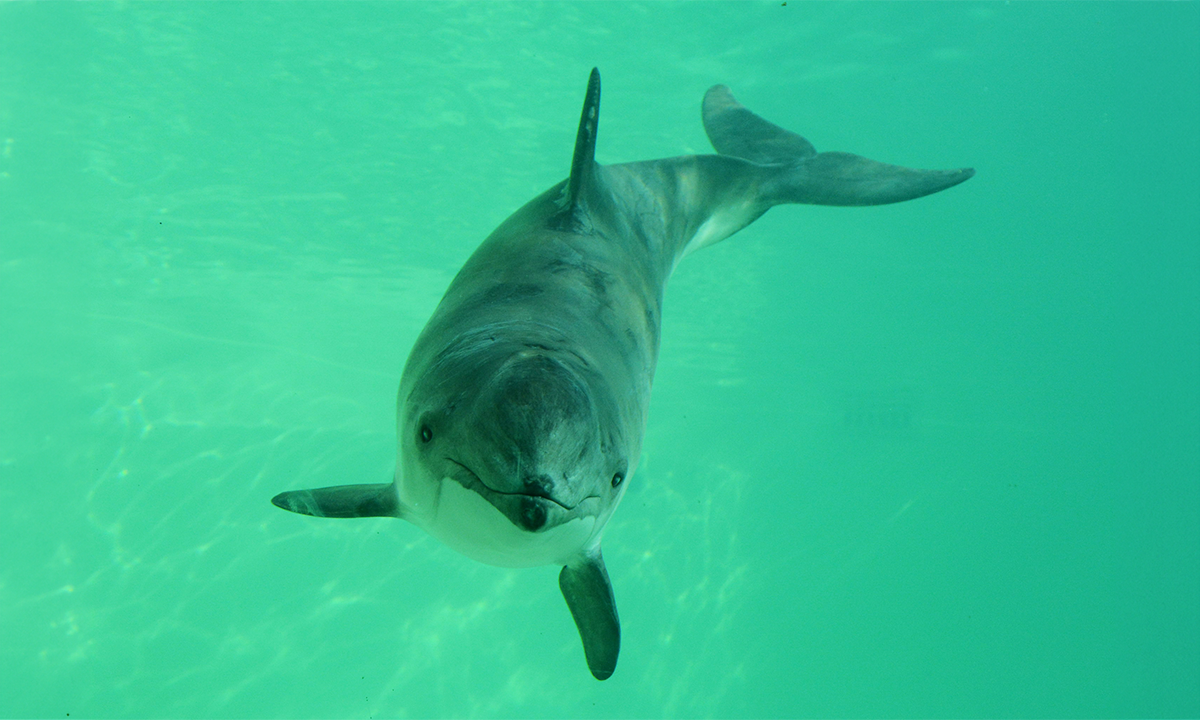
Porpoises are fish-eating machines. A study of harbor porpoises (Phocoena phocoena) around Denmark found them consuming as many as 200 fish per day, followed by evening foraging in deep waters. Given their reliance on echolocation to find and capture prey, you can count on a porpoise sending out its clicks nearly continuously during waking hours. The high-frequency clicks of about 135 kilohertz make a rat-a-tat-tat that’s inaudible to us but indispensable to a porpoise.
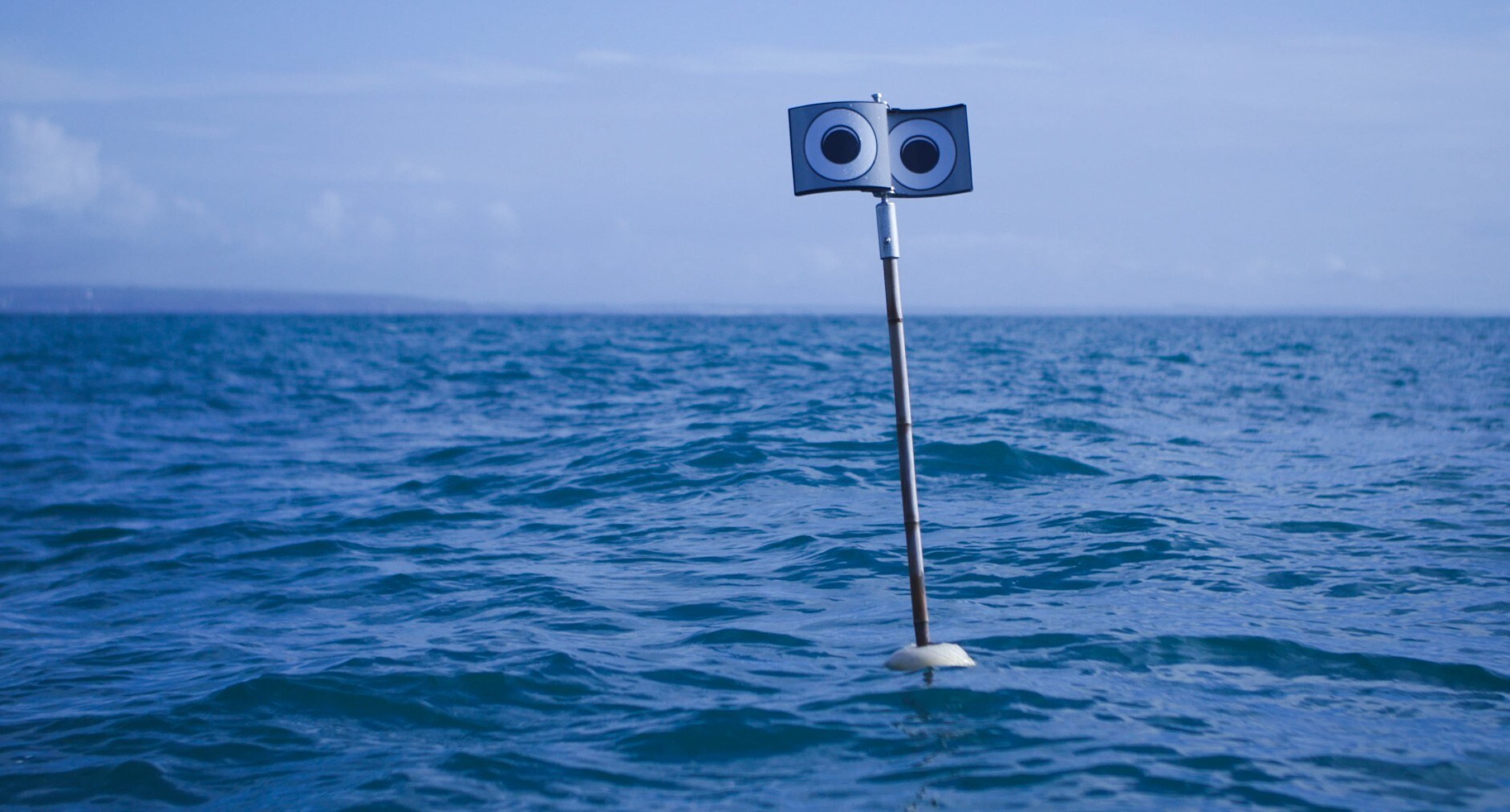
To understand whether ship noise interferes with porpoise echolocation, biologists from universities in the United Kingdom and Denmark deployed underwater microphones in a narrow strait. The “Little Belt” between Denmark’s Funen Island and Jutland Peninsula, near the Port of Fredericia that handles more than 2,500 vessels per year, brings large boats and porpoises into close contact. Moreover, an endangered population of harbor porpoises rely on the strait for its concentrations of eelgrass beds and associated fish species.
“This study adds to the growing understanding of how underwater noise and the increasing vessel traffic affects our environment, and in particular a noise-sensitive species like the harbour porpoise,” said study author and Aarhus University marine mammal researcher Jonas Teilmann in a statement.
Read more: “Swimming in Noise”
The results of three years and two months of hydrophone monitoring, published in Marine Mammal Science yesterday, showed that harbor porpoises “buzz” less when vessels pass within about 3,000 yards. Their buzz rates were reduced by up to 40 percent during the busiest boat traffic times, which were concentrated on summer days. This happened immediately in response to the arrival of vessels nearby, suggesting that even brief encounters with boat noise may disrupt porpoise foraging.
Although harbor porpoises are often solitary or in small groups, they rely on echolocation clicks for communicating with their babies and each other. So, their social behavior may be squelched by boat traffic as well.
“While we did not directly assess the impact of boat traffic on porpoise populations, the disruption we found is likely to affect their ability to cope with other environmental stressors,” explained co-lead author Shannon Merkle, now with NOAA Fisheries.
Because they rely on the concentrated prey in the Little Belt, this population of porpoises would be hard-pressed to move elsewhere.
Whether from vessel traffic, fishing activity, construction, offshore energy exploration, or other activities, human-caused noise will likely continue to rise around Denmark and other coastal regions throughout the world, which is why the study findings call for more attention to the effects of anthropogenic noise on porpoises and other coastal species.
Basically, we need to quiet down our coastlines. 
Enjoying Nautilus? Subscribe to our free newsletter.
Lead image: Ecomare/Salko de Wolf/Wikimedia Commons