To predict how communities of organisms will respond to environmental changes, scientists look to the deep past. Tracking the relationship between biodiversity change and change over millions of years provides a window into factors that allow (or disallow) organisms to handle change. In a paper published yesterday in Science led by University of Oxford researchers, the extinction risk of marine invertebrates was tied to the configuration of coastlines.
The researchers looked at about 300,000 fossils representing more than 12,000 genera of ocean invertebrates that lived over the past 540 million years on shallow, continental shelves. By reconstructing the arrangements of the continents during the organisms’ lifetimes, they estimated the geometry (both shape and orientation) of the coastlines they inhabited. Then, by statistically modeling the relationship, they tested the hypothesis that coastline geometry influenced extinction risk.
The data showed that organisms inhabiting north-south-oriented coastlines, like today’s North American coasts, had a better chance of long-term survival when conditions changed. The study authors hypothesized that the north-south coastlines offered a corridor for organisms that rely on shallow waters to migrate and stay within their tolerance ranges when climate or other conditions changed.
Read more: “Our Boiling Seas”
Organisms that lived alongside islands, inland seaways, or east-west-oriented coastlines like today’s Mediterranean Sea coasts were disadvantaged when conditions changed. Migration to newly suitable habitats was likely impossible, short of crossing the open ocean. As such, these coastal invertebrates, which have limited abilities to traverse long distances, faced what the researchers dubbed “latitudinal traps.”
“Groups that are trapped at one latitude, because they live on an island or an east-west coastline, for example, are unable to escape unsuitable temperatures and are more likely to become extinct as a result,” explained study author and earth scientist Erin Saupe in a statement.
During mass extinction events or periods that were particularly warm, the role of coastline geometry in extinction risk was more pronounced. The geographic constraints imposed by the shape and orientation of coastlines appeared to have amplified importance in driving extinction during periods of elevated environmental stress.
“This work confirms what many paleontologists and biologists have suspected for years—that a species’ ability to migrate to different latitudes is vital for survival,” concluded lead author and earth scientist Cooper Malanoski in a statement.
These patterns detected over millions of years might apply to modern species. Organisms living in “latitudinal traps” of east-west coastlines or islands may be especially vulnerable to dramatic changes in conditions.
The study calls for paying attention to coastline geometry in predicting and mitigating how species will endure continuing climate changes. 
Enjoying Nautilus? Subscribe to our free newsletter.
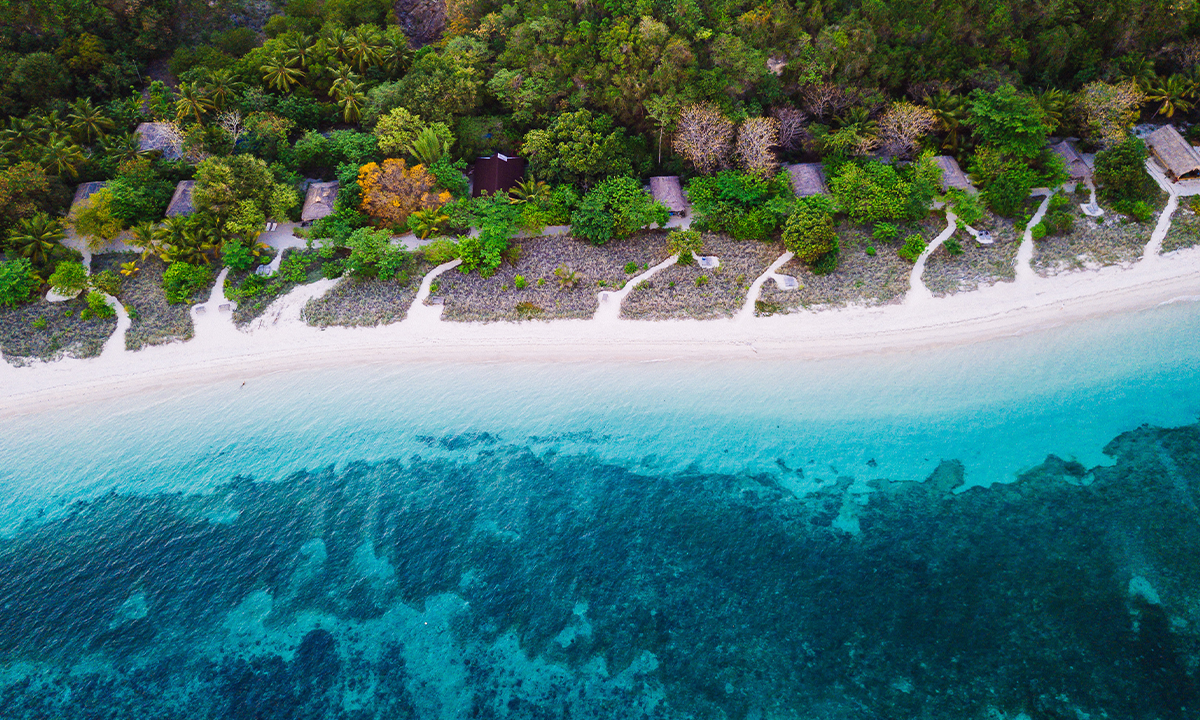
Lead image: Erik Lukas / Ocean Image Bank