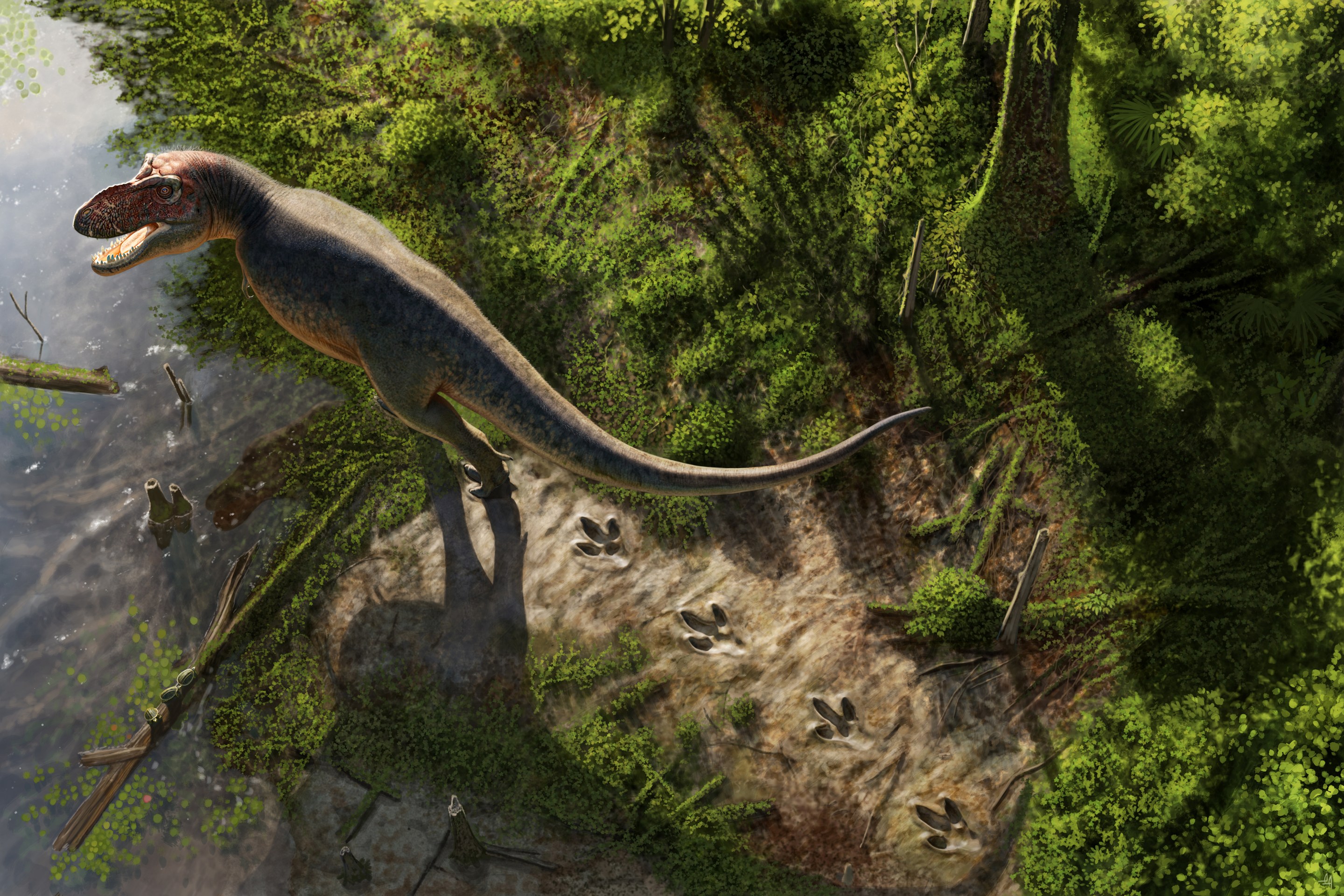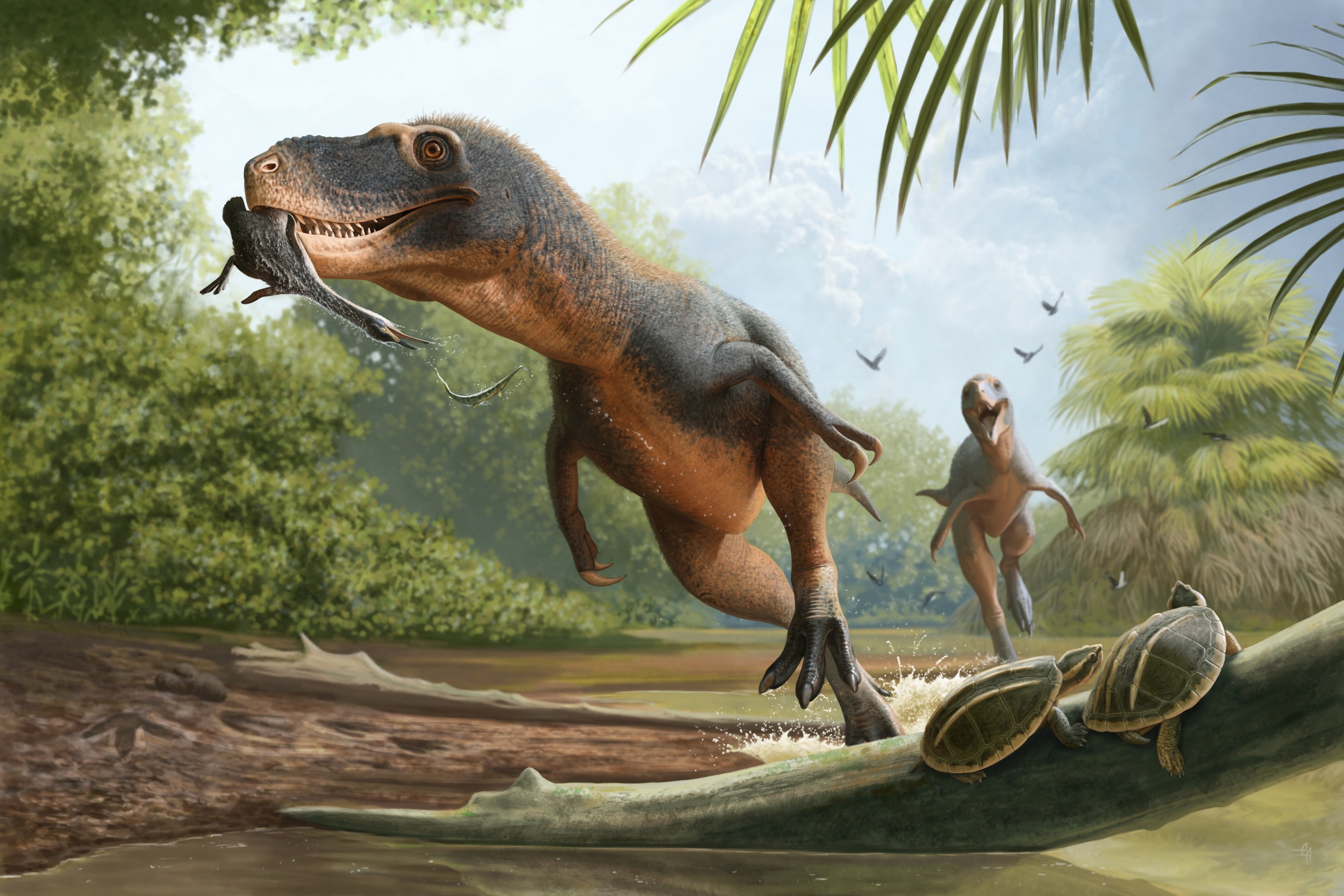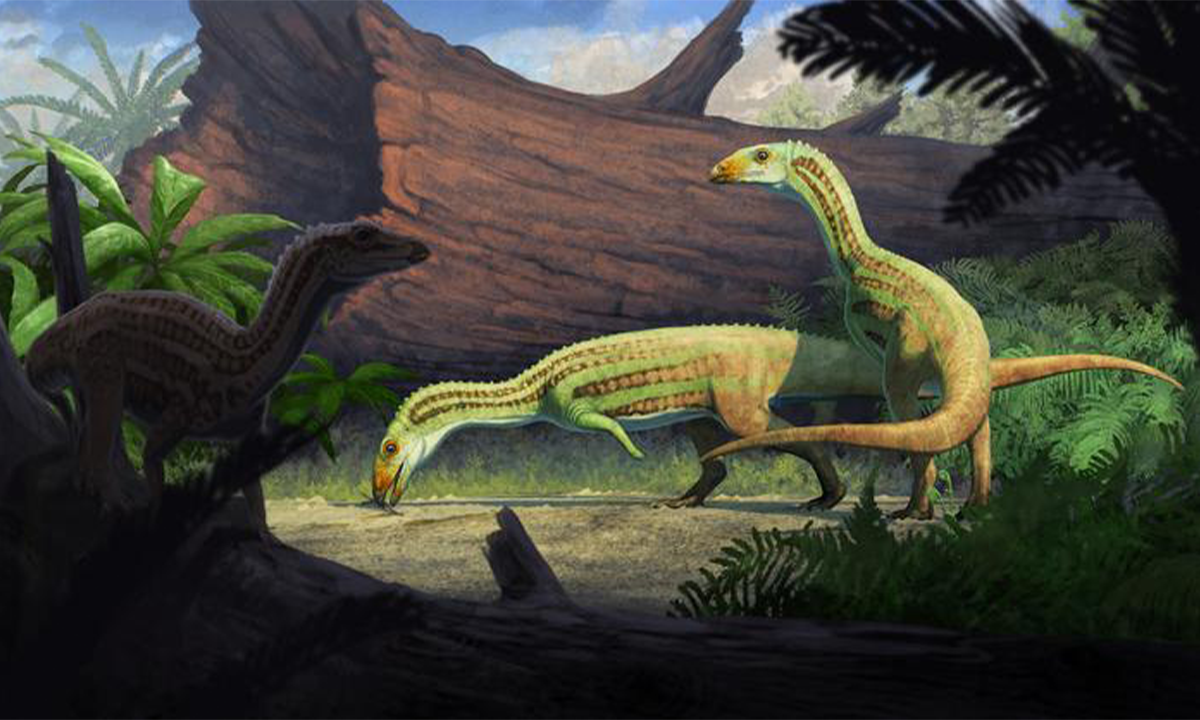
They looked like ostriches as they walked upright on two legs, with the other pair of small legs acting as arms. Even their other features, like hollow bones, large eye sockets, and a toothless beak, were reminiscent of birds or of the “ornithomimid” theropod dinosaurs that lived alongside them. But the shuvosaurid group of reptiles that inhabited Earth during the Late Triassic were neither birds nor dinosaurs—they were ancient relatives of crocodiles.
The fossils from a dainty shuvosaurid show that they walked on all four legs as juveniles, then learned to walk upright, according to a study published in the Journal of Vertebrate Paleontology earlier today. Paleontologists from the University of Washington and the Burke Museum in Seattle reported on a new shuvosaurid species—dubbed Sonselasuchus cedrus—based on hundreds of fossils unearthed in Arizona’s Petrified Forest National Park thought to represent at least 36 individuals.
The forest-dwelling S. cedrus was only 25 inches tall (about the height of a Canada goose) and had the typical characteristics of shuvosaurids, but a longer, narrower snout than other known Sonselasuchus species. The abundant fossils, many from immature individuals, allowed the study authors to describe a new feature: a quadrupedal, or four-legged, childhood.
Read more: “When We Were Lunch”
“By analyzing the proportions of the limb skeletons of different animals, they determined its bipedal stance (standing on two feet) may have been the result of a differential growth pattern,” explained the lead study author, graduate student Elliott Armour Smith, in a press release.
More than 950 shuvosaurid bones had been recovered from the Kaye Quarry in the Petrified Forest and sent to the Burke Museum collections. By comparing the size of the forelimbs and hindlimbs of multiple individual S. cedrus, the researchers noted a change in size ratios with growth. Younger animals had relatively proportional forelimbs and hindlimbs, but the hindlimbs continued to grow longer and stouter into adulthood.
“Essentially, we think these creatures started out their lives on four legs,” explained Smith. “They then started walking on two legs as they grew up. This is particularly peculiar.”
Why the bones of so many S. cedrus were clustered together is intriguing. The study authors hypothesized that “aggregation of skeletons at the Kaye Quarry was the result of gregarious behavior driven by a reduction in access to water with aridifying conditions.” The layers of fossil records of plant communities in the area suggest a drying climate, which may have induced these crocodile ancestors to gather near remaining moist areas.
It makes for quite an image: a dense group of goose-sized crocodiles roaming on all fours around a damp conifer forest. 
Enjoying Nautilus? Subscribe to our free newsletter.
Lead image: Gabriel Ugueto