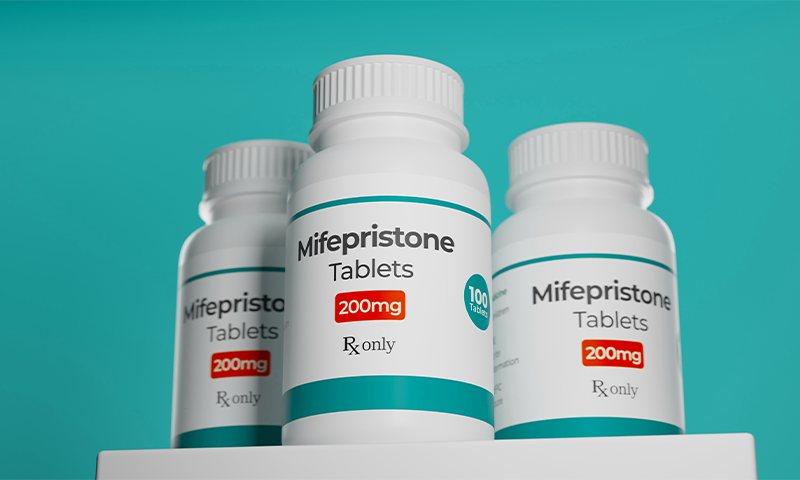
The abortion pill mifepristone is a lifeline for millions of women in the United States. In the 19 states where abortions are now banned, it is often the only way that women can safely end an early pregnancy or treat a miscarriage. Current shield laws allow telehealth providers in states without bans to mail the abortion pills across state lines without fear of prosecution, creating a fragile workaround.
Now fake science threatens to sink the drug—again. Last month, Secretary of Health Robert F. Kennedy Jr. ordered an FDA review of mifepristone, not because of new evidence about its safety or effectiveness, but due to a report written by anti-abortion activists. It’s just the latest round in a series of attacks on the drug from anti-abortion groups over the years.
The report, authored by the Ethics and Public Policy Center, found that more than 10 percent of people who take mifepristone experience “serious adverse events.” But the analysis wasn’t peer-reviewed, the authors have no scientific background, and they fail to provide a verifiable source for their data. Experts say the math does not add up.
The authors—Jamie Bryan Hall, EPPC’s director of data analysis, and Ryan Anderson, the organization's president—say they took their data from an insurance database, but because they don’t specify which database, “there’s no way for anybody to try to re-create their analysis to see if they receive the same results,” Sara Redd, of the Center for Reproductive Health Research in the Southeast at Emory University’s Rollins School of Public Health, told The Atlantic.
Read more: “Termination of Pregnancy Has Always Been Part of Women’s Health”
The abortion pill is actually two drugs: Mifepristone and misoprostol. In the U.S. this combo is used to terminate two-thirds of pregnancies up to 10 weeks, and sometimes to treat miscarriages.
Last week, the Center for Reproductive Rights sued the Trump administration for stonewalling freedom of information requests related to the FDA review. The lawsuit points to the decades of evidence showing that 99 percent of people who have taken mifepristone have experienced zero complications. More than 100 peer-reviewed studies have confirmed the safety and efficacy of the drug since it was approved 25 years ago, and more than 7.5 million women in the U.S. have used it for abortion or to manage a miscarriage with vanishingly few adverse events.
Junk science has been used before to attack mifepristone. According to The New York Times, in February of 2024, a publisher retracted two of the studies that anti-abortion groups had used in court to claim the drug is dangerous. Last year, in a 9 to 0 ruling, the Supreme Court dismissed a lawsuit brought by anti-abortion groups that sought to restrict or ban the drug.
The FDA imposed certain limits on the drug in 2011, requiring that it be prescribed by certified clinicians and dispensed under specific conditions. Legal challenges to those rules are pending across the country, and last week a federal district court in Hawaii ruled that the restrictions violate federal law.
Meanwhile, the FDA’s approval of a generic version of mifepristone in October set off fresh outrage among anti-abortion activists. The new generic meets the same safety standards as the brand name drug and could ensure continued access while lawsuits over the original drag on.
If junk science wins this round, the consequences will extend well beyond one pill. 
Enjoying Nautilus? Subscribe to our free newsletter.
Lead image: Carl DMaster / Shutterstock