If you’ve spent enough time on social media, you’ve probably seen someone told to “touch grass.” Usually leveled at the terminally online, this retort is a humorously insulting reminder to maintain a connection with the real world. But with much of our lives increasingly spent online and a rising epidemic of loneliness, the “touch grass” posters might be on to something. New research published in Health & Place suggests that engaging in outdoor activities—even alone—might actually protect us from feeling lonely.
While participating in activities in nature has been shown to reduce feelings of loneliness, the effect is usually attributed to the social nature of the activities, which makes sense. But what if the natural surroundings are playing a role as well? Can feeling a connection with nature help you feel less alone? That’s the question sociologist Johan Cottis Hoff set out to answer in this latest study.
To answer it, he recruited participants from the area surrounding Mjøsa—Norway’s largest lake and a popular destination for outdoor recreation—to take a survey. Respondents were asked about their connectedness to nature, their attachment to Mjøsa, their feelings of loneliness, and how often they engaged in various solo outdoor activities (walking, exercising, fishing, canoeing, and so on).
Read more: “The Simple Dutch Cure for Stress”
He found that both engaging in outdoor activities and feeling a connectedness to nature were associated with lower levels of loneliness. “The conclusion is that outdoor activities in natural environments largely have a protective effect against loneliness,” Hoff said in a statement. “Strengthening the sense of belonging, not just to other people, but to natural environments and the surroundings, appears to have a protective effect against loneliness.”
Importantly, not all open-air excursions fit the bill. Exercise activities like jogging weren’t as good at relieving loneliness as activities that reinforces a sense of connectedness with nature, like a casual walk around the lake. “When you see yourself as part of nature, you create a sense of belonging to a community,” Hoff said.
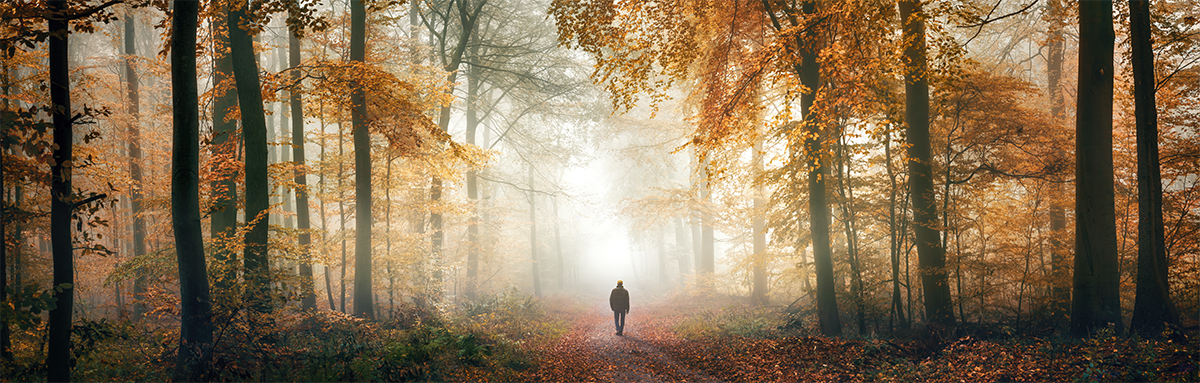
In other words, if you want to use the great outdoors to feel less alone, it’s important to actually engage with nature. So the next time you’re outside, remember to luxuriate in the sunlight, spot birds, and, yes, touch grass. 
Enjoying Nautilus? Subscribe to our free newsletter.
Lead image: Smileus / Adobe Stock