For at least a quarter of a century, public health advocates have understood how social factors like income and education shape health outcomes. But in recent years, where you sit on the political spectrum has joined that list, according to a new study in Nature.
A team of scientists found that conservative Americans got measurably less healthy than liberal Americans over the course of the 2010s. By the early 2020s they were dying at significantly higher rates, even setting aside COVID-19 deaths. They also ran a separate large survey, in 2024, of more than 21,000 people and found that right-leaning Americans—especially Republicans and Trump voters—are less likely to trust their doctors, follow medical advice, and seek care when they probably should.
It isn’t just about COVID vaccines. It extends to medications for chronic conditions like diabetes and hypertension, and to willingness to go to the doctor for chest pain. The findings don’t prove that political identity is causing worse health, only that the two are correlated, and demographic explanations don’t fully account for it.
Previous research that relied on county-level data had already found that more Republican-leaning areas tended to have worse health outcomes, but those studies had trouble determining whether it was the people or the places that mattered most. The new study used data collected from something called the AddHealth survey, which tracks people born in the ’70s and early ’80s, including individual-level health outcomes, measured by objective biomarkers, as well as political affiliations. The scientists controlled for geography.
I spoke with study author Neil O’Brian about how trust in science and medicine have shifted over time, what their findings tell us about the MAHA movement, and what, if anything, doctors can do to get through to conservative patients.
Read more: “Our Dark, Unvaccinated Future”
Is distrust in doctors new for conservatives, or is it an old pattern?
I did a piece where I tried to figure out when this emerged—has it always been the case, or is it new? Is it unique to doctors, or do we see it across the board? It’s a difficult question to answer because it’s hard to find surveys that ask about both trust in one’s personal doctor and also about party affiliation. What we did was look at publicly available surveys. The running hypothesis was that this emerged during the pandemic, so we tried to find data from before the pandemic and after the pandemic. Before the pandemic, it was nonpartisan. When we came back after the pandemic, it’s consistently partisan across surveys.
The question is: When did the gap emerge? We used data from a nationally representative survey called the General Social Survey (GSS), which is done every two years in the U.S. They don’t ask about trusting your doctor specifically, but they ask things like: Do you have confidence in medicine, the press, education, medical scientists, and so on? What you see is that these institutions aren’t all moving in the same direction. By the end of the 2010s, you have a partisan split. Republicans have more confidence in the military than Democrats, but Democrats have more confidence in scientists than Republicans. The punchline is that there’s one non-governmental institution—medicine—that’s nonpartisan all the way through the end of the 2010s. When the GSS comes back in the 2020s, you see the partisan split emerge. So this seems like something new, timed around the 2020 pandemic.
It’s so interesting that the polarization of science has shifted. In the 1970s, data show that Republicans had high trust in science. During that era, the left was more likely to be critical of the scientific establishment.
I can’t speak to that specifically, but by the 1990s and into the 2000s, it was nonpartisan. By the mid-2010s, you have the now-familiar gap where the right is less trusting of science than the left—and that emerged a little earlier than what you see with medicine. Going back to the ’70s, that’s entirely plausible. One reason is education polarization: Folks with a college degree were more likely to be Republicans in the 1970s and are now more likely to be Democrats, and that could matter for trust in scientists.
What should we make of the MAHA movement in light of your findings?
It fits into the broader trend. It would be fair to characterize the MAHA movement as skeptical of science and allopathic medicine [standard evidence-based Western medicine]. There are certainly some positive aspects, focusing on whole foods and eating less sugar, but those folks aren’t going to see their primary care provider. You could see that accentuating the trends in these data.
What about left-leaning groups—some new-age communities are very distrusting of mainstream medicine and lean more liberal. How do they fit into this larger picture?
It used to be that anti-vaxxers were the crunchy folks on the left. The pandemic seems to have entirely shifted that dynamic. To the extent that the left was more skeptical of allopathic medicine, that’s no longer true. There are certainly subgroups of liberals who are really distrusting and subgroups of conservatives who are really trusting. But on average, the left is more trusting of doctors, thinks medicines to treat chronic illness are more safe and effective, and reports going to see their primary care provider at higher rates.
If conservatives don’t trust doctors, who do they trust?
What you see on the right, even among independents, though it’s a little less pronounced, is declining trust, especially top-end trust, in physicians. Among parts of the left, it’s either stagnated or increased over time. It’s still the case that people on the right are more trusting of physicians for medical advice compared to other sources. It’s just that the level of trust has declined significantly over time.
On the other hand, for something specific like COVID vaccines, studies have found that people on the right are less likely to trust their doctor compared to figures like Trump. So for vaccine-specific issues, some public figures on the right seem to be more trusted. But for trust in physicians generally, it’s just fallen quite a bit.
Do you think the ideological split is mostly about what media people are consuming, or are there other factors?
There are a whole bunch of factors potentially feeding into this. One thing that supports the media hypothesis is that the partisan gap is largest among people who are tuned into politics—which suggests left and right are consuming news from different outlets, one saying trust medicine, another saying don’t. Among folks who aren’t paying attention to politics, the partisan gap in trust is much, much smaller. So I’d take that as consistent with the media explanation.
What are the other factors?
One thing that comes up a lot is place: rurality and urbanicity. We control for that in the article, but it’s true that if you look at the density of primary care providers in very rural, very conservative counties, there just aren’t as many PCPs as in large urban or suburban areas. So if you live in an under-resourced area and then a pandemic hits and you’re watching news that’s very skeptical of the medical establishment, you can see how that creates a compounding effect. There are also antecedent factors around trust in science generally. If those predispositions were already there, the pandemic created a kind of roll-on effect. A variety of things are likely feeding into this.
Read more: “Why Reading Your Doctor’s Notes Can Be Painful”
What you found is an association between ideology and health outcomes. What would you need to show an actual causal link?
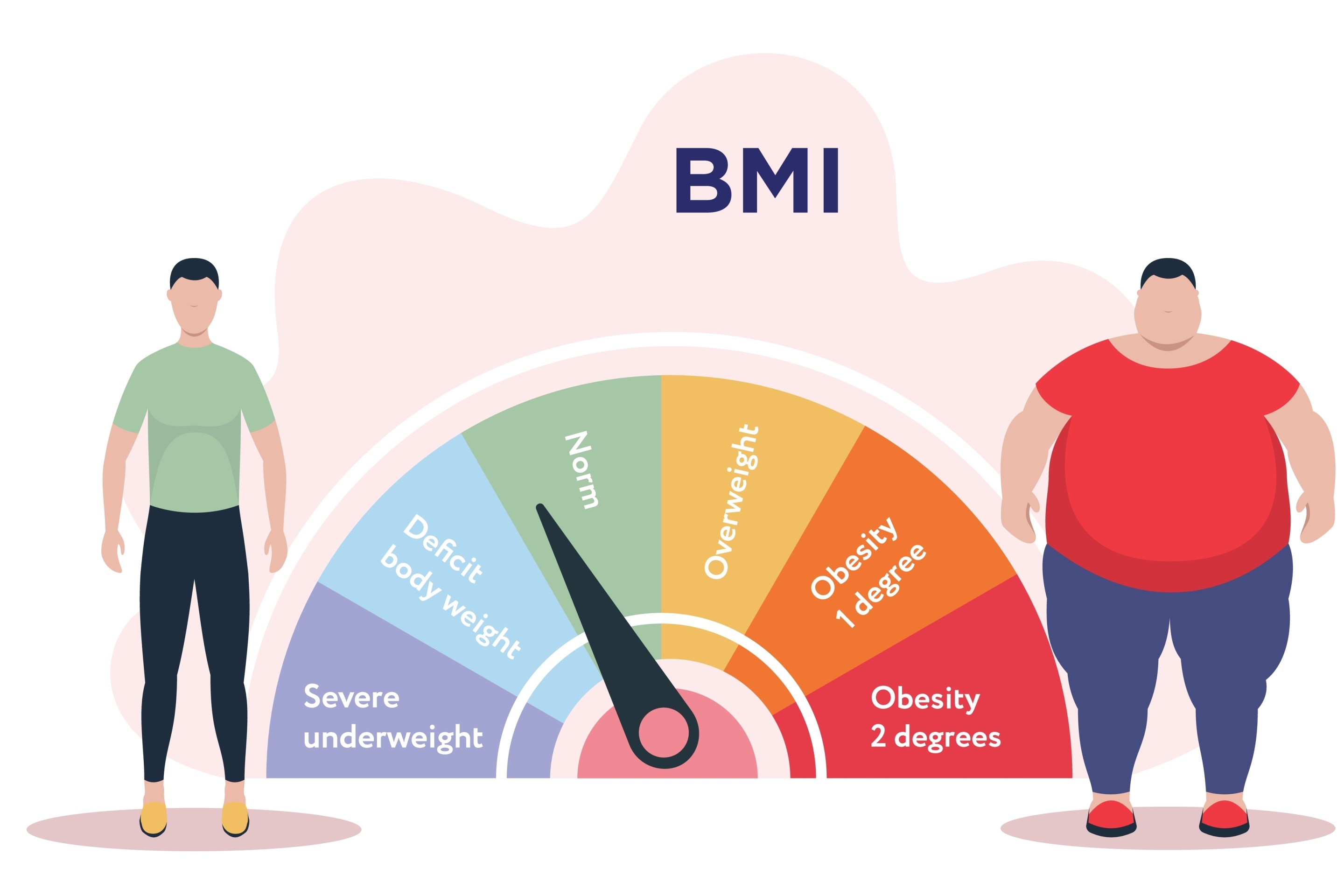
One thing we point to in the paper—and this is just relationships, not direct evidence—is that the health gap between left and right had already emerged by the end of the 2010s going into the pandemic. Those on the right had higher rates of hypertension and obesity, for example. Then the pandemic hits, and survey data shows that folks on the right are less likely to think medicines to treat hypertension are safe and effective. So one pathway is: If you have hypertension and are less likely to take anti-hypertensives, that could worsen your health situation. Could you get data on shifts in medicine use and downstream health effects and back that out? That would be really interesting—complicated, but interesting. The hope is to find ways to look at some of these mechanisms and whether variation in these intervening factors impacts longer-term outcomes.
I would have expected the pandemic to have the opposite effect, that so many deaths from ignoring medical advice would make people rethink their assumptions.
On the left, it probably did. On the left, you have people reporting very high levels of trust. Black Democrats, who historically have been less trusting, are now showing up on surveys as more trusting than white Republicans. White Democrats are now reporting very high trust in doctors and medicine, and I’m working on a project showing they’re way more likely to take various prescription drugs. So it depends where you land. Some people became more skeptical, which may hurt them. Others became more trusting, which could help them. To the extent the pandemic made some people who weren’t previously adherent or going to the doctor start doing that more, there’s a positive effect there.
Have we seen this kind of health outcome disparity split along political lines before in history?
There have been some studies using death data. It’s always tricky. But depending on how you measure it, folks on the right were probably a little bit healthier in an earlier era. Then, partly as a consequence of the shifting political coalition—people without a college degree moving right, those with college degrees moving left—and then add the pandemic on top, it sort of flipped.
What might change the balance—how do you reach people when something as critical for well-being as medicine has become aligned with politics?
It’s really tough. I’m not a doctor, but my understanding is that doctors think a lot about social determinants of health: how race or gender shapes an interaction in an exam room. My point, and I’m not sure what someone would do with it, is that politics is also shaping that relationship. People are now aware of that with respect to vaccines, but the point here is that it extends more broadly, to other dimensions of health as well. My takeaway is: Be armed with the knowledge that a patient’s political background as they come into an exam room is probably shaping how they look at you, and not just at public health officials or pharmacological interventions beyond COVID vaccines. 
Enjoying Nautilus? Subscribe to our free newsletter.
Lead image: michaelheim / Adobe Stock