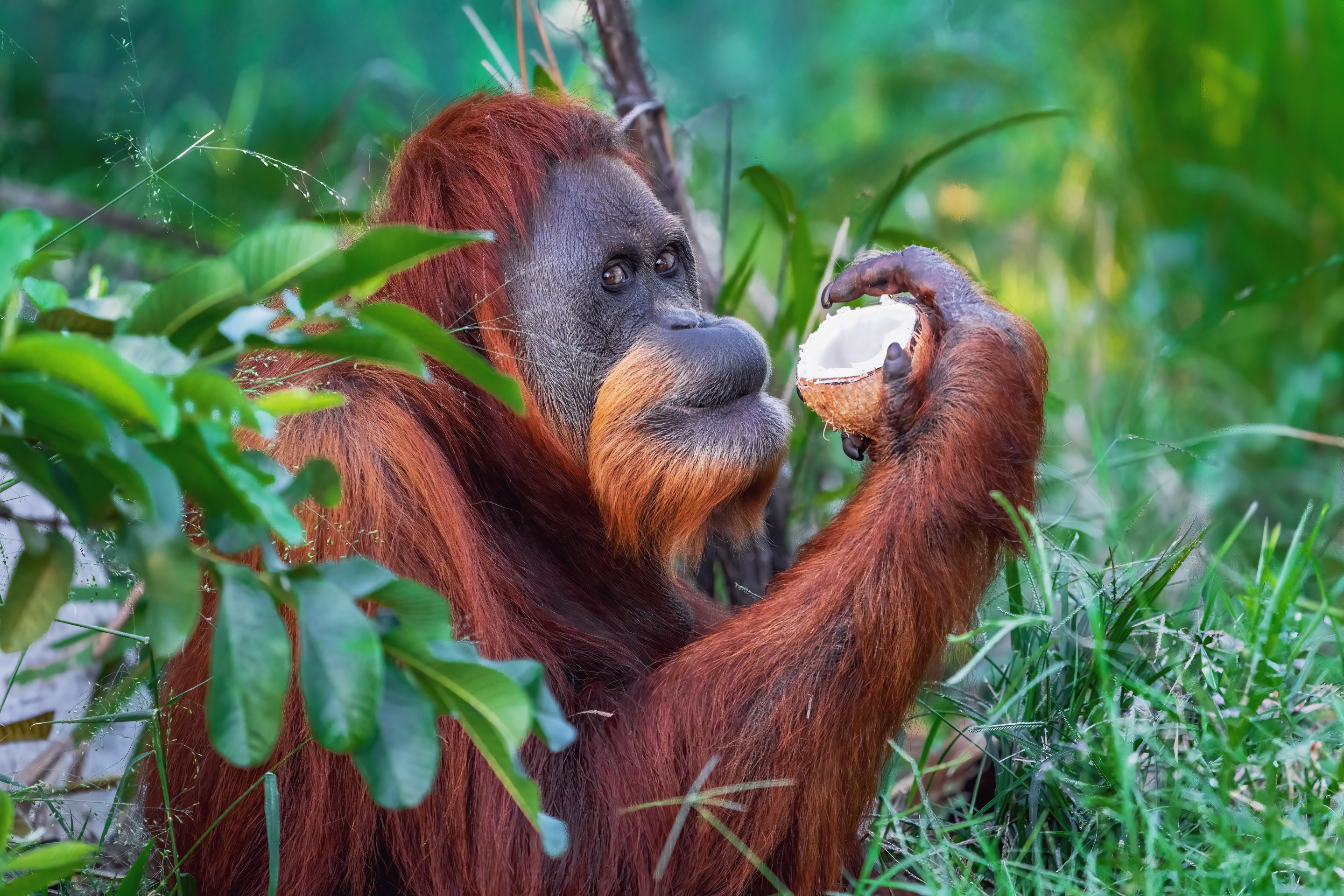
Humans have different modes of learning—from individual study to informal lessons in family groups to formal education at school. So, why shouldn’t other great apes? A new study published today in Science explores how individual and social learning play out in orangutans.
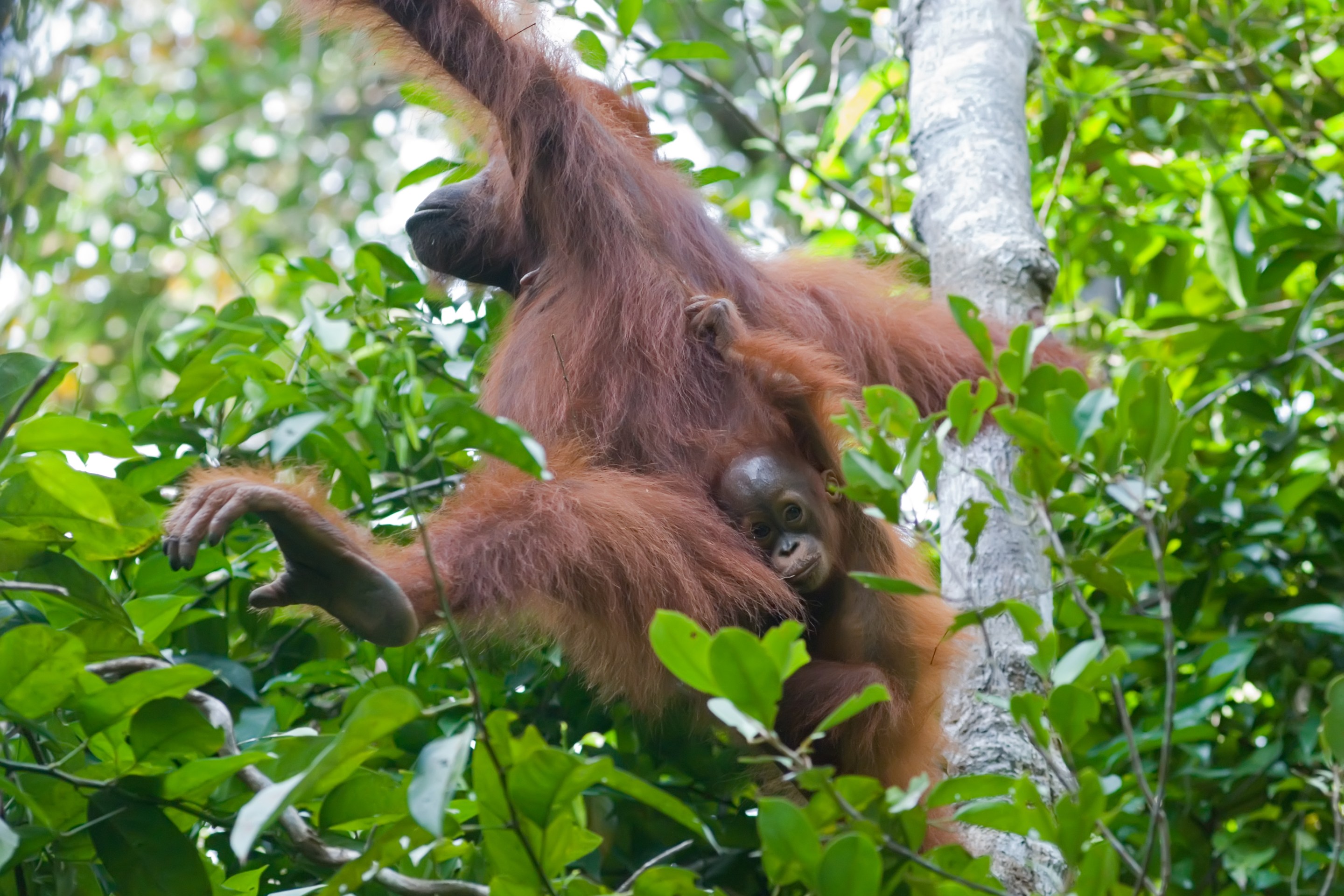
Researchers from Germany, Indonesia, Switzerland, and the U.K. analyzed observation data collected over 12 years at the Suaq Balimbing research area in Sumatra, Indonesia, where wild orangutans (Pongo abelii) live in the peat forest. Diet is central to orangutan life, encompassing about 250 food types in the wild, which require distinct approaches to procure—for example, using sticks to extract ants from trees. During the lengthy parenting period of eight years, immature orangutans learn what and how to eat from their mothers.
Read more: “Orangutans Seek Out Medicinal Plants”
From more than 1,700 hours of observations, the researchers found about 6,700 instances of learning about food by 21 immature orangutans. They included both individual “exploration” (when young orangutans manipulated objects such as seeds in attempts to feed) and social “peering” (when they watched other orangutans in a sustained, focused way).
Social learning was more common than individual learning by a factor of about five. However, immature orangutans differed markedly in their abilities to learn socially versus individually, and the most adept learners ended up with the most diverse diets once they became independent. The study authors hypothesize that genes, early development, parental care, and access to social information may contribute to the learning styles of young orangutans.
“These findings about the extent of cultural and individual learning during these apes’ long childhoods suggest that this pattern, that we clearly share with them, has origins all the way back to our common ancestors, many millions of years ago.” explained University of St. Andrews cognitive scientist Andrew Whiten in a press release.
That said, they found the distinction between individual learning and social learning to be blurred. Watching often inspired a bout of individual exploration, as if the sight of another orangutan preparing and eating food was a stimulus to try it themselves. Coining a new term of “socially initiated learning,” the paper authors noted that “peering exerts an influence on exploration for as long as around 2.5 hours.” Especially in cases where individual learning was low, social learning helped get that orangutan up to speed on diet.
All of which makes the most productive orangutan meals a family (and friends) affair. 
Enjoying Nautilus? Subscribe to our free newsletter.
Lead Image: diegograndi / Adobe Stock