The Neanderthals of my imagination are usually framed by frozen backdrops. Perhaps wooly creatures—rhinoceros or mammoths—amble past stocky hunters, festooned in the pelts of vanquished Ice Age quarry.
Scientists chalk up several Neanderthal features—such as short limbs and stockier builds—to the species’ adaptation to the colder climates that prevailed during their time on Earth. One such feature, Neanderthals’ broad nose, was thought to lead to similarly ample nasal sinuses, containing bones specialized to warm and humidify inhaled air in their chilly, dry surroundings.
But researchers studying a remarkably well-preserved Neanderthal skeleton found in a cave in Italy have discovered that this individual’s nasal architecture was not terribly different from that of modern humans. This could mean that Neanderthals were not as cold-specialized as previously thought, though the nose bones of one individual do not necessarily tell the tale of the entire species.
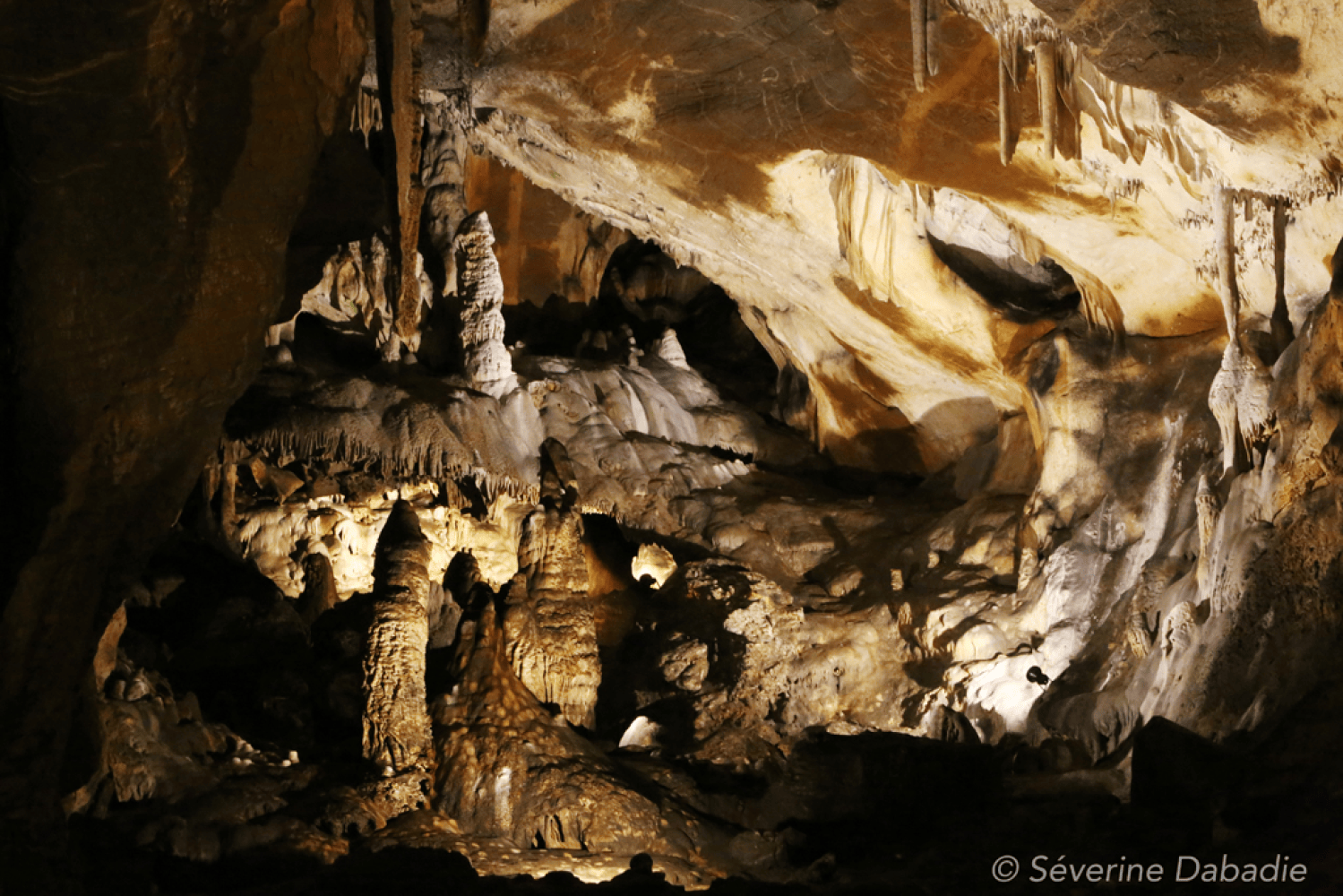
The Neanderthal skull studied by scientists lies in a cave near Altamura in Italy. The skeleton, which researchers discovered in 1993, is covered in deposits of a mineral called calcite, which has the effect of preserving the bones. This intricate preservation allowed the team of European scientists to investigate the internal nasal bones of the Neanderthal skull in unprecedented detail.
Read more: “How Neanderthals Kept Our Ancestors Warm”
The researchers threaded endoscopes into the skull—which remains in the cave to avoid damaging it—but did not find two delicate structures in the nasal bones that were proposed to occur in Neanderthals. The absence of those features changes the going theory about Neanderthal respiratory adaptation to cold climates. The nasal cavities, at least those of the Altamura Neanderthal, look more similar to those of low-latitude modern humans, which don’t contain adaptations that can help weather climate extremes, than to those of modern people living in Arctic environments.
“The nasal opening exhibits a structure that is antithetical to that of contemporary human populations from high latitudes, displaying, instead, a shape associated to low-stress climatic conditions,” the authors wrote in a PNAS paper reporting the findings.
But the Altamura skeleton, which is between 130,000 and 172,000 years old, is a relatively “early” Neanderthal. The species inhabited a wide swath of what would later be known as Europe, the Middle East, and Asia Minor from about 450,000 to 40,000 years ago. Their existence occurred in the Pleistocene epoch, marked by periods of glaciation and cold interspersed with brief warming trends. In short, a pretty harsh climate for the early human species to navigate.
The shapes of nasal bones and other traits could have varied significantly throughout the sweep of Neanderthal existence, caution the authors. And this the first and most complete examination of Neanderthal internal nasal architecture, conducted on only one individual.
With each new discovery, the face of one of our closest evolutionary cousins comes into clearer focus. 
Enjoying Nautilus? Subscribe to our free newsletter.
Lead image: Costantino Buzi / Wikimedia Commons