Imagine you’re suddenly transported to the wilderness, hundreds of miles from civilization, with nothing other than what you’re carrying with you right now. The way you view your personal effects would likely change drastically. With no cell towers or electricity, your cherished phone is useless, the money in your wallet is only good for fire tinder, but the drawstring on your sweatpants could be used as a fishing line, or maybe a snare to catch dinner.
The value we place on things is contingent on our circumstances and subject to change as they do. Anthropologists from the University of Mississippi and the University of Alabama recently demonstrated this in a study of stone spear tips belonging to two groups of hunter-gatherers who settled in the Tennessee River Valley during different time periods.
Read more: “The Emergence of a Deadly Hunting Technology in Prehistoric North America”
The Clovis people were the first humans to settle in the region around 13,200 years ago. As strangers in a strange land, it’s likely they were more uncertain where to source the sedimentary rock they needed to fashion weapons. That’s probably why their stone spear tips showed signs of resharpening, the researchers say.
“We hang on to stuff today, but when we’re talking about mobile hunter-gatherers, they had a different understanding and worldview when it came to personal possessions,” study co-author Jesse Tune of the University of Mississippi said in a statement. “Spear points were designed to be disposable objects, and that makes what the Clovis were doing interesting.”
Several hundred years later, the Cumberland people settled in the same area and their stone spear points told a different story. Instead of resharpened tips, the researchers found usable spear points that had been discarded.
So what made the Cumberland people relatively more wasteful? According to the team, they likely learned where the rock came from their Clovis forebears, which made carrying spear points around less valuable.
“When you think about a people who are moving around a lot, understand that they didn’t have any pack animals,” study co-author Shane Miller of the University of Alabama explained. “You really don’t want to be carrying around a bag of rocks, and so you’re going to be judicious about balancing what you need versus what you can carry.”
Fast forward several thousand years and as we’ve pushed the frontiers of exploration, we’ve left disposable tools our ancient ancestors couldn’t dream of in places they never imagined visiting. In fact, there are six high-tech landers gathering moon dust on the lunar surface right now.
It’s something that’s not lost on the researchers. “There really is no difference between Ice Age hunter-gatherers and the people sending missions and rovers to Mars,” Tune said. “We’re moving into an area, deciding what to take with us, learning the resources and slowly expanding. It’s the exact same process.” 
Enjoying Nautilus? Subscribe to our free newsletter.
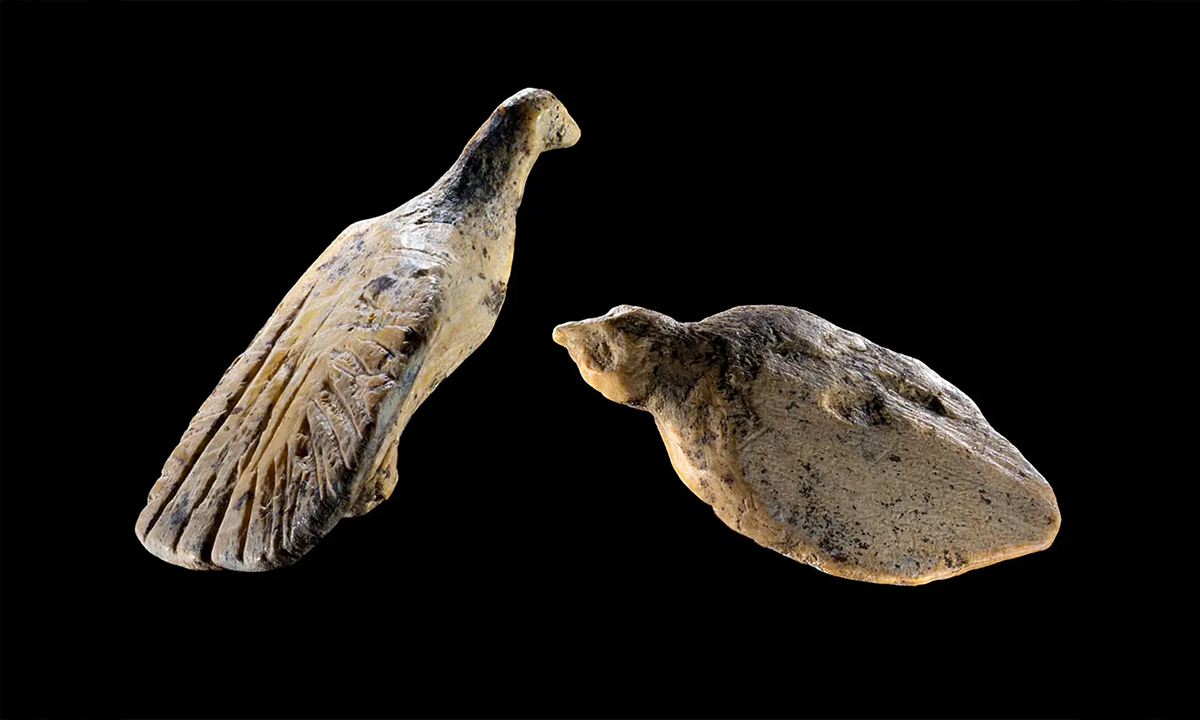
Lead Image: Kevin Bain/Ole Miss Digital Imaging Services