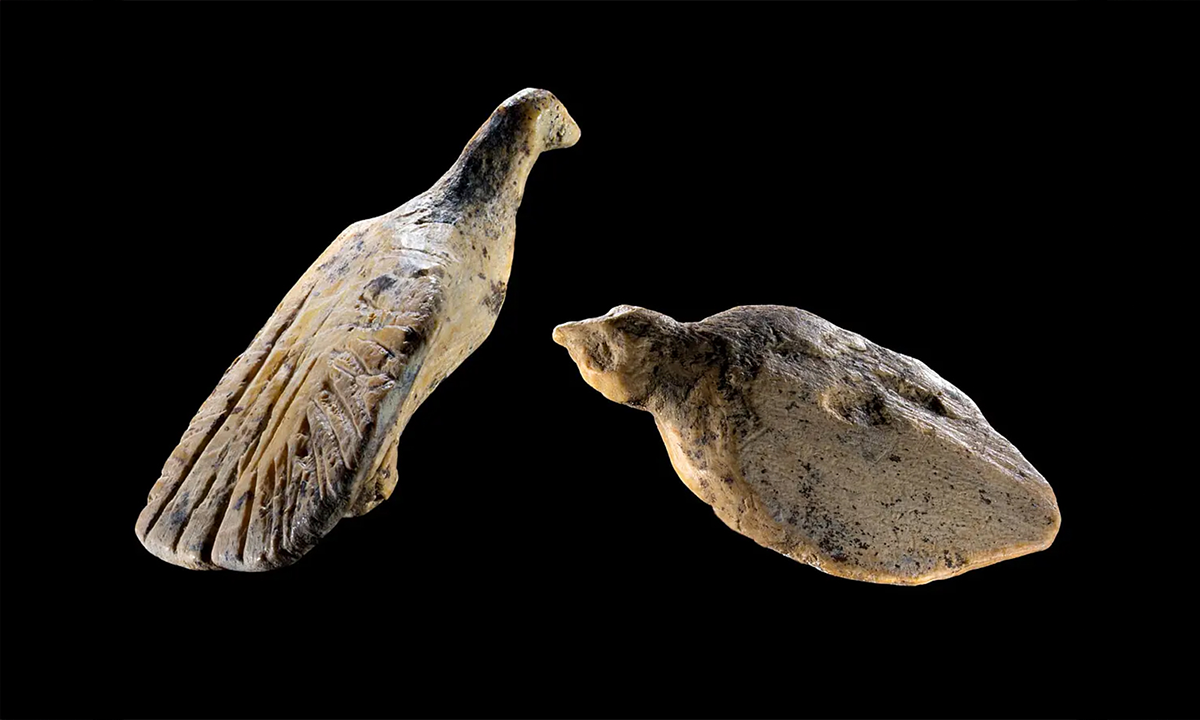
Archaeologists have discovered two remarkable mammoth ivory carvings in southwestern Germany: intricate miniatures that are about the size of your thumbnail and date back 40,000 years.
One depicts a resting bird, possibly brooding over its eggs, with a clear shape and a carefully carved head, beak, and eyes. The other seems to have its wings partly outstretched, with a distinctive beak and feather markings visible.
These fine figurines were found at the well-known Hohle Fels Cave, part of the UNESCO World Heritage area of the Swabian Jura. The layer of sediment they were discovered in places the carvings to when the first modern humans would’ve been arriving in the Upper Danube region during the most recent Ice Age.
Read more: “Early Humans Made Animated Art”
“The figurines demonstrate that the earliest artists were skilled ivory-carvers, who could depict delicate motifs in miniature form,” director of excavations Nicholas Conard, from the University of Tübingen, said in a statement. “The carvings are not highly stylized but instead include many specific and unique features. Here the artist has recorded detailed observations that allow us to consider which kind of bird is represented and what the bird could be doing.”
Given that the carvings were close together, it’s possible that they were made by the same skilled hand. Measuring just 0.79 inches by 0.39 inches by 0.2 inches, and weighing only a fraction of an ounce each, they’re the smallest carvings found at the site so far. Other figurines from the period are three or four times larger.
Bird figurines from this period in this region are very rare, vastly outnumbered by carvings of other animals such as mammoths, lions, bears, and horses. They might have been used as personal talismans or as symbols of identity for the person who carved them, but experts don’t know for sure.
Overall, excavations from the Hohle Fels Cave have turned up some of the oldest examples of prehistoric art and musical instruments ever discovered—and now two new pieces can be added to this impressive collection. 
Enjoying Nautilus? Subscribe to our free newsletter.
Lead image: Ralf Ehmann / University of Tübingen