If you’ve ever had the misfortune of staring down the gullet of a screaming goose, you know it contains the stuff of nightmares—a thick, barbed tongue surrounded by an array of fleshy, toothlike protrusions. Now, research published in The Innovation about a recently uncovered Archaeopteryx fossil shows that birds got their fascinating structures early in their evolution.
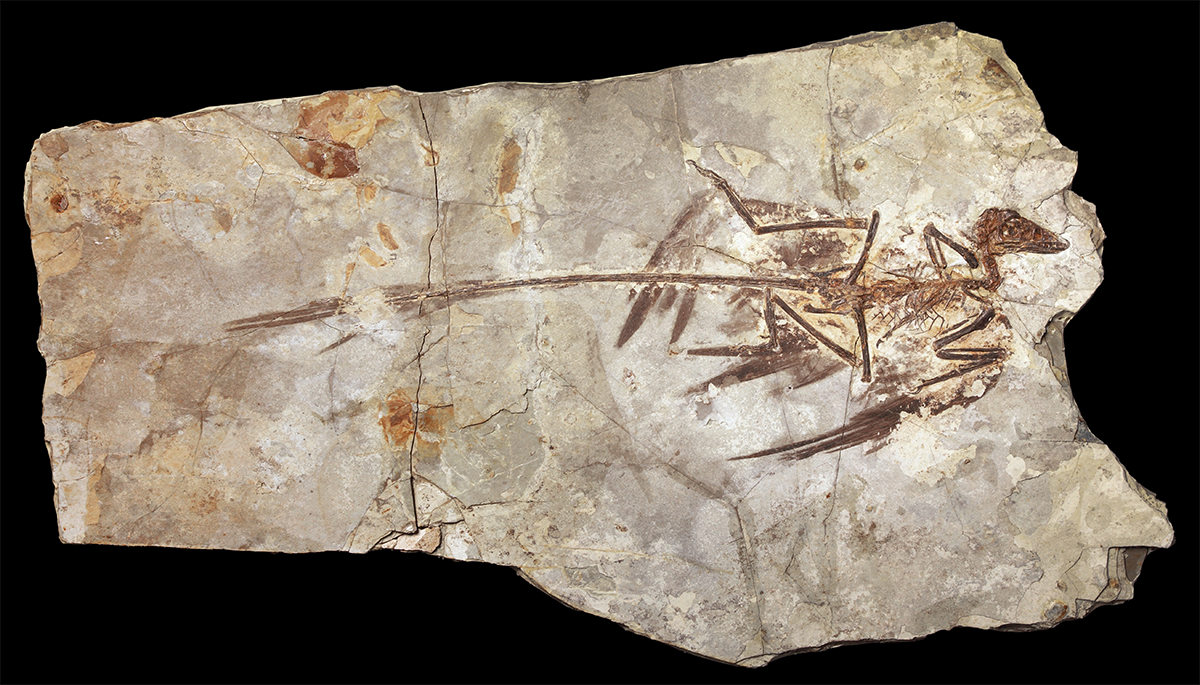
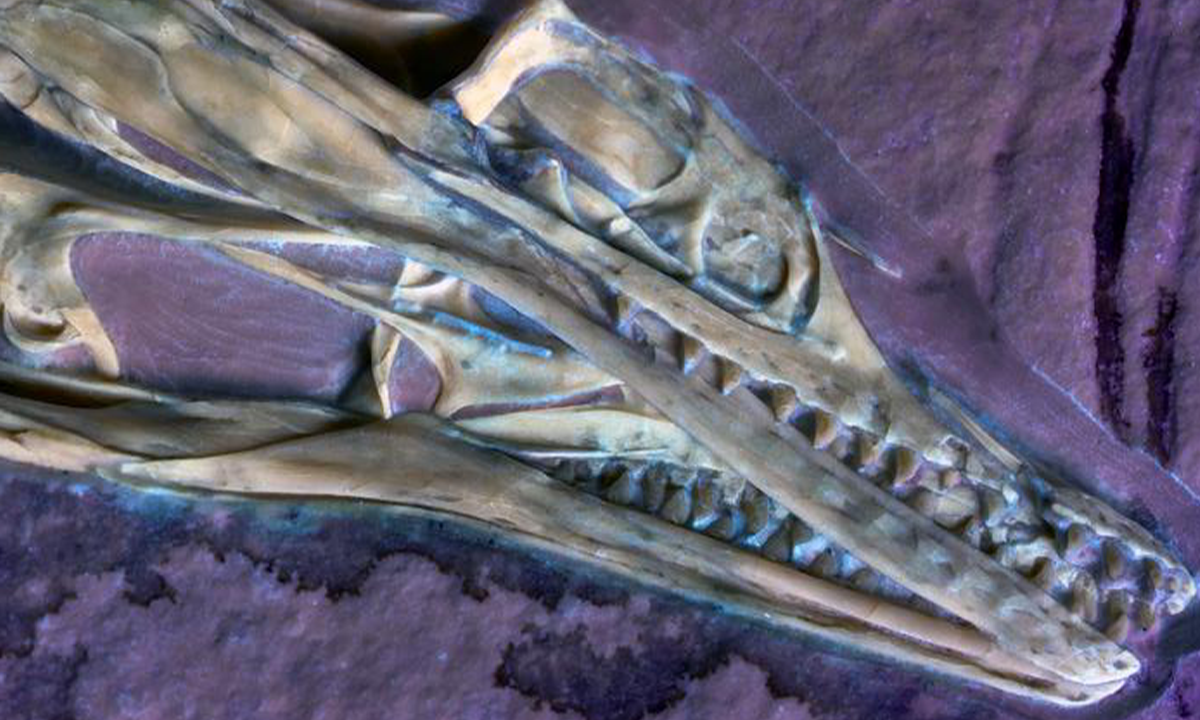
The Archaeopteryx fossil in question arrived at the Chicago Field Museum in 2022, and chief preparator Akiko Shinya began the painstaking process of chipping away limestone to reveal the full specimen. To ensure she didn’t remove any important parts of the fossil, Shinya used an ultraviolet light, which causes fossilized soft tissues to glow. That’s when she noticed something strange.
“I remember them calling me over and saying, ‘Jingmai, we found something strange, come look at it,’” study author Jingmai O’Connor said in a statement. “They showed me these tiny, glowing dots, and I had no idea what we were looking at.”
After consulting texts on bird anatomy, O’Connor realized what they were: oral papillae. “Imagine if the flesh on the roof of your mouth just had rows and rows of tiny, fleshy cones—that’s what birds have,” said O’Connor. These structures facilitate feeding by guiding food down the bird’s throat while steering it clear of the windpipe.
Read more: “Conjuring Imaginary Creatures”
But that’s not all, the team also discovered a tiny sliver of bone in the tongue. “This teeny-tiny bone is one of the smallest bones in the body, and it indicates that Archaeopteryx had a highly mobile tongue, like many birds today,” O’Connor added.
A CT scan of the head revealed even more secrets—little tunnels in the beak, indicating spaces where nerves would have been. Taken together, the articulated tongue, oral papillae, and enervated, sensitive bill all point to an overall adaptive push toward finding and eating food, and O’Connor believes she knows why: While flight confers enormous benefits, it doesn’t come without costs, and the biggest one is the demand for more energy.
“These discoveries show this really clear shift in how dinosaurs were feeding when they started flying and had to meet the enormous energetic demands of flight,” O’Connor explained. “Birds have a super-efficient digestive system—everything is modified to maximize the efficiency of eating and the calories that they can extract from food. And the digestive system starts with the mouth.”
While all birds are dinosaurs, not all dinosaurs are birds, and these structures can help researchers draw a clearer line between the two.
“For a long time, there have been very few things that we could say really characterize the transition from terrestrial dinosaurs to flying bird dinosaurs,” O’Connor said. “These weird little features in the mouth of Archaeopteryx, that are also found in living birds, are giving us new criteria that we can use to tell whether a dinosaur fossil is a bird or not.” 
Enjoying Nautilus? Subscribe to our free newsletter.
Lead image: Photographer Delaney Drummond, (c) Field Museum