
According to ancient Egyptian beliefs, every night the sun descended to the underworld ferried on a boat shepherded by the sun god Ra. During his nightly voyage, Ra was attacked by the great serpent Apophis, the embodiment of chaos and darkness. Though these two were locked in an eternal struggle, Ra managed to put up Harlem Globetrotters numbers against his age-old nemesis, emerging victorious against the serpent each morning.
Of course, he had a little help. As Ra journeyed through the underworld, Egyptian priests working topside performed a ritual designed to curse Apophis by stabbing, burning, and spitting on graphical and wax effigies of the serpent. Until recently, most of what was known about the ritual came from a single copy in a spellbook dated to the fourth century BCE. But according to a new study published in the Journal of the Egyptian Language and Antiquities the Apophis curse ritual is older and more pervasive than previously thought.
Read more: “This Is What an Egyptian Mummy Smells Like”
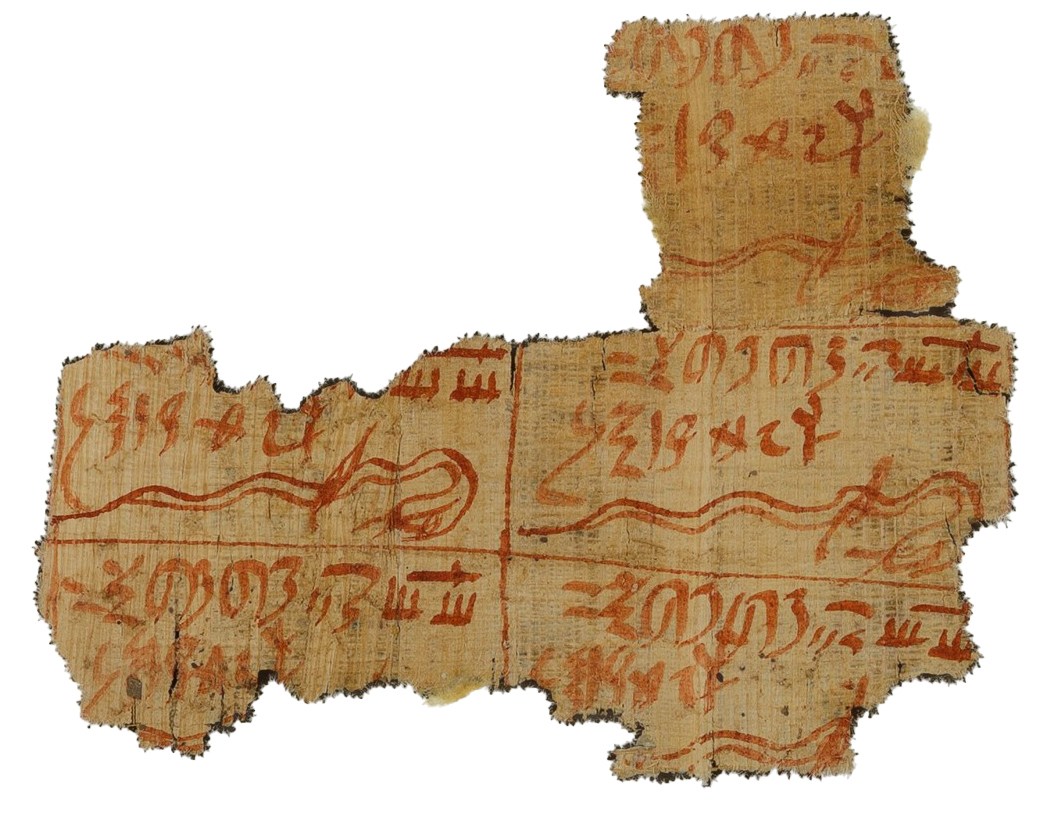
Fredrik Hagen from the University of Copenhagen and a team of Egyptologists analyzed 40 fragments of papyrus excavated from a Temple garbage heap in the ancient city of Thebes. No bigger than postage stamps, these fragments appear to be mass-produced copies of the illustrations and scripts used in the ritual. Dated to around 3,400 years old, the fragments push back the earliest evidence of the ritual by a millennium.
“These tiny fragments give us a new indication of how widespread curse rituals were in ancient Egypt,” Hagen explained in a statement. “Our finds and the subsequent analysis of the ritual confirms that it was a regular part of temple life, but a quick look at references to the ritual in other contexts also show that it was widely used outside temples, and that it was a common feature of Egyptian culture more broadly.”
In fact, the curse ritual was used to target the pharaoh’s enemies, other people, and even more conceptual antagonists like poison and inclement weather. So why hasn’t more evidence of it surfaced? According to the team, destroying the papyrus was part of the process.
“The papyrus drawing was often completely destroyed during the ritual, when it was trampled on, spit on, pierced with a knife and ultimately burned,” Hagen said. “For the ritual to be successful, the materials had to be destroyed by fire, so we are extremely fortunate to have found any of them in a condition that still allows them to be recognized and studied.”
The ash heap of history turns out to be more interesting than previously thought. 
Enjoying Nautilus? Subscribe to our free newsletter.
Lead Image: Metropolitan Museum of Art