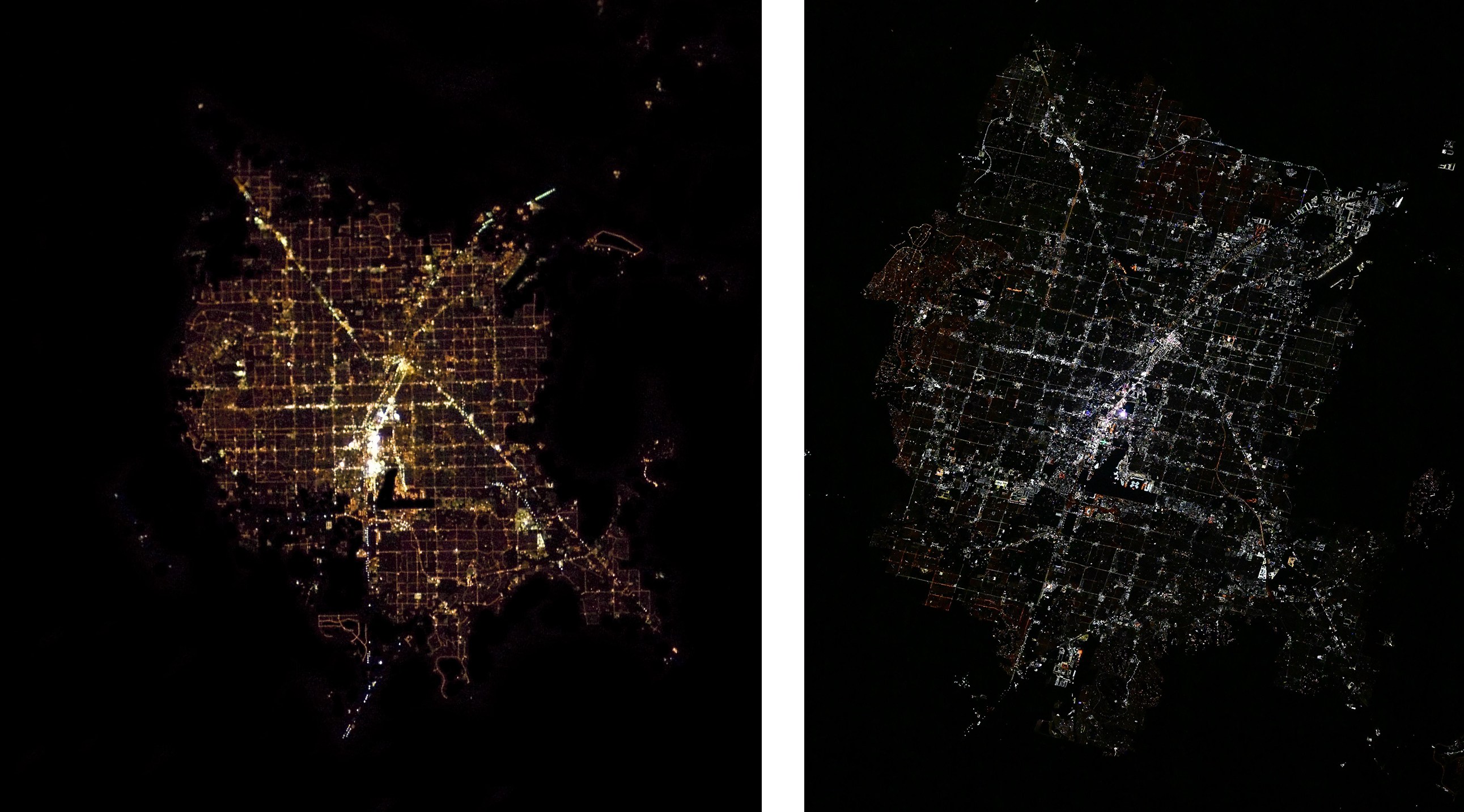
Cities are living, breathing things. While they may have tiny footprints compared to the continents they’re scattered across, these bustling population centers still belch out the bulk of global greenhouse gases. Monitoring these dense pockets of carbon emissions has proven to be difficult, but technology is catching up, and new research is charting a path forward.
To get a more complete picture of urban carbon emission monitoring, Gan Zhang of the Guangzhou Institute of Geochemistry in China led a team that analyzed data from 10 major long-term monitoring networks and more than 20 cities. Their comprehensive review, recently published in Carbon Research, reveals a patchy but growing network, with some striking divides.
The team found that richer areas like North America, Western Europe, and East Asia have more readily adopted smart-monitoring technology, while Africa, South America, and South Asia lag behind. China, the researchers say, could provide a blueprint for emerging economies seeking to level up their carbon monitoring, as the country has made huge strides in a short period of time.
Read more: “Cities Obey the Laws of Living Things”
The researchers also found that shifting centers of industry necessitate a carbon-monitoring network that’s more flexible. As factories move from city centers to the suburbs, carbon-monitoring networks need to adapt to capture changing emissions patterns. Another challenge the review identified was distinguishing between carbon emitted from natural processes and anthropogenic carbon emissions from fossil fuels. More advanced networks, the researchers say, can more easily make these distinctions.
Finally, the researchers stress that cities should take different approaches to carbon monitoring that take into account their unique geographical contexts. A coastal city and a desert city, for example, will require vastly different carbon sensor setups.
“We cannot manage what we do not measure,” Zhang said in a statement. “By integrating top-down atmospheric measurements with traditional bottom-up inventories, we can create a transparent, evidence-based framework for carbon neutrality. Our work at the Chinese Academy of Sciences is focused on refining these tools to meet the complex challenges of modern, sprawling urban landscapes.”
As cities grow and carbon-monitoring technology improves, the team hopes this new research will provide a roadmap for policymakers and scientists alike. 
Enjoying Nautilus? Subscribe to our free newsletter.
Lead image: mykhailo pavlenko / Shutterstock