What happens when rats are introduced to an island?
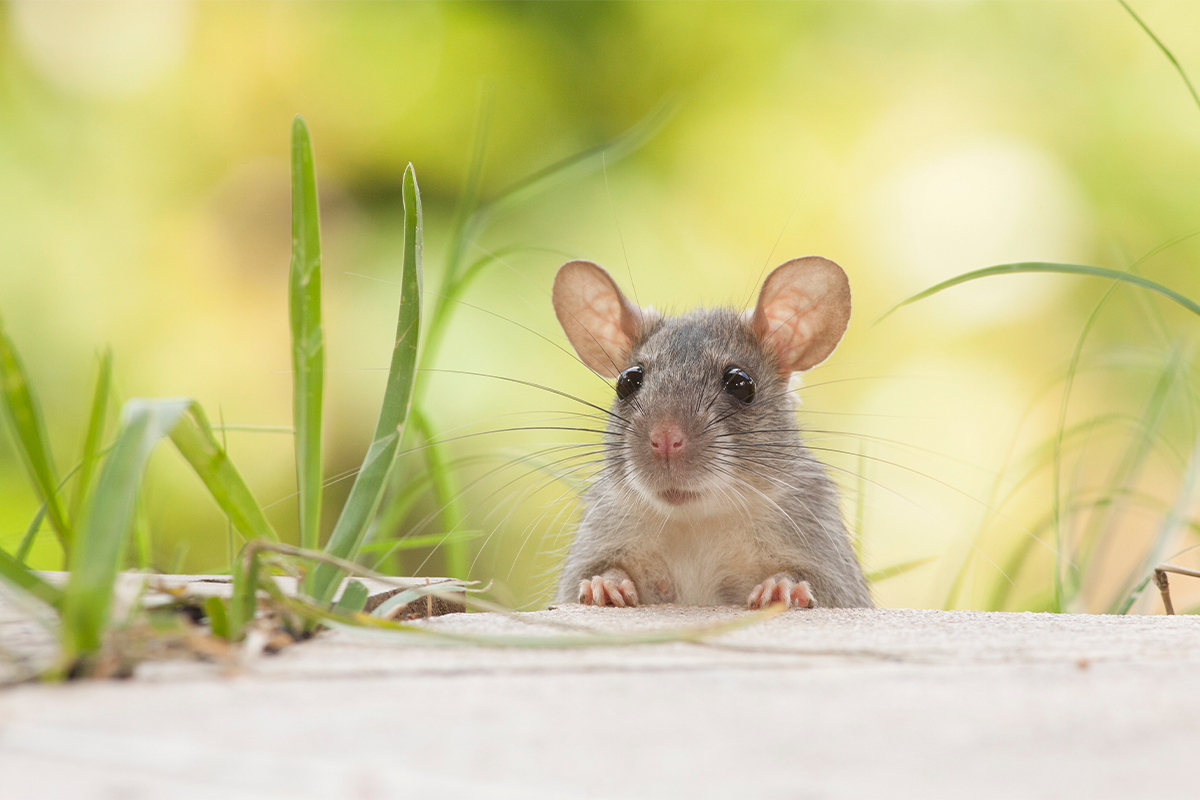
Based on many such introductions—to Hawai‘i, to Guam, and to hundreds of other islands—rats are ruinous. In addition to raiding human settlements, they decimate ecosystems by gobbling up native species such as ground-nesting birds, their eggs, and the seeds of native trees. Now, a new study in the journal Biological Invasions reports on the reverse trajectory: when rats and other rodents are removed from an island.
Australia’s Lord Howe Island was raided by introduced black rats (Rattus rattus) and house mice (Mus musculus) more than a century ago, as sailing ships contacted its shores. In 2019, an intensive eradication program succeeded in eliminating both rodent species, in part thanks to the island’s diminutive size of less than six square miles. By 2023, an island survey yielded no evidence of non-native rodents, providing the opportunity to assess ecosystem recovery.
Researchers based in Australia sampled invertebrates over two yearlong periods, one pre-rodent-eradication and one post-rodent-eradication. Using four survey methods, which included sampling on both the ground and on tree trunks, they collected a total of 24,209 invertebrates from 20 different forest sites. Invertebrate abundance was more than 50 percent larger in the sample after rodent removal (14,829 captures) than the sample prior (9,380 captures).
Read more: “From Rats to Riches”
The big invertebrates like wood lice and roaches that rodents like to eat were the most affected by the change. “We found dramatic increases in larger invertebrates, which is exactly what you’d expect if invasive rodents had been preying on them,” said study author Maxim Adams, a doctoral student at the University of Sydney, in a press release.
Invertebrates are low on the food chain, and lots of animals eat them, so the change in insect and other invertebrate fauna reverberated throughout the ecosystem. For example, following the eradication of rodents, the Lord Howe woodhen, a ground-dwelling bird that picks insects and worms off the forest floor, rebounded from its near-extinction status.
“Rodents didn’t just affect a few iconic species, they reshaped ecological relationships across the island,” said Nathan Lo, a study author and evolutionary biologist at the University of Sydney. “What we’re seeing now is evidence of an ecosystem beginning to reorganize itself after that pressure was removed.”
The researchers, however, emphasized that the recovery from rats will be a prolonged process of years, if not decades. While the overall abundance of animals is likely to continue to increase, not all species will benefit from the removal of rats, due to the complex relationships at play. “Ecosystems may settle into entirely new configurations,” Lo pointed out.
Oh, rats! 
Enjoying Nautilus? Subscribe to our free newsletter.
Lead image: raulbaena / Adobe Stock