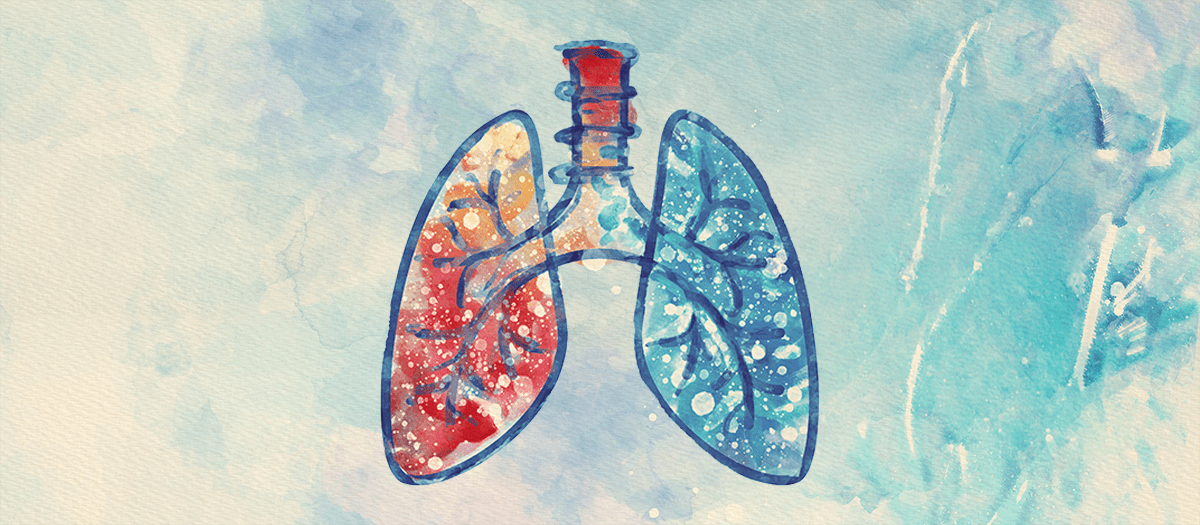
Asthma is more than just brief bouts of shortness of breath. Over time, it can actually change the structure of your lung tissue, stiffening and constricting airways while promoting abnormal blood vessel growth. This process was long thought to be caused by inflammation, but a 2011 study found that repeated constriction of the bronchia—like the kind that happens during an asthma attack—could cause this airway remodeling on its own.
This mechanical component of asthma progression poses some challenges for scientists who want to study it. Animal models don’t exactly mimic human organs, and you can’t go around slicing up asthma patients to take a peek at the process unfolding inside. So what’s the solution? Build your own lung.
Read more: “This Iconoclast Injected Life Into Artificial Body Parts”
Researchers led by Dan Dongeun Huh, formerly of the University of Pennsylvania, created a lung-on-a-chip using cultured cells lining the airways of both asthma and healthy patients, and published their process in Nature Biomedical Engineering. While organ-on-a-chip technology is relatively new, the researchers took it a step further. Applying lessons from soft robotics, they created a lung-on-a-chip that moves, mimicking the repeated contraction of asthma attacks.
Their novel approach uncovered that asthmatic lung tissue displayed the trademark stiffening and abnormal blood vessel formation of airway remodeling, but healthy tissue didn’t. “This is the first time that anyone has demonstrated the effect of a mechanical process on tissue remodeling—including both fibrosis and angiogenesis—in asthma patients,” Huh explained in a statement.
To take a closer look at the molecular processes involved, the team surveyed the proteins being expressed. They found several protein expression patterns known to be involved in asthma progression, but others that were entirely new. According to the researchers, these new findings will allow them to identify both biomarkers for diagnosis and progression, as well as new targets for asthma therapies.
In the future, thanks to their movable lung-on-a-chip, asthma patients may be able to breathe a deep sigh of relief. 
Enjoying Nautilus? Subscribe to our free newsletter.
Lead image: pronoia / Adobe Stock