The International Space Station has been whizzing around Earth for almost three decades, and for half that time it didn’t have a lot of windows. That changed when the Cupola module was launched in 2010. This European Space Agency module included a dome featuring seven windows—bearing more than a passing resemblance to the cockpit of the Millennium Falcon.
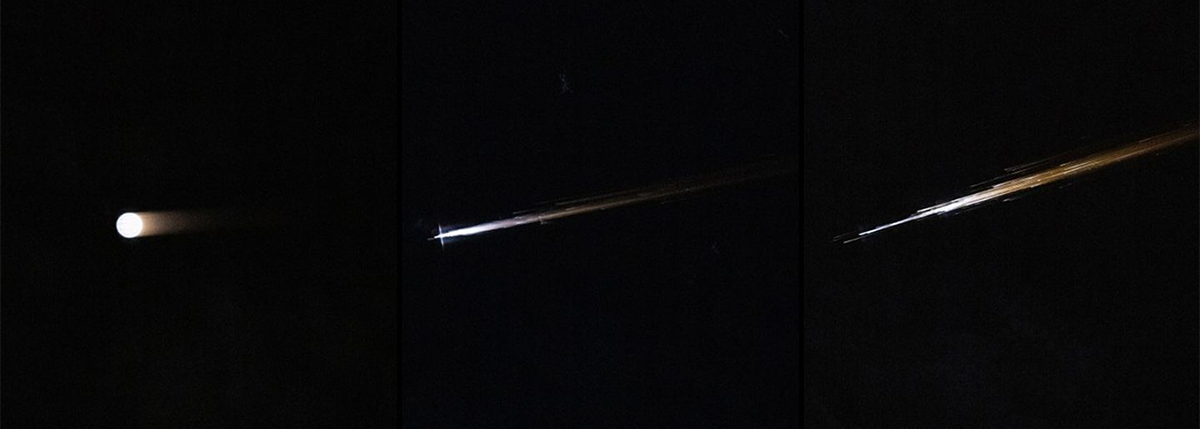
While the Cupola’s stated purpose was to provide ISS astronauts “situational awareness” during external operations, it’s become a popular spot for sojourning space explorers to take snapshots. As NASA astronaut Chris Williams was waiting for an unmanned supply craft to dock last month, he managed to catch this stunning fireball streaking through Earth’s upper atmosphere, where it broke apart.
“Just as we were passing over West Africa, I saw a bright object directly below us, streaking through the upper atmosphere,” Williams wrote on Instagram. “I saw its tail grow and then split apart into a shower of smaller pieces.”
Per NASA, the fireball could have been the result of the disintegration of any number of things, including the rocket used to launch the supply craft or some other orbital debris (as Williams suspected). According to NASA’s estimates there were around 9,000 metric tons of junk floating around our planet in 2022. Roughly a third of the largest debris (bigger than four inches) came from the destruction of just three satellites: the intentional demolition of a Chinese weather satellite via missile in 2007 and an accidental collision between U.S. and Russian satellites in 2009.
Read more: “I Track Space Debris As It Crashes to Earth”
With more than 10,000 satellites in space—and a lot more uncontrolled debris—some scientists have become concerned about a potential orbital pileup. It does make for a pretty spectacular light show, though.
Per NASA, the fireball could have been the result of the disintegration of any number of things, including the rocket used to launch the supply craft or some other orbital debris (as Williams suspected). According to NASA’s estimates there were around 9,000 metric tons of junk floating around our planet in 2022. Roughly a third of the largest debris (bigger than four inches) came from the destruction of just three satellites: the intentional demolition of a Chinese weather satellite via missile in 2007 and an accidental collision between U.S. and Russian satellites in 2009.
With more than 10,000 satellites in space—and a lot more uncontrolled debris—some scientists have become concerned about a potential orbital pileup. It does make for a pretty spectacular light show, though. 
Enjoying Nautilus? Subscribe to our free newsletter.
Lead image: NASA