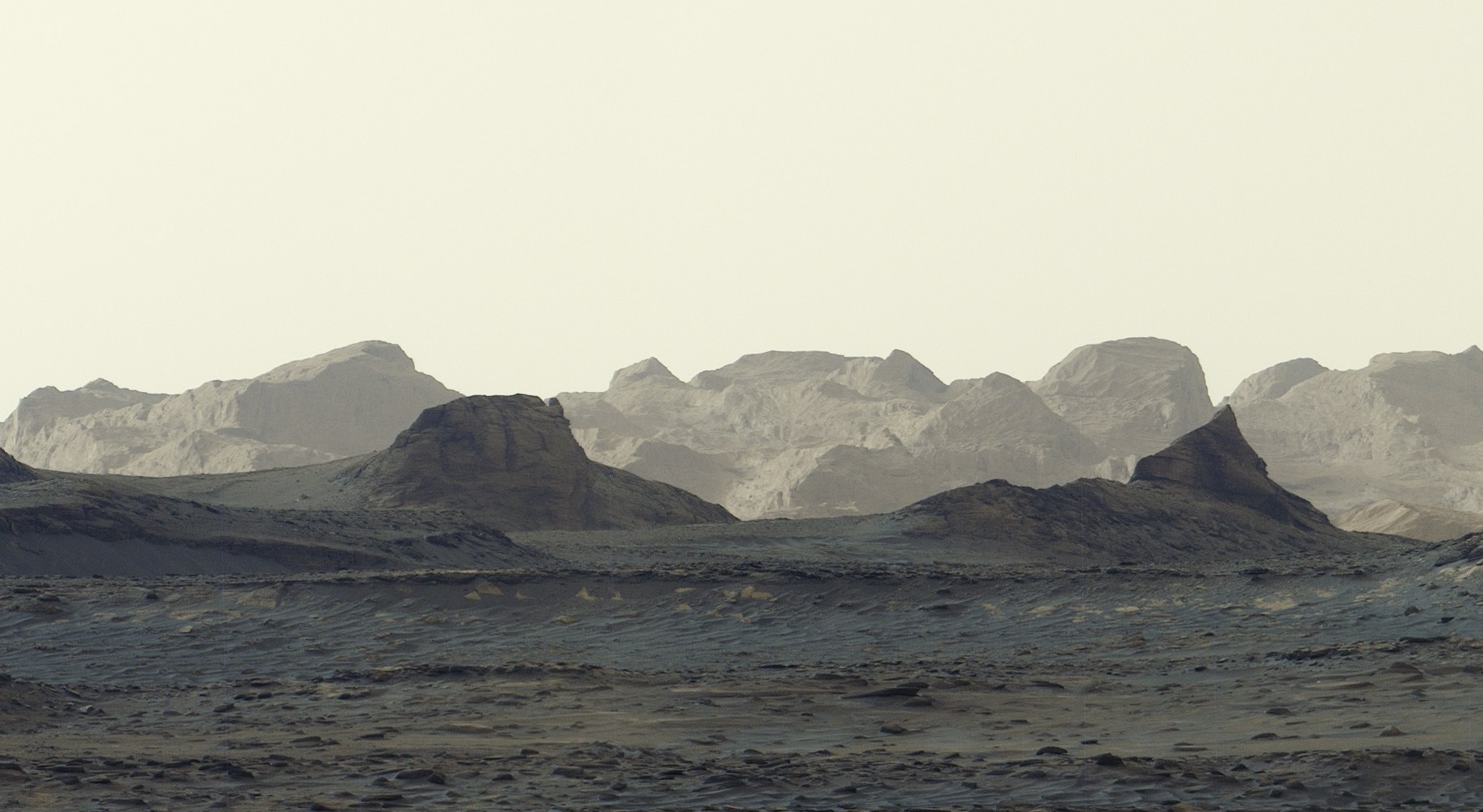
Fatty acids on Mars! Amino acids on asteroids! Complex carbon chains in interstellar clouds!
There have been plenty of exciting headlines about the discovery of organic molecules in space—but so far, no life. That’s because there are several non-living processes—like the fusion within stars—that are capable of producing these molecules. That raises an important question: If we do detect organic compounds that come from extraterrestrial life, how will we be able to tell? New research published in Nature Astronomy adds a powerful new tool to our toolkit.
According to planetary scientists from the University of California, Riverside, the key to telling apart biotic organic compounds from abiotic ones lies in their organization. “We’re showing that life does not only produce molecules,” study author Fabian Klenner explained in a statement. “Life also produces an organizational principle that we can see by applying statistics.”
Read more: “Will We Know Alien Life When We See It?”
The researchers applied a statistical framework used in ecology to describe different ecosystems by quantifying their richness (how many species live there) and evenness (how uniformly they’re spread). After examining 100 different datasets of organic compounds found in microbes, fossils, meteorites, and more, the researchers were able to determine the unique characteristics that set biotic compounds apart from abiotic ones.
Amino acids produced by life are more evenly distributed than abiotic amino acids, which tend to be shorter, simpler chains. Abiotic fatty acids, on the other hand, show a more even distribution than those that occur in living cells (and primarily make up cell membranes). Incredibly, this simple test is sensitive enough to detect a compound’s biological origins when the sample has been substantially degraded. The researchers were able to distinguish statistical signals of life from fossilized dinosaur eggshells.
Still, the researchers stress that this new test can’t be used to definitively “prove” the existence of extraterrestrial life on its own. Instead, it’s another arrow in our biosignature-detecting quiver. “Our approach is one more way to assess whether life may have been there,” Klenner said. “And if different techniques all point in the same direction, then that becomes very powerful.”
The next headline you read about finding organic compounds in space might include a few more exclamation points. 
Enjoying Nautilus? Subscribe to our free newsletter.
Lead image: NASA