In the mid 20th century, a dispute broke out between Britain and Iceland over fish. These were the so-called Cod Wars. Icelandic cod fisheries had been devastated by overfishing, so to protect them, the country kept expanding its maritime territorial limits. In the early stages of the conflict, the British simply refused to acknowledge the new limits, and warships were sent to protect British trawlers against Icelandic gunboats. When Icelanders came out to protest, the British Embassy in Iceland’s capital city, Reykjavik, mocked them, playing bagpipes and military music over a gramophone. In 1975, the conflict turned violent. British and Icelandic ships rammed each other, and a coast guard ship fired live ammunition back at least once. Iceland eventually threatened to close a United States military base and withdraw from the North Atlantic Treaty Organization. In the end, Iceland won.
The Cod Wars are just one instance in which nature itself was the source of an international dispute that nearly led to armed conflict. But as ecological disruptions become increasingly common around the planet—whether from natural disasters, biodiversity loss, or environmental crime—they threaten the ability of nations to protect their citizens, institutions, and interests against foreign and domestic threats. A trio of researchers recently published an assessment of 27 case studies where disrupted ecosystems intensified societal unrest and political instability, threatening national security, in the journal Nature-based Solutions. They argue that nature needs to play a larger role in national security planning.
I spoke with co-authors Bradley J. Cardinale, professor at Penn State College of Agricultural Sciences, and Rod Schoonover, ecological security expert and former director for the U.S. National Intelligence Council, about the relationship between environmental crime and the drug trade, the dangers of decoupling politics from science, and what gives them hope.
You write that the ecological foundations of national security have been underappreciated. Why is that?
Rod Schoonover: Historically, especially in the post-Cold War period, security institutions were built around visible adversaries, things like armies, states, territories, and cyber actors. Ecological disruption is harder because it looks and often manifests itself as actor-less. No one really declares war against the elements that degrade soil fertility or an emergent coronavirus. But the effects can still undermine the state’s ability to safeguard water, food, safety, and security. And so, these are some of the hardest risks for traditional security systems to deal with. Yet, they’re among the most emergent and pressing security risks of the coming decades.
Bradley J. Cardinale: Rod is coming at this from the national security perspective, and I come at this from the perspective of an ecologist. We’ve known for decades that nature provides people with goods and services, but ecologists rarely think about what happens when we lose those goods and services. Does it actually cause conflict—and in this case, conflict among nations, or national security threats?
Read more: “The Queer Ecology of the Colombian Civil War”
How did you come to realize that ecological disruption was one of the most pressing security concerns?
Cardinale: I hadn’t thought about it much until Rod invited myself and a few others to Washington, D.C. to talk at a National Intelligence Council meeting, a workshop to basically forecast what might be the greatest ecological threats. The people we talked to were leaders in the military and people who represented our intelligence agencies. They’re well aware that climate change, the physical process of warming, can create droughts and famine that cause people to spill across borders. It can cause military equipment to not work properly. They understand that climate change poses a threat. But Rod’s working group was basically asking, are there biological changes in nature that can have the same implications? It was the first time I was really forced to think about it. Rod, what was the genesis of it for you?
Schoonover: I was working in the intelligence community, and my job was looking at how security is affected by planetary changes. I began reading primary journal articles in the ecological sciences to get a real sense of what was happening. It felt to me, from the outside, that the tone in these articles, over several years, was getting increasingly dire. This was mirrored by the United Nations Intergovernmental Panel on Climate Change, which was calling for transformative change—not just in climate, but in ecosystem services and biodiversity. And we’ve been doing a lot of good work. We talk about climate as being accepted by the security community, even if it isn’t where it needs to be. But it seemed like we really needed to articulate nature’s contribution to security in a way that security professionals can understand.
I noticed years ago that a lot of generals, admirals, and secretaries of defense probably know that biodiversity loss, for example, is bad, but do they know how it’s in their remit? That’s the work that I’ve been trying to do. You can’t just assume that this pandemic, or this infectious disease outbreak, or this pollinator decline is outside of your role. It isn’t just an environmental issue. One of the reasons why I thought it was good to have this latest effort, with Bradley, in the peer-reviewed literature, is so that other ecologists could build on it.
In your new paper, you explore five major domains where the health of the natural environment intersects with national security: food security, water security, health security, natural disasters, and environmental crime. Are any of these categories special standouts right now in 2026, or are they all equally worrisome?
Schoonover: In the face of an impending Godzilla El Niño, it’s hard not to think about food security as a really salient one. But my background is in complex systems, so I think about the multiplicity of stresses. We can piece it out by sectors for communication purposes, but people are feeling them typically all at once. It’s also where you live. It’s very context dependent.
Cardinale: If we were to build on Rod’s point about local impacts, we could focus on the U.S. and take the priorities of the current administration. This administration is very heavily focused on spillover of immigrants across the border, with the narrative, not always correct, that they’re criminals. It’s also targeted drug cartels and the alleged boats of drug transporters. But it’s relevant to note that a lot of the drug cartel funding comes from wildlife crime and illegal logging. There are many examples of how drug cartels in Mexico are actually funded by ecological disruptions.
In other words, some of the problems that our current administration is really focused on, rightly or wrongly, are actually ecological problems. It’s not just insurgencies that we see over in Africa that are using wildlife poaching and the horns of rhinoceros and elephants to fund crime. It’s here in our backyard, potentially affecting our own people in the U.S. as well.
Are any nations doing a good job of accounting for biological impacts beyond climate change in their national intelligence and security plans?
Cardinale: The entire European Union is currently in an exercise to say, “Yeah, we’ve got to start adding these threats to our national security plans because they’re going to start affecting us, impacting our economic security, impacting spillage across borders, and causing local conflicts.” The United States is one of the few that isn’t. Rod, is that a fair assessment? Like, I think we've just got an administration that says environmental everything isn't worth considering.
Schoonover: Certain elements of the U.S. government are pragmatic no matter what—until you make them complete ideologues. For example, some people in the current administration still focus on fisheries issues and wildlife issues. But these issues don’t show up, for example, in the national security strategy. And that suggests we’re pointing in the wrong direction.
The scientific community is articulating some very big changes, but is the national security strategy of the United States dealing with this? Sure, they’re paying attention to AI, and other advances, but what attention is being paid to earth system science? The implications for humanity and national security and global security at large are very clear, but this country’s national security strategy—which most scientists haven’t read—looks bereft of any of it. It lives on a different planet than the one that we currently live on.
Read more: “Trump’s War on Science Continues”
What implications does the Trump administration’s firing of the National Science Board have for the country’s ability to take some of these risks seriously in the near term?
Schoonover: There’s a long history in the United States where national security and scientific integrity go hand-in-hand. They’ve been wrapped around each other for over a hundred years. That’s one of the reasons why we have the prosperity that can underwrite our security resources, thinking, and architecture. When we decouple from the scientific enterprise and weaken it, I firmly believe that it weakens our own national security writ large. We could spend an hour going through each of these anti-science things that have happened over the last year or two. It’s not just this latest thing.
Cardinale: Gutting the National Science Foundation of its independence is basically just going to undermine science. And if you undermine science, and you don’t use science to guide your decisions in the U.S., that’s going to weaken your decision making. You’re going to be subject to whims that aren’t based on facts or at least scientific evidence. And so, that’s going to be true for things like national security as much as it is for anything else. The National Science Foundation funds everything except for biomedical research: all physics, all chemistry, all biology, everything in the STEM topics. If you don’t have independent science at the National Science Foundation, you won’t have a nation making decisions that are based on that evidence.
Schoonover: It’s unsustainable. Decisions that are ideological, that go too far down this pathway, will have severe consequences.
Cardinale: And the consequences won’t be confined to the four years the current administration is in office. Not one of the graduate students and postdocs from my lab, not a single one, is staying in the United States to get a job in this current environment. My students are going to China. They’re saying, “I’m going to go to another country. I’ll go to Canada if I can. I’ll go to Europe.” China is pouring money into science because they want to become the world leader now that the United States is giving it up. And that’s not just my lab. Everybody I talk to—students who are graduating with Ph.D.s or postdocs who have Ph.D.s and are looking for jobs—isn’t staying in the United States because there’s no support for science right now. There’s no money for research, there are no jobs. But some countries are like, “This is our opportunity to become the global leader.” And China is one of them.
Schoonover: Yes, many of these changes are irreversible in the near term.
Historically, when governments have decoupled from science, what are the consequences?
Schoonover: From the security standpoint, when you weaken science, governments become worse at detecting threats before they become emergencies. We have a loss of competence. We lose people, data, models, monitoring networks, and institutional memory. We have a loss of trust from citizens. Everything costs more because we don’t have good decision making. And then everything’s more brittle. The possibility of something bad happening from past poor decision making goes up. For readers who have read anything about polycrisis, you know that when different stresses facing the planet become more intertwined, the last thing you would want to do is wean yourself off science. It’s the worst thing you could possibly do. But that’s the environment that we’re headed straight into.
Cardinale: Yes, the benefit of science is predictive and forewarning. And one thing I’ve noticed is that my weather app on my phone really stinks lately. It’s actually raining outside, but my weather app says it’s supposed to be sunny. Weather predictions, particularly in the U.S., have just been horrible. That’s because the science used to develop them is generated by the National Oceanographic and Atmospheric Association, NOAA, and NOAA has had enormous firings and layoffs in its weather service. As a result, its predictive models stink. But European and Australian models for the weather are doing great. The same is true for these ecological disruptions. We’re pretty good at predicting locust outbreaks. We’re pretty good at predicting certain kinds of disease outbreaks. We can give people forewarning for some of these things—at least now. But as soon as we start to ignore the science, those forewarnings and those forecasts are going away. Just like we’re losing good weather predictions.
Is there anything that ordinary citizens can do to protect themselves or make change happen aside from voting for pro-science candidates?
Cardinale: The scale of this particular issue is sufficiently large that it takes government involvement to correct it. Environmental problems in general, sure. There are things you can do as a consumer with individual choices and the decisions you make so that local impacts collectively can have bigger and bigger impacts. But when it comes to national security, that’s a governmental function. And unless you vote in representatives of your government who take this stuff seriously, there’s very little you can do as an individual. That's my opinion. Rod, do you have a different opinion?
Schoonover: There are places of agency in a lot of different stages of the causal chain, but it’s also not fair to ask citizens to solve systemic ecological risk through some kind of lifestyle choice.
One of the reasons we’re delighted for you to interview us is that we want to spread this story around. I firmly believe that security, including national security, isn’t what generals and admirals think. It’s the citizens in a democracy who get to help decide what constitutes national security. And we’re making an argument that the traditional way of thinking about security is insufficient. We need to build things like the ecological foundations of security into how our government operates.
Security isn’t some tangential thing. We all deal with domestic security, and, in some ways, community and human security. But national security is the most important thing that a government does. It’s the thing that wins all arguments. It’s the reason for the government to exist in many ways. If it somehow doesn’t create systems that protect human beings and protect our health or livelihoods, then we’ve lost our way. I could draw a diagram here of the Earth and a little circle of the biosphere in it. And inside of that biosphere lies all of security. It’s not like the biosphere is an add-on.
Cardinale: The idea of national security has also evolved through time. If you go back 50 to 100 years, the concept of national security was military. It was protecting your borders from invasions and from other countries. It wasn’t until the 1990s where we said, protection from cyberattacks, that’s a part of national security. Organized crime, that’s a part of national security now. Now we’re saying, “It’s time for the concept to evolve again, where hunger, disease, natural disasters, and protecting people against these things is part of national security as well.”
Rich nations have historically been able to buy their way out of ecological crises, whereas poor nations have not, as you note in the paper. At what point does this strategy begin to fail?
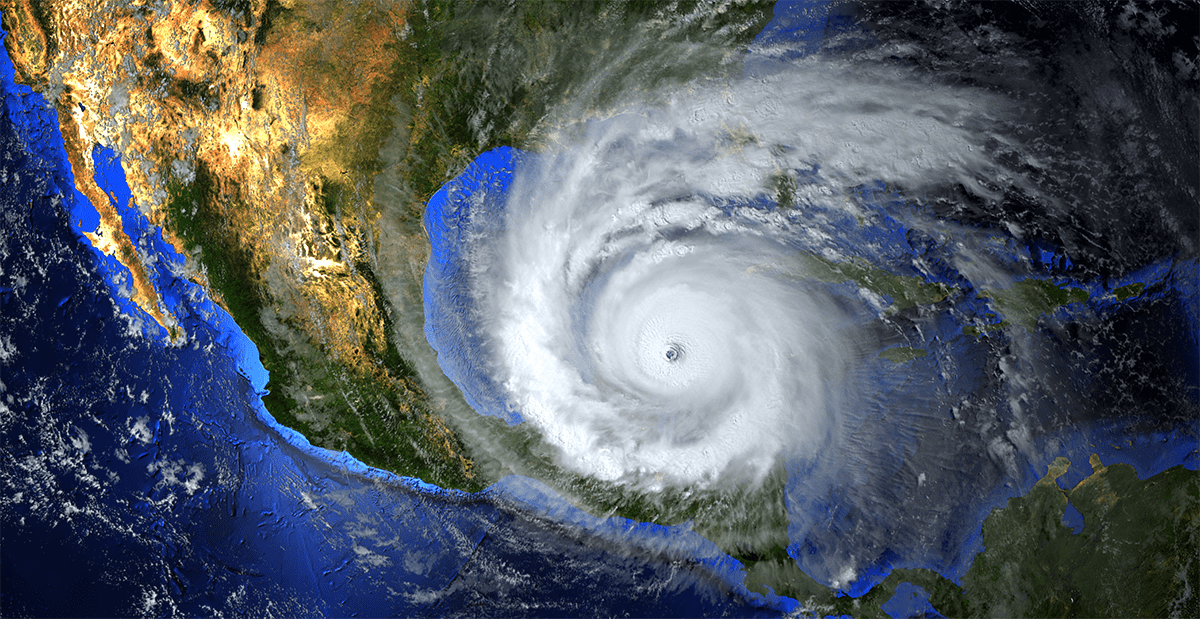
Cardinale: There are limits, and in the U.S. we’ve seen examples of such limits. One of the examples we give of a national crisis was Hurricane Katrina. It’s still the greatest natural disaster that we’ve faced. But there are some really well-established studies that have shown that if that area of the country hadn’t destroyed all of its natural wetlands, it would’ve served as a sponge for most of the water. The damage from Hurricane Katrina would’ve been fairly minimal compared to what it actually was. And that’s simply because dikes and pumps and all of the hard engineering structures we tried couldn’t replace what nature provided, which could have prevented the disaster for free. So we can buy our way out of a lot of these problems, but not all.
Schoonover: I might offer a perpendicular example. It’s been my feeling for quite some time that we’ve gotten the vulnerability piece a bit askew. We assume that natural disasters are things that primarily affect the underdeveloped nations. And they’re vulnerable, but the United States is vulnerable in a different way. Which country did worse than every other during COVID-19 in terms of deaths, despite our GDP, despite our supposed adaptive capacity?
Read more: “They Came for Climate Science. Then the Storms Came.”
Is there anything that gives you hope that things can change, particularly in the United States?
Schoonover: We’ve been going down a road of incremental change, and slow change is in many ways the same as no change, in terms of really thinking about Earth system stress. For a long time, we were talking openly about how hard is this landing going to be? But we’re finally seeing transformative change, much of it not good, but at least it’s transformative. It’s modeling how societies can pivot on a dime given the right leadership. For the first time in my adult life, I’m seeing mind-blowing change rather than incrementalism. And I think incrementalism could be the death of us just as much as catastrophe.
Cardinale: You would say that even if it’s a change in the opposite direction of what we would need, at least from the perspective of this paper and national security?
Schoonover: As long as it’s temporary.
Cardinale: I don’t have much hope. This is going to get far worse in the United States before it gets better. And I agree that transformative change in leadership could lead to a transformative change in how we treat natural infrastructure. But at that point, we’re going to be playing catch-up to almost every other country on Earth. I guess if anything gives me hope, it’s that other places will have already developed the science, and will have already developed the examples that we need in order to play catch-up quickly. But in that interim period, it’s not going to be a good time.
Schoonover: But look at this conversation we’re having right now. These are the kind of conversations that help us imagine the future on the other side of the discontinuity that’s already underway. I tell my class, “We aren’t prepared for what has already happened.” We need to not just do the scientific piece, but to incorporate it into the way we govern and the way we envision security. More of us are doing that in this very moment than ever before. Because there’s no going back to normal. There’s no going back to the before times.
Cardinale: One of the hopes for our paper was that we get the ecologists who know about ecosystem services talking to the national security experts who can begin to think about the biological impacts on security. Hopefully we can stimulate some of that conversation and be ready when leadership is open to it.
How much receptivity have you found so far on the national security side?
Schoonover: It depends. It’s a hard question because I don’t know who the national security side in the United States is at the moment. It’s diffuse. They’re around. But very few of the national security experts that I would recognize in either party are in the government. I was just in a conversation this morning talking about this in an international forum and the uptake was pretty good. What’s hard is people don’t know how to organize. A lot of the analytic pieces are falling into place. But there’s a difficulty in envisioning how we steer this monstrosity that we created 80 years ago [the United Nations] toward this new thing. And maybe we don’t. We’re talking about things that are big and require more than the authors of this paper can offer. We’re talking about, how do you get people to think about security in a different way?
But a remarkable conference just took place in Santa Marta on a just transition away from fossil fuels, where 60 countries came together, co-sponsored by Colombia and the Netherlands. We need to do that with security and governance—have that kind of conference where we embed not just the stuff that Brad and I are talking about related to nature, but also the other pieces like AI and drones, that are disrupting the entire security discussion. The existing security doctrine is leading us into the ditch. We need to bring together lots of people to rethink it. 
Enjoying Nautilus? Subscribe to our free newsletter.
Lead image: Mike Mareen / Adobe Stock