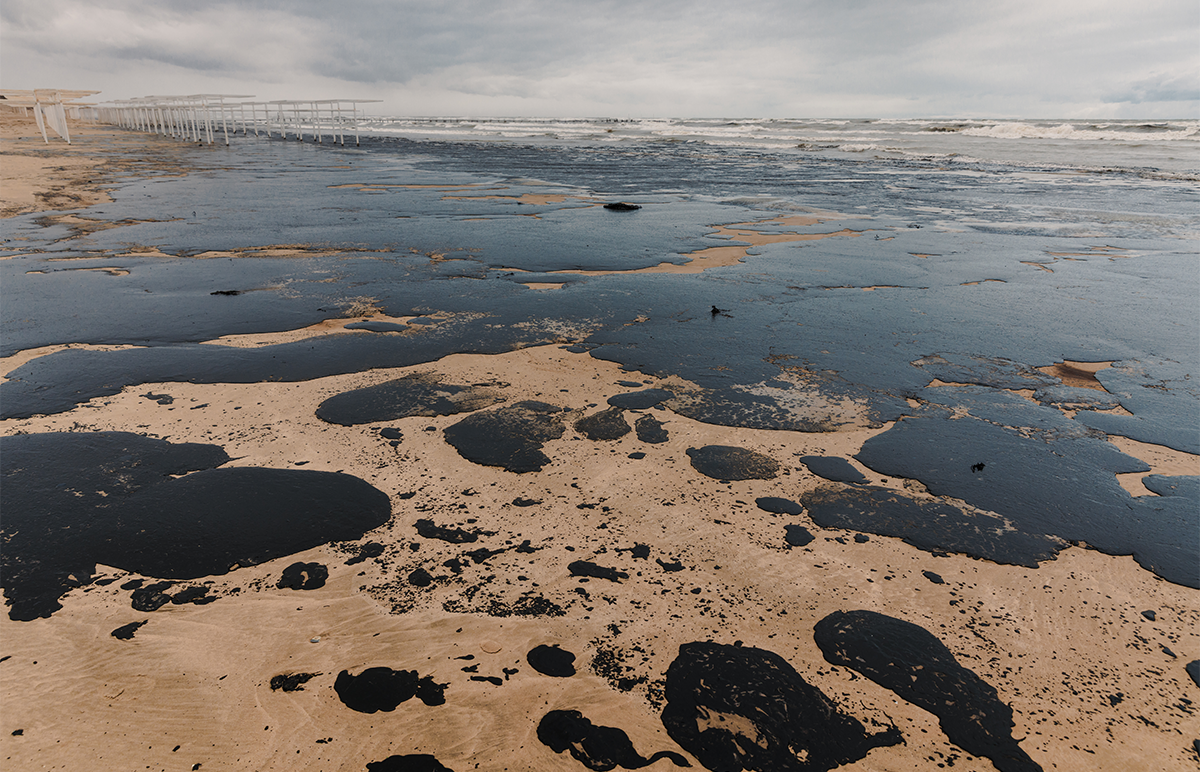
On a January morning in 1969 a black cloud spread through the Santa Barbara Channel, off the coast of Southern California. The plume of crude oil spewed from Union Oil Platform A, from which workers had just drilled a fresh well almost 3,500 feet down. As they pulled the drill bit out of the bore hole, oil, water, and mud shot from the well with enormous pressure—an accident known as a blowout. Over the next 10 days, between 3.4 and 4.2 million gallons of oil poured into the channel and washed up onto the coastline.* The spill decimated local sea bird communities—by some estimates more than 3,500 succumbed to the pollution—and left the carcasses of animals from marine mammals to barnacles in its destructive wake.
But the spill, which was the biggest in United States waters at the time, would eventually incite creation, even as it visited so much destruction on the Southern California shoreline. In the ensuing months and years, the spill would spark the modern environmental movement in the U.S. starting with the birth of the first Earth Day.
As oil gushed from the blown out well, the ecological disaster unfurled in slow motion, media coverage mounted, and politicians took notice. President Richard Nixon announced a stop to drilling in the area in early February. He then visited the spill site in March, suggesting that the accident might prompt a cessation to all offshore oil drilling in the U.S. But by April the ban on drilling in federal waters in the Santa Barbara Channel was lifted.
Read more: “Reinventing Staten Island”
On the one-year anniversary of the spill, in 1970, Santa Barbara celebrated the first Environmental Rights Day. The event was organized by people working closely with federal legislators who spoke on the day and affirmed their dedication to tackling environmental issues. One of those lawmakers, U.S. Senator Gaylord Nelson from Wisconsin, pushed for a more expansive day of action, an environmental “teach-in” across college campuses to occur in the spring of 1970.
The first iteration of what became known as Earth Day happened on April 22, 1970, and reports of the day held that 20 million people participated in marches and rallies calling for environmental reform. Through the 1970s, the country’s gathering environmental movement encouraged sweeping policy changes. These included the establishment of the Environmental Protection Agency in December 1970, and the signing of several key pieces of legislation—the Clean Air Act, the Clean Water Act, and the Endangered Species Act (all signed into law by Nixon) to name a few.
These days, Earth Day has evolved into a global celebration in which, according to earthday.org, more than 1 billion people participate. But U.S. environmentalists are confronting serious headwinds in the form of the Trump administration’s dismantling of much of the regulation that grew from that April day in 1970. Trump’s EPA, for example, is facing a spate of lawsuits due to its rollback of standards that dictate the emission of mercury and other pollutants from coal-fired power plants and for failing to enforce recently strengthened rules against soot pollution, among other deregulatory actions. Last month, Trump administration officials voted to issue exemptions from protecting an endangered whale species in the Gulf of Mexico to the oil and gas industry extracting offshore resources there.
On this Earth Day, we remember the genesis of the annual event, and the ecological disaster that birthed it. Although 2026 is different in so many ways from 1970—geopolitically, environmentally, and socially—there is still a need (perhaps even more pressing now) for people to join together and speak out for the environment and for the planet whose health dictates humanity’s fate. 
Enjoying Nautilus? Subscribe to our free newsletter.
Lead image: artifirsov / Adobe Stock
*Correction: The estimate for the amount of oil that spilled from the blown-out oil well off Santa Barbara was 3.4 to 4.2 million, not 3.4 to 4.2 billion as the story originally stated.