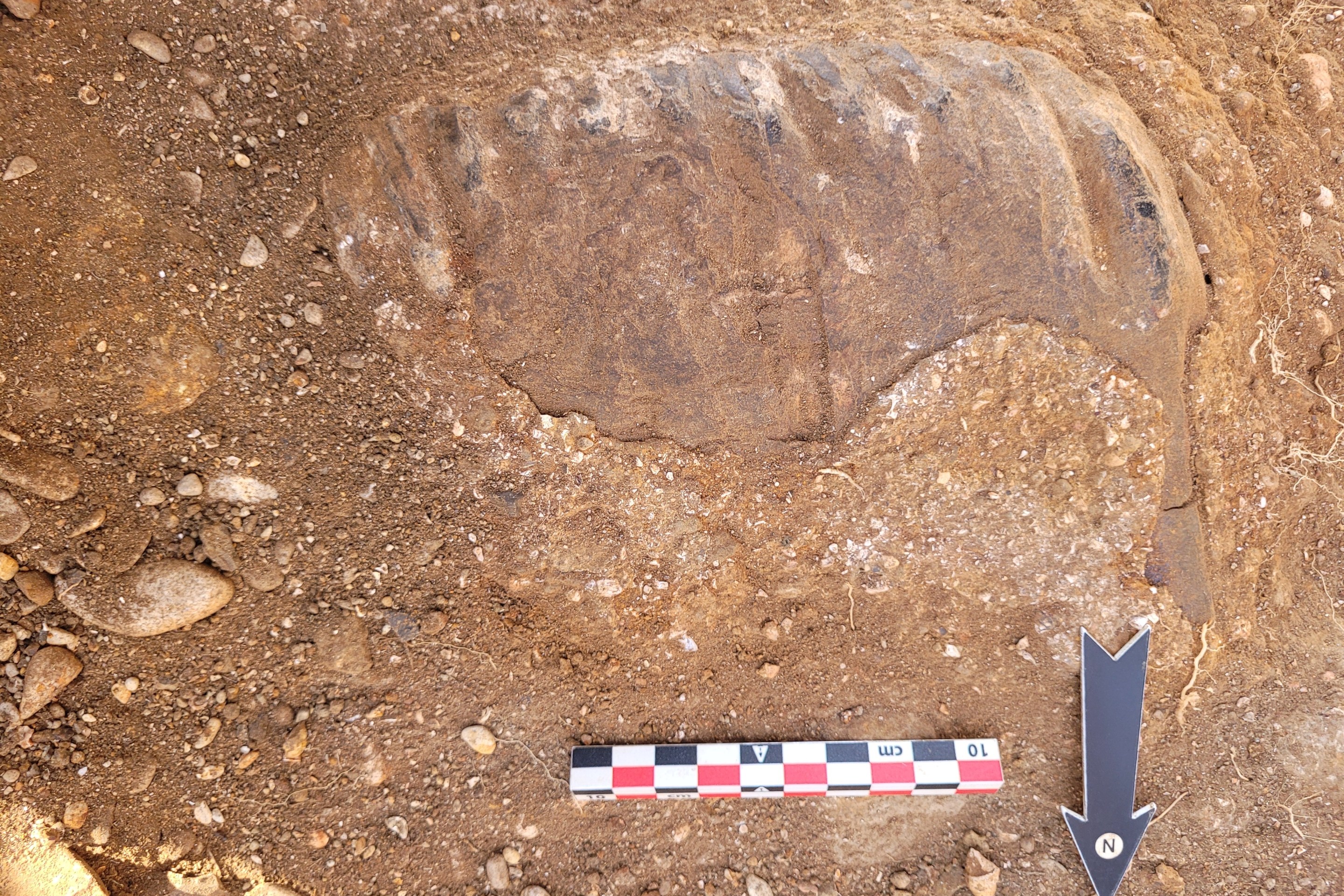
Years ago, in a dry riverbed in Brazil, paleontologists discovered a strikingly odd fossilized jawbone. Unusually twisted, the jaw featured lower teeth protruding outward and smaller denticles lining the plate. Finding one misshapen jaw might have led them to assume it had been deformed, either by nature or time, but they found eight more. Now, they’ve solved the mystery of the curious jawbone and published their findings today in the Proceedings of the Royal Society B.
The jawbone, the team determined, belonged to a tetrapod species that they dubbed Tanyka amnicola, a living fossil even in its own day 275 million years ago.
“Tanyka is from an ancient lineage that we didn’t know survived to this time, and it’s also just a really strange animal,” study author Jason Pardo of the Field Museum in Chicago said in a statement. “The jaw has this weird twist that drove us crazy trying to figure it out. We were scratching our heads over this for years, wondering if it was some kind of deformation. But at this point, we’ve got nine jaws from this animal, and they all have this twist, including the really, really well-preserved ones. So it’s not a deformation, it’s just the way the animal was made.”
Tetrapods comprise all the four-legged vertebrates we’re familiar with today. Around 375 million years ago, the ancestors of all tetrapods (called “stem tetrapods”) split into two groups: those that produced watertight eggs capable of surviving on land and those that produced eggs that still needed water. While the former evolved into modern mammals, birds, and reptiles, the latter evolved into amphibians.
Many stem tetrapods died out after the split, but the 275-million-year-old Tanyka lingered, living alongside the offshoots.
Read more: “The Hidden Landscape Holding Back the Sea”
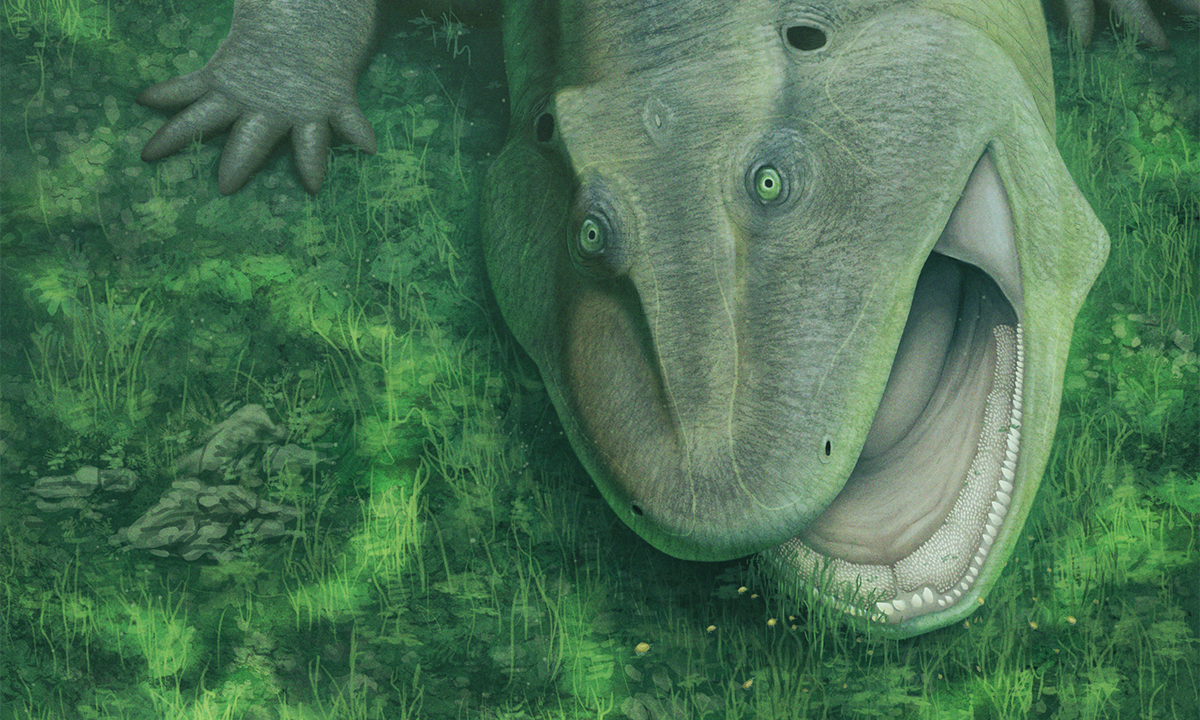
So what did this living fossil look like while it was still living? Unfortunately, the lower jawbones are all that have been discovered thus far, leaving paleontologists with little to go on. Still, by comparing it to the bones of relatives, they believe it resembled a giant salamander, about three feet long with a slightly longer snout.
They also think it was herbivorous. Taken together, the tiny denticles on the bottom of the jaw plate and the outward pointing teeth create a structure ideal for crushing and grinding up plant matter.
“We expect the denticles on the lower jaw were rubbing up against similar teeth on the upper side of the mouth,” Pardo said. “The teeth would have been rasping against each other, in a way that’s going to create a relatively unique way of feeding.”
While the search for more Tanyka bones continues, the find is already helping researchers solve another puzzle—filling in the fossil record gaps of Gondwana. Made up of modern-day landmasses of South America, Africa, Antarctica, and Australia, fewer fossils have been discovered from this ancient supercontinent compared to the Global North.
It’s a shame, really. If they’re anything like Tanyka, they’re no doubt fascinating. 
Enjoying Nautilus? Subscribe to our free newsletter.
Lead image by Vitor Silva