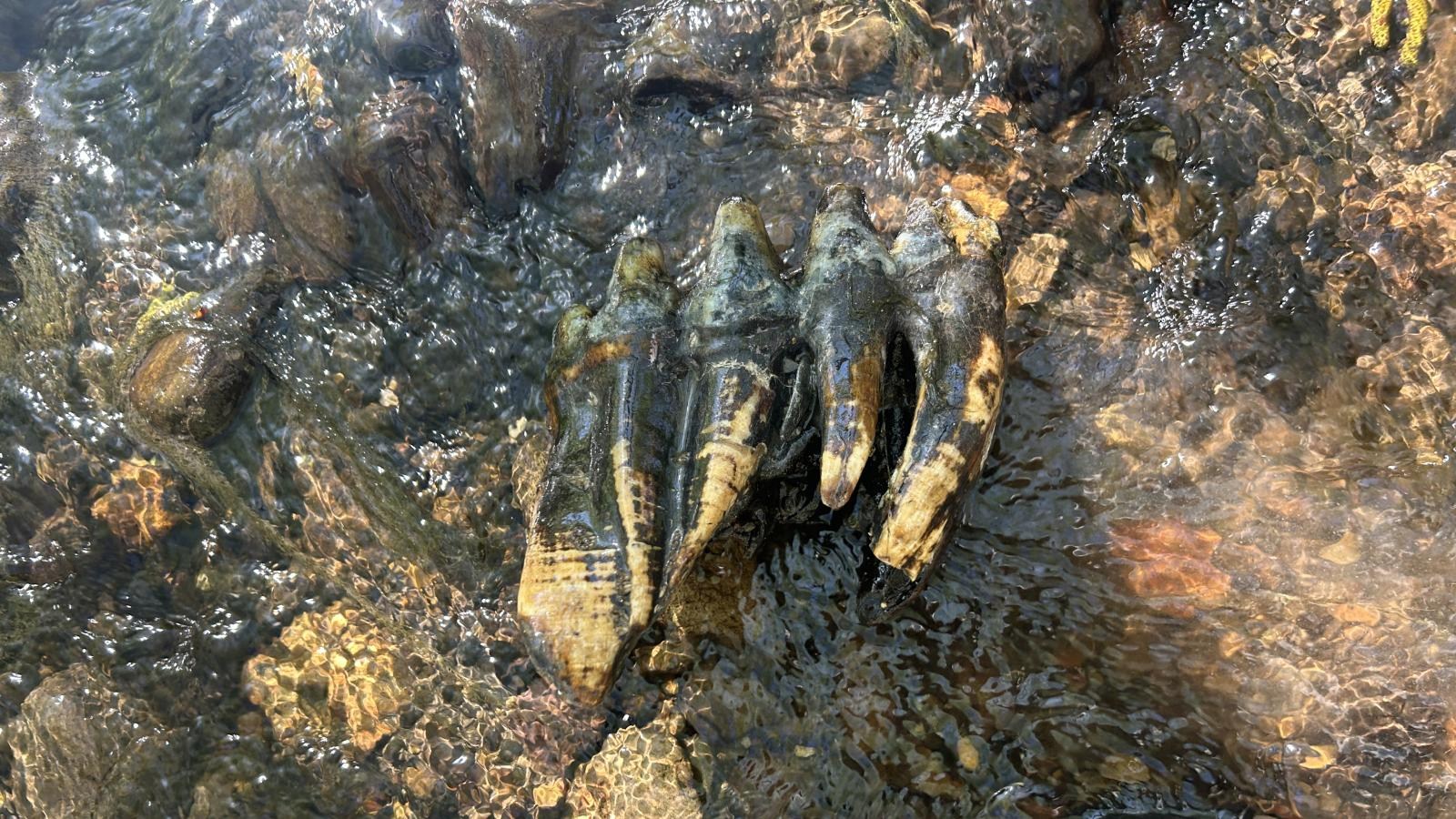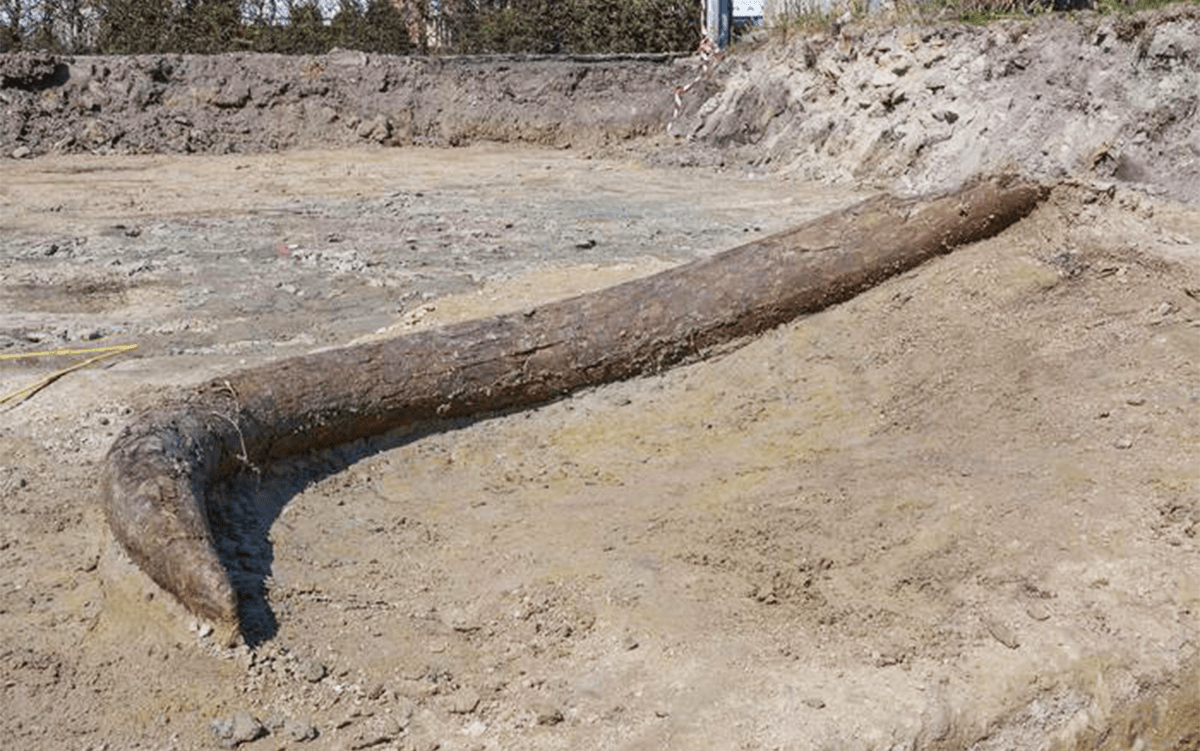
Construction workers digging near Regensburg, Germany unearthed something interesting back in 2020: an eight-foot-long tusk from a woolly mammoth. Archaeologists from the Bavarian State Office for the Preservation of Historical Monuments soon descended on the site to excavate. They uncovered more than 70 additional bones. According to their analysis, recently published in the Journal of Archaeological Science, the animal had been butchered.
After hauling the bones back to the Bavarian State Collections of Natural History, a team of 14 scientists from various disciplines got to work examining them. “The mammoth’s tusk and bones were exceptionally well-preserved due to their millennia-long conservation in the wet soil environment,” study author Christoph Steinmann said in a statement.
Read more: “What Happens When Giants Disappear from Ecosystems?”
Radiocarbon dating revealed the mammoth died between 27,000 and 25,000 years ago, but there was no indication of whether its demise was the result of natural causes or if it was hunted. What happened after the mammoth’s death was a little clearer. The research team found distinct cut marks made by humans, particularly along the ribs. In fact, one of them seems to have been used as a makeshift cutting board.
Pollen spores discovered alongside the remains paint a picture of its prehistoric ecosystem. The region where the mammoth was found was once part of the Mammoth Steppe—a vast grassland dotted with dwarf shrubs but otherwise treeless. The biome was once so extensive it wrapped around the globe, stretching from Portugal through Asia all the way to Wisconsin.
While prehistoric humans and mammoths both thrived on the steppe, researchers say it was odd to find evidence of humans living so far north at that time. “There is virtually no evidence of human activity in this region from that peak period of the Ice Age,” study co-author Andreas Maier of the University of Cologne explained. “Due to climate change, hunter-gatherer communities in Europe retreated southward and eastward.” 
Enjoying Nautilus? Subscribe to our free newsletter.
Lead image: BLfD