If humans want to establish an outpost on the moon, we need a few things. First and foremost, oxygen, which the moon has in spades, although it’s bonded chemically to minerals. Secondly, water, which is present in ice frozen at the lunar poles. Thirdly, a food source, and this is where things get trickier.
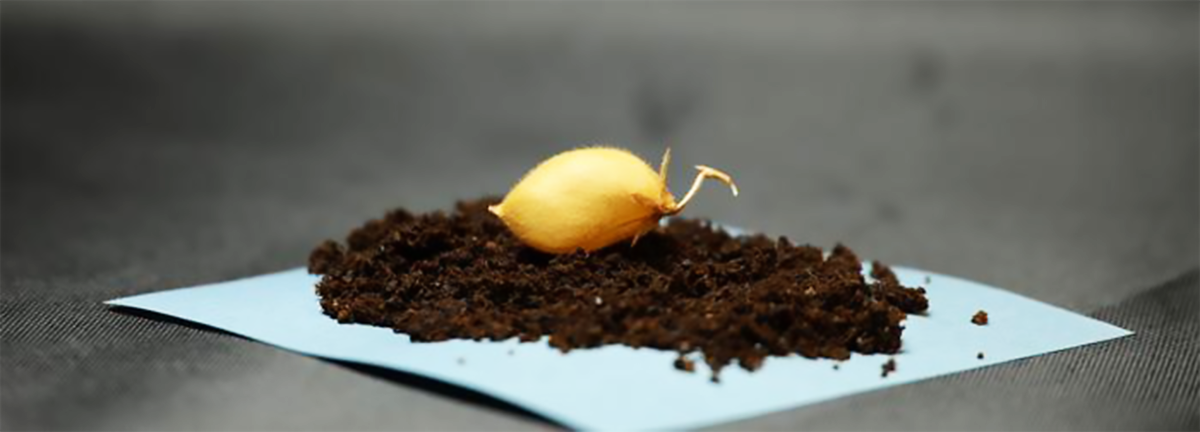
Fortunately, researchers from the University of Texas at Austin, working in collaboration with Texas A&M University, recently succeeded in growing chickpeas in lunar soil, or regolith.
“The research is about understanding the viability of growing crops on the moon,” Sara Santos of the University of Texas, author of a study detailing the team’s methods in Scientific Reports, said in a statement. “How do we transform this regolith into soil? What kinds of natural mechanisms can cause this conversion?”
It’s a great question. Lunar regolith is a powdery, dust-like material made up of minerals and heavy metals, many of which are toxic to plants. Unlike soil on Earth, which contains bacteria, fungi, and the organic byproducts of their metabolism plants need to grow, lunar regolith is functionally “dead.”
Read more: “Should People Live on the Moon?”
Because we haven’t been back to the moon in more than half a century, regolith is also in short supply on Earth. To get answers, the researchers turned to Space Resources Technologies, which manufactures simulated regolith originally designed by the Exolith Lab at the University of Central Florida based on samples from the Apollo missions.*
With their regolith in hand, the team then had to make it a little more hospitable to plants by adding vericompost—worm manure excreted by red wigglers that contains microorganisms. To prepare the chickpea roots, they painted them with a solution containing arbuscular mycorrhizal fungi, a symbiotic fungi found in soil that supplies vital nutrients while protecting the plants from heavy metals.
Testing the two additives in different proportions revealed that chickpea plants could mature to harvest in soil composed of up to 75 percent regolith. Any higher concentration, and the plants wouldn’t survive (although plants treated with the fungi held on for longer than those without). Incredibly, they discovered the fungi was able to colonize the regolith mixture, meaning creating a stable soil substrate would only require a single inoculation.
Harvesting chickpeas is a big first step to growing crops on the moon, but there are still questions about whether or not they’re safe to consume—a subject for future research. Until then, we’ll have to hold off on making moon hummus. 
Enjoying Nautilus? Subscribe to our free newsletter.
Lead image: University of Texas Institute for Geophysics
*As originally published, this story indicated the University of Central Florida (UCF) manufactured the simulated regolith used in the study. While UCF did originally come up with the recipe for the simulant, it was manufactured by the private company Space Resources Technologies. The story has been updated to reflect that information.