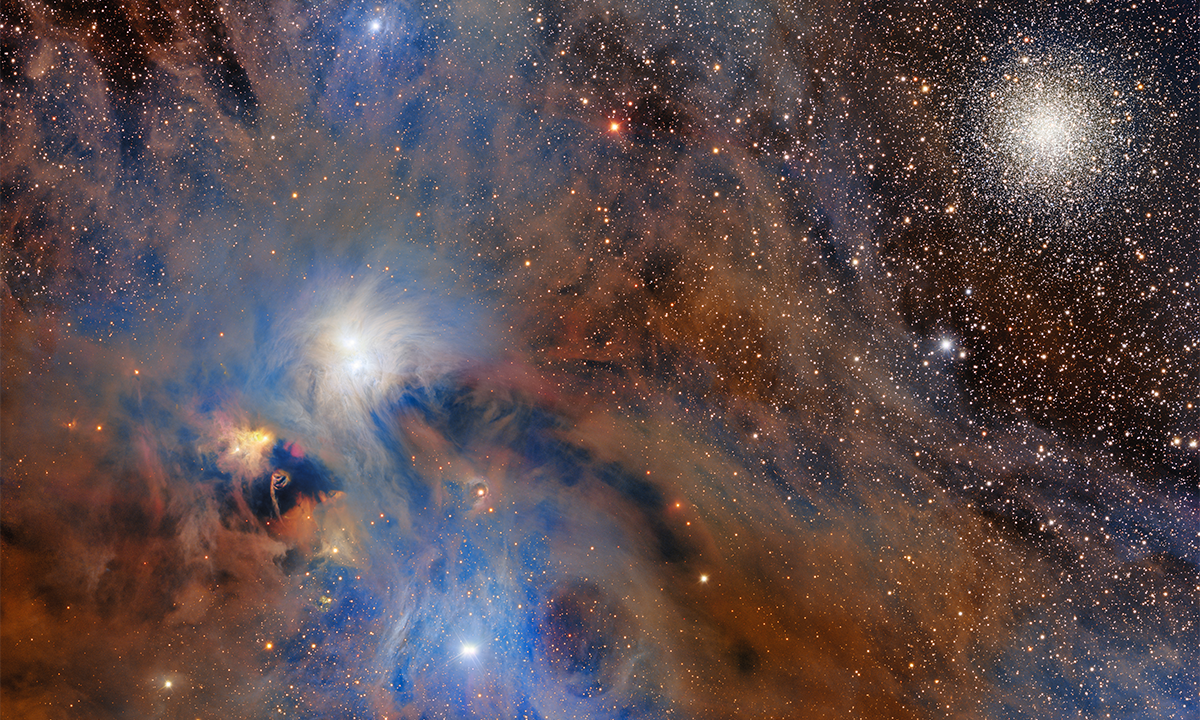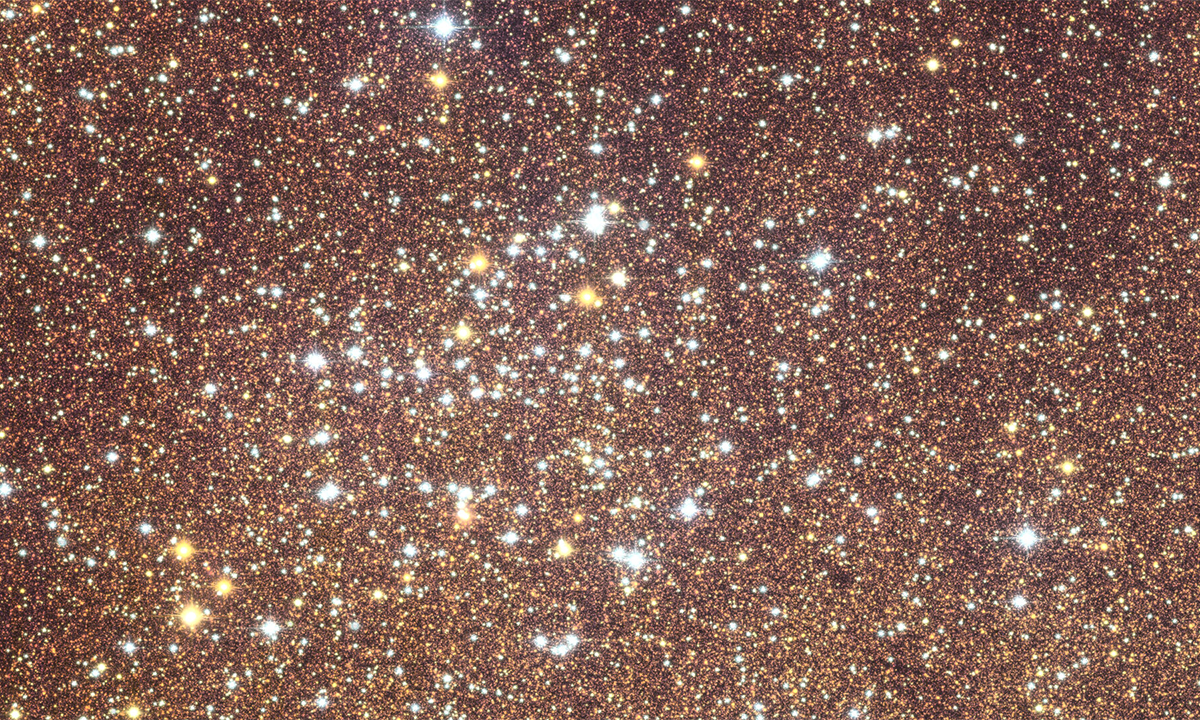
If the Milky Way were a Danish, the fruit filling would be its galactic bulge, a region in the center of the disk densely packed with stars. Astronomers from the European Space Agency recently released the most detailed image of this crowded area ever captured, a crucial step in the hunt for the region’s exoplanets.
The photo was taken by the ESA’s Euclid space telescope, parked almost 1 million miles from Earth. Like the Hubble Space Telescope, Euclid has highly sensitive cameras capable of separating the light from individual stars. Its field of view is 270 times larger than Hubble’s, which makes it perfect for discerning the more than 60 million stars within the galactic bulge.
Far from being just another beautiful photo, the newly released image will help astronomers search for exoplanets in the area with something called microlensing. When two stars pass in front of one another, the gravity of the star nearer to Earth bends the light of the farther star. If the nearer star has a planet in tow, its gravity will also put a little wobble in the light, allowing astronomers to detect it. Because microlensing relies on a literal alignment of the stars, it helps to focus on areas with a lot of them, like the galactic bulge.
Read more: “Looking for a Second Earth in the Shadows”
“During the last 20 years, almost 300 exoplanets have been discovered using this technique, all with ground-based telescopes and all toward the center of our galaxy,” Jean-Philippe Beaulieu, co-leader of the exoplanet working group of the Euclid Consortium, said in a statement. “This image from Euclid includes 51 known planetary systems—and it will assist in studying many more that will be found.”
While Euclid’s observation only lasted one day—too brief to catch any microlensing events—it established an important benchmark for future surveys of the area. “Since Euclid can clearly separate individual stars, one can then measure how fast they move over time and use that information to confirm the existence of a planet and determine its mass,” Natalia Rektsini, who led the release of Euclid’s galactic bulge survey data, explained. “This would not be possible with data from one point in time.”
With over 60 million stars to choose from, planet hunters are going to be busy. 
Enjoying Nautilus? Subscribe to our free newsletter.
Lead image: ESA/Euclid/Euclid Consortium/NASA, CFHT. Image processing: J-C Cuillandre and E Bertin (CEA Paris-Saclay).