The recipe for life seems simple at first blush: Combine organic compounds and liquid water, add an energy source, then simmer for eons. Unfortunately, finding the finished product somewhere that isn’t Earth has proven to be a frustrating endeavor. The ingredients themselves, however, might be more plentiful than previously thought, according to new research from Aarhus University published in Nature Astronomy.
Astronomers Alfred Thomas Hopkinson and Sergio Ioppolo simulated the conditions found in cosmic dust clouds floating in the expanse between stars where new solar systems form. To recreate this extreme environment on Earth, they chilled a small chamber to roughly 430 degrees Fahrenheit below zero, created a near total vacuum, and subjected it to radiation. They introduced glycine—an amino acid already known to form in interstellar space—into the system.
Read more: “The Fly in the Primordial Soup”
The researchers found that peptides, short chains of amino acids that can form more complex proteins, formed inside the chamber along with water—two potential ingredients for life. “We saw that the glycine molecules started reacting with each other to form peptides and water. This indicates that the same process occurs in interstellar space,” Hopkinson explained in a statement. “This is a step toward proteins being created on dust particles, the same materials that later form rocky planets.”
Their findings suggest complex organic molecules like proteins could be abundant in space, something that significantly increases the odds of life originating somewhere else in the universe.
“Bit by bit, these tiny building blocks land on rocky planets within a newly formed solar system. If those planets happen to be in the habitable zone, then there is a real probability that life might emerge,” study co-author Ioppolo explained.
Even more exciting? This discovery could just be the first of many uncovering the nonliving processes that can produce the very building blocks of life. 
Enjoying Nautilus? Subscribe to our free newsletter.
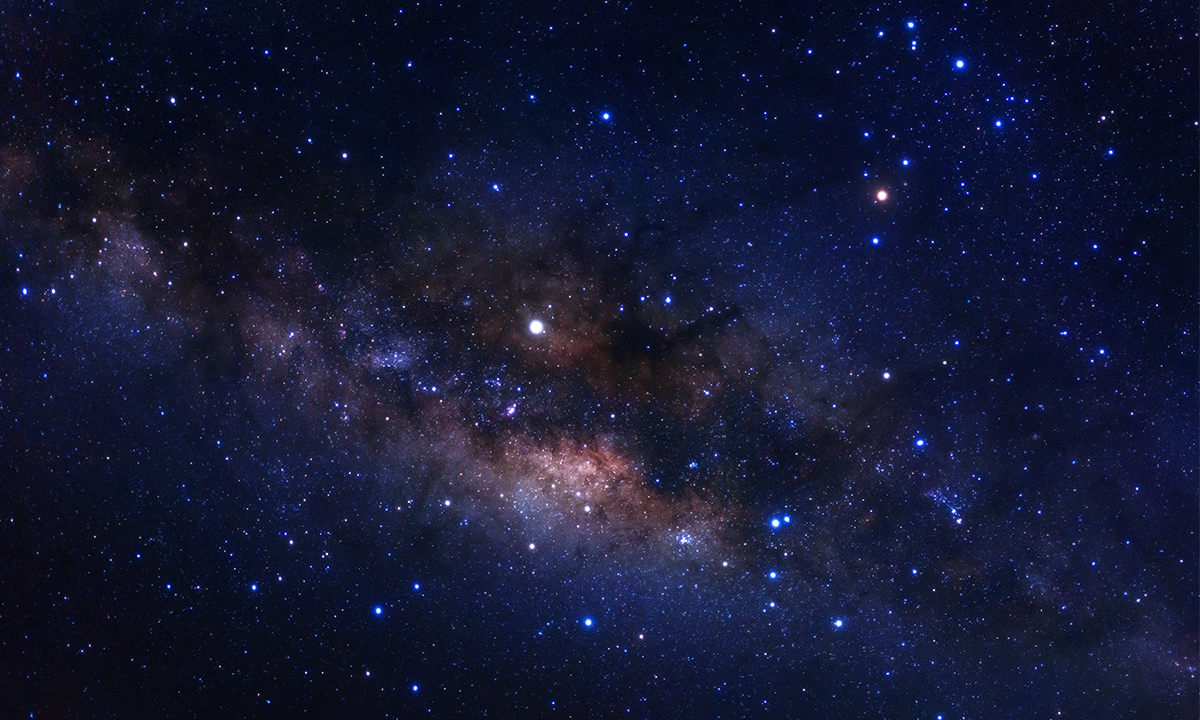
Lead image: sripfoto / Shutterstock