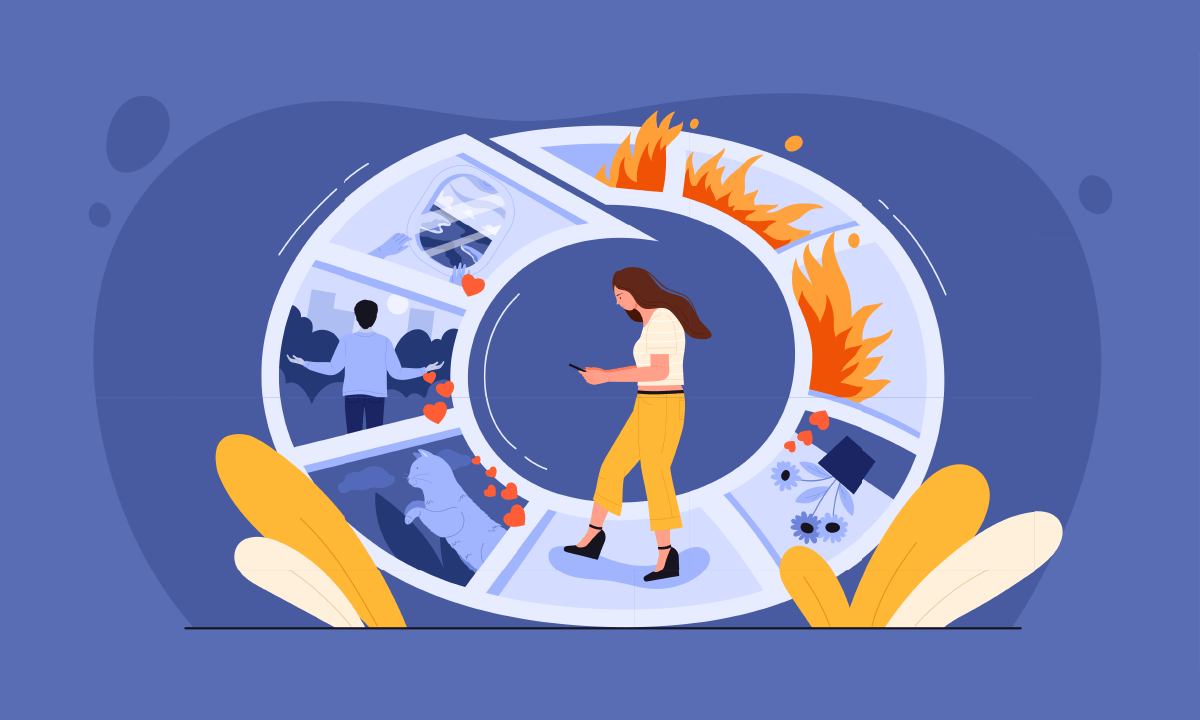
After a week stuffed with family gatherings, long travel days, and most likely hours spent on personal devices fluttering between social media platforms, many of us may feel the need for a break. And according to recently published research, a break—specifically from social media—may be just the tonic to ease a host of negative mental health symptoms.
Study participants who engaged in a one-week social media detox, reducing their use of Facebook, Instagram, Snapchat, TikTok, and X, self-reported lessened symptoms of anxiety, depression, and insomnia, according to scientists from Beth Israel Deaconess Medical Center in Boston and the University of Bath in the United Kingdom. The researchers published their findings in JAMA Open Network. More than 290 volunteers, who ranged in age from 19 to 24 and typically otherwise spent about two hours a day on social media platforms, participated in the weeklong reduction. Interestingly, the observed reported benefits didn't require a full abstention—participants just cut back usage to about half an hour per day.
Read more: “Is Facebook Luring You Into Being Depressed?”
Reducing social media use is not a panacea to address true mental health ailments, of course. Such a detox “certainly would not be your first-line or your only form of care,” study co-author John Torous, a Harvard University psychiatrist, told The New York Times. The study also doesn’t indicate how lasting such mental health benefits might be. But the research does add to a growing body of findings that suggest even such brief breaks could be beneficial to mental health.
The authors of the paper also point out that the nature of a person’s social media use, rather than the absolute quantity of time spent on social media, seems to be a more important determinant of how it leaves one feeling. “Interventions may be more effective if they target reducing problematic engagement rather than focusing exclusively on overall reduction in use,” they write in the paper.
Even for folks who aren’t feeling symptoms of anxiety, depression, or insomnia, a little more time spent eating leftovers with loved ones and a little less lamenting a lack of Instagramable vacation plans likely can’t hurt. And the result could provide another bounty: The participants in the study gained an average of nine hours of their lives back from the platforms, just across the detox week. Think of all of the extra holiday shopping! 
Enjoying Nautilus? Subscribe to our free newsletter.
Lead image: Flash Vector / Shutterstock