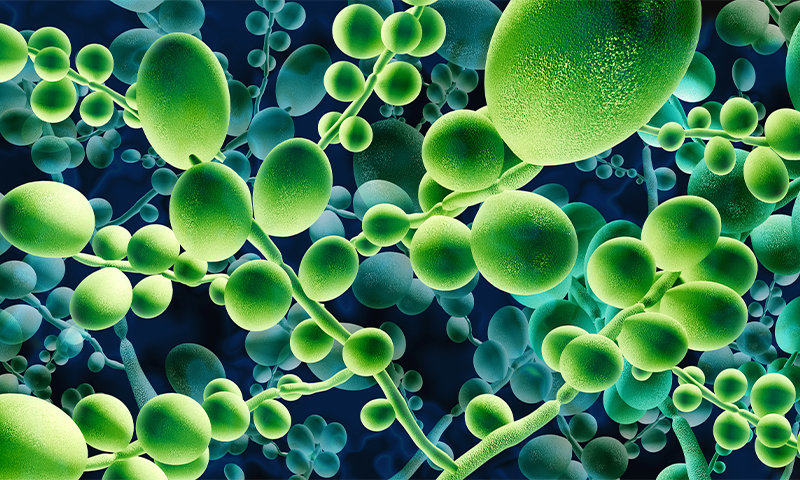
Yeast and mold and mushrooms. Spores and gills and filaments. Fungi are everywhere, many of them invisible to the eye. They live in the soil, air, and water. They colonize our body tissues and cavities and live on our skin. But rising global temperatures seem to have expanded their geographical reach and made them better at infecting humans.
They’re also better at killing us. Two women died of fungal infection earlier this year after getting cosmetic procedures at a clinic in Mexico. One of them was an otherwise healthy woman in her early 30s. Doctors in Houston determined that fungal meningitis, a disease that causes swelling of areas around the brain and spinal cord, probably caused her death. The fungus likely infected her and numerous other people after they received epidural anesthesia during surgeries at one of two clinics in Mexico near the border with Texas.
Fungi are very adept at hiding out inside their human hosts.
Acute invasive fungal infections are on the rise around the globe. According to a June research report, around 3 million people globally suffer from chronic severe fungal infections. Many of these are life-threatening: Fungi kill an estimated 1.6 million people per year. In the United States alone, deaths from fungal infections rose 52 percent between 2018 and 2021 to over 7,000, the CDC reports. But we are very bad at diagnosing fungal infection, so the true numbers may be much higher.
Most healthy people can resist serious infection, but those with weakened immune systems are especially vulnerable. This includes the millions of people who receive immunosuppression treatments, such as some cancer therapies and medicines patients receive following organ transplant. COVID-19 can also make people more susceptible.
Fungi are very adept at hiding inside their human hosts: Infections are both difficult to catch and tricky to treat. According to a 2022 survey of 500 doctors, diseases arising from fungal infections are among the conditions most often diagnosed late. Even when doctors correctly diagnose fungal infections, we have few effective medicines to treat them, as many fungi can now resist existing antifungal drugs.
In late 2022, the World Health Organization published a list of the most deadly human fungal pathogens, sorted into three priority buckets: Critical, high, and medium. The fungi primarily afflict the millions of people around the globe with compromised immune systems, who have been hospitalized in healthcare facilities for a long time, have catheters, or have previously received antibiotics or antifungal medications.
But at least one fungus on the list, though rare and in the lowest-priority group, seems risky for even healthy individuals: Lomentospora prolificans. One review found that one-fifth of infected patients had no underlying disease and the overall mortality rate was almost 47 percent. The fungus has been found in a wide range of environmental sources such as oil-soaked soils, cattle dung, sewage, and chicken manure.
The 11 highest-risk fungal pathogens:
Critical
Cryptococcus neoformans: a microscopic fungus that typically invades the lungs, brain, or spinal cord.
Candida auris: a yeast that can enter the bloodstream and spread through the body.
Aspergillus fumigatus: Humans and animals inhale this fungus from the air. Fatal invasive aspergillosis is now the most common mold infection worldwide.
Candida albicans: A naturally occurring fungus that lives in small amounts in the skin, intestines, and mouth.
High
Nakaseomyces glabrata (Candida glabrata): common yeast often found contaminating urine cultures that can cause superficial mucosal and life-threatening bloodstream infections.
Histoplasma spp.: a fungus that lives in soil with large amounts of bird or bat droppings.
Eumycetoma causative agents: fungi found in soil and water that may enter the body through a break in the skin, often on a person’s foot, and can cause Mycetoma, firm, usually painless but debilitating masses under the skin that can affect the underlying bone.
Mucorales: fungus with a special predilection for nasal passages and lungs and a high affinity for invading blood vessels.
Fusarium spp.: Filamentous fungi that can induce local infections of nails, skin, eye, and nasal sinuses, as well as occasionally, severe, systemic infections.
Candida tropicalis: pathogenic yeast that infects human skin, gastrointestinal tract, and the female genitourinary tract.
Candida parapsilosis: the second most common species in patients with Candida bloodstream infections in Latin America and eastern Asia. 
Lead image: Lightspring / Shutterstock