Should sunlight be delivered on demand, no matter the time of day?
One company is toying with this godlike act. Reflect Orbital recently applied for a federal license to trial this concept in April 2026. During this test, an orbiting satellite will unfurl a 60-by-60-foot mirror and aim sunlight to specific sites on Earth. The goal is to launch a constellation of some 4,000 of these massive mirrors by 2030, expanding the world’s access to solar energy and increasing availability during peak-use hours in the morning and night.
The company says the constellation could also boost crop yield and illuminate rescue efforts, defense operations, and entire cities. Reflect Orbital even claims customers could eventually “order sunlight to your exact coordinates at any time.”
But these beams could interfere with telescopes’ views—and astronomers are already dealing with surging light pollution around the world and up in space. Most astronomers say the constellation would affect their work, according to an August survey from the American Astronomical Society.
This would “be like having the full moon up every night, and that will be devastating to astronomy,” Siegfried Eggl, co-lead of the International Astronomical Union’s Center for the Protection of the Dark and Quiet Sky, told Gizmodo. In response to such criticisms, Reflect Orbital told Bloomberg that it aims to steer clear of observatories and will share its satellite positions with scientists. Those who study the night skies have already had issues with visual pollution from the increasingly crowded low-orbit melee of Starlink and other prolific satellite initiatives.
These harms wouldn’t stop in space, of course. Light pollution messes with the day-night cycle that has regulated Earthly creatures for billions of years. And from our planet, these thousands of extra-reflective satellites could resemble rapidly traveling stars—so migratory birds and other animals, who look to the stars for navigation, might get lost.
It’s also possible that the many mirrors involved may not be enough. The planned constellation of a few thousand satellites might only offer a few minutes of light in a given spot. The company would need thousands more to stretch that to an hour, astronomers Michael J. I. Brown and Matthew Kenworthy noted for The Conversation.
“The cost that this incurs not only on astronomy, but on the entire civilization—plus the ecological impacts—are, in my personal view, not worth the effort,” Eggl said to Gizmodo. Perhaps this proposal is just the latest reflection of humanity’s long quest to bend the rules of the cosmos. 
Enjoying Nautilus? Subscribe to our free newsletter.
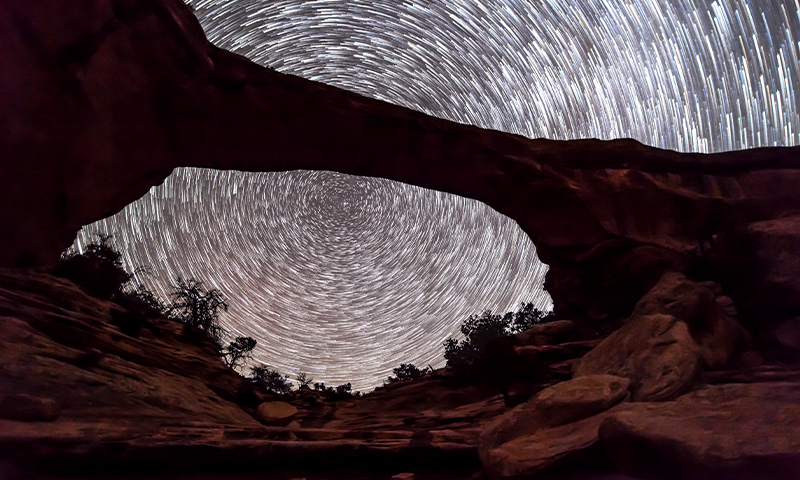
Lead image: Jacob W. Frank / Wikimedia Commons