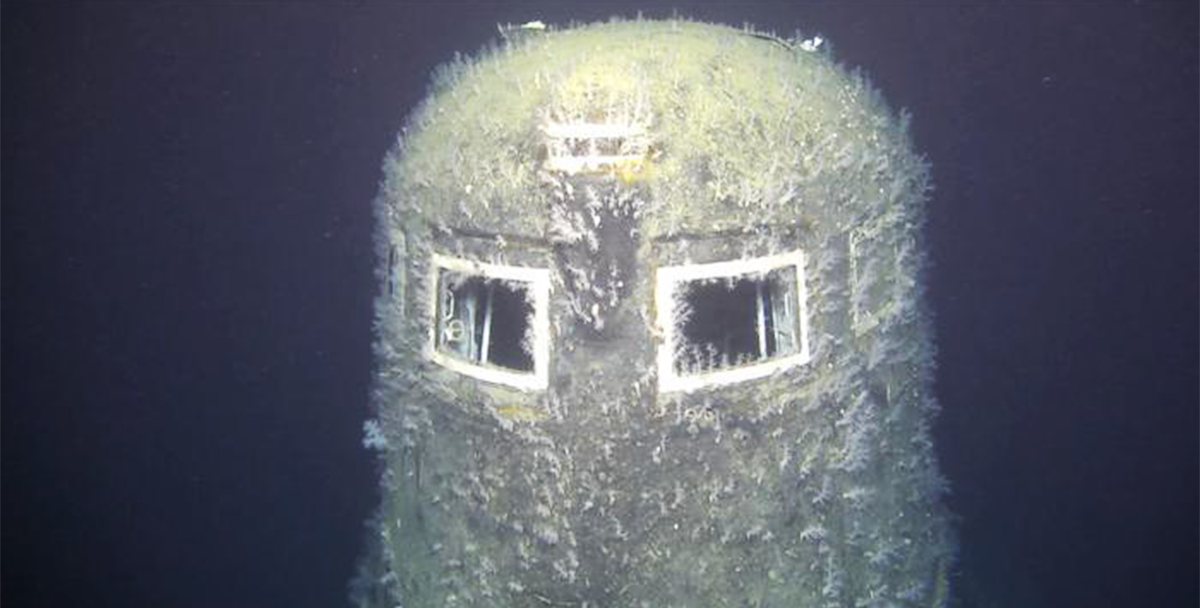
On April 7, 1989, the nuclear-powered Soviet sub K-278 Komsomolets carrying two nuclear warheads was silently moving beneath the frigid waters off the coast of Norway’s Bear Island when disaster struck. A short-circuit in the engineering compartment sparked a fire that spread through the bulkheads, feeding on the cables as it went.
As the sub’s electrical systems failed, the nuclear reaction powering the ship was halted and its crew abandoned ship. The sub came to rest on the ocean floor, 5,500 feet underwater, where it remains to this day. Now, new research published in the Proceedings of the National Academy of Sciences reveals its fate.
In 2019, Justin Gwynn of the Norwegian Radiation and Nuclear Safety Authority and researchers from the Institute of Marine Research conducted a survey of the wreckage of Komsomolets using a remotely operated deep-sea submersible. They took video of the wreckage, sampling the surrounding water, sea life, and sediment to measure radioactivity. Gwynn’s recently published analysis of the data collected during the investigation shows the extent of the damage.
The researchers discovered the forward section of the submarine was destroyed, exposing the torpedo compartment containing the nuclear weapons to seawater. Luckily, their analysis showed no signs of plutonium escaping. Titanium plates installed by the Russian government over 30 years ago to prevent seawater from moving through the torpedo compartment remained in place.
The nuclear reactor is another story. Readings from samples collected around one of the ventilation pipes detected the ongoing release of radioactive isotopes, albeit intermittently. The levels of radioactive strontium and cesium (two isotopes generated by nuclear fission) were 400,000 and 800,000 times higher, respectively, than normal seawater. Samples from sponges, corals, and anemones showed high concentrations of radioactive cesium as well.
According to the researchers, the levels of plutonium and uranium isotopes detected indicate the nuclear fuel in the reactor is corroding. Thankfully, the radiation isn’t accumulating. Instead, radiation levels show a steep decline just feet from the wreckage of the sub, indicating it’s being diluted by the seawater. Sediment samples also showed no sign of elevated radioactivity.
Altogether, it might seem like the best-case scenario for a sunken nuclear submarine (one of nine that we know of), but it’s unclear what the future holds for the Komsomolets. The researchers say radioactive material will continue to seep from the sub into the ocean as the reactor’s corrosion progresses, and continued research will be necessary to monitor it. 
Enjoying Nautilus? Subscribe to our free newsletter.
Lead image: Institute of Marine Research / Ægir6000