Every commercial fishing operation grapples with the incidental capture of animals other than the target species. Whether it’s sea turtles caught in shrimp trawls or salmon trapped in Alaska’s pollock fishery, such “bycatch” is both ecologically and economically costly. Habitats are deprived of species that are crucial components of ocean communities, and fisheries may have to shorten their seasons or install expensive equipment.
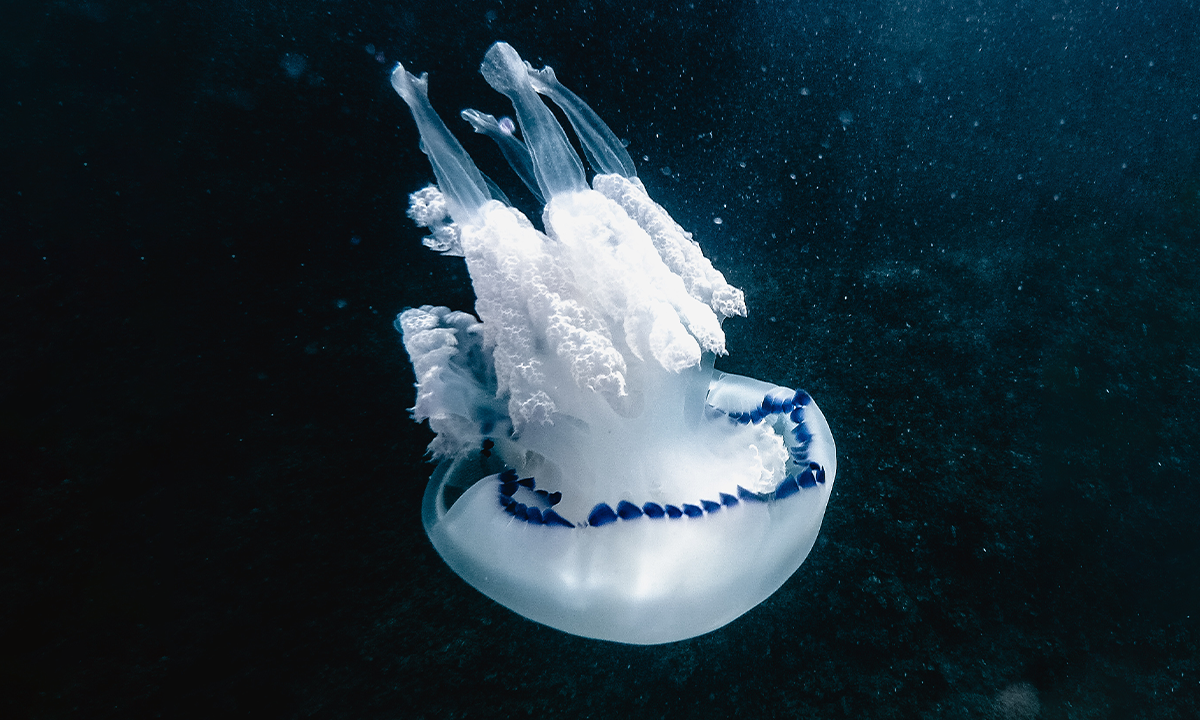
Jellyfish haven’t received much attention as bycatch. Yet, they’re common victims of small-scale net fisheries. A study published today in Frontiers in Marine Science, led by marine biologists from the Universidad Católica de Valencia in Spain, proposed a way to valorize jellyfish bycatch by extracting collagen instead of considering them unfortunate waste products of commercial fishing.
The researchers interviewed members of four fishing guilds in the Spanish Mediterranean. Their questions were designed to assess the fishers’ level of motivation for finding uses for the discarded jellyfish. Overall, the fishers noted an appreciation for jellyfish, but they clearly lacked the know-how to monetize them.
Read more: “It’s Time to Redefine What Sustainable Fishing Means”
The most common bycatch species was the barrel jellyfish (Rhizostoma pulmo). In the lab, collagen was extracted from those caught as bycatch as well as those intentionally caught in hand nets. The collagen extracted from bycatch jellyfish didn’t prove appreciably different from collagen obtained from jellyfish harvest. Or as lead study author, marine scientist Raquel Torres, put it in an interview with EurekAlert: “The accidental capture did not significantly damage the collagen.”
Collagen is used in many products—including skin-care lotions, wound dressings, drug capsules, and nutritional supplements. It’s become popular in regenerative medicine as well, which seeks to restore body joints and tissues. And so, the incidentally caught jellyfish, instead of just getting tossed, might offer a valuable commercial resource if viable modes of extraction can be put in place.
“By demonstrating that jellyfish bycatch can provide collagen without compromising quality, we propose a circular bioeconomy solution: reducing waste, creating new economic opportunities, and supporting small-scale fisheries at the same time,” explained Torres.
All of which is to say, one fisher’s trashed wild jellyfish could be another’s treasure. 
Lead image: Marimont Studio / Wirestock / Adobe