When did agriculture come to Ireland?” turns out to be a surprisingly contentious question. While the time periods vary by region, archaeologists generally consider the establishment of agriculture to mark the transition between the Mesolithic hunter-gatherer culture and the more technologically advanced Neolithic culture. For Ireland, this transition seems to have occurred after 4,000 B.C.
Except for one site.
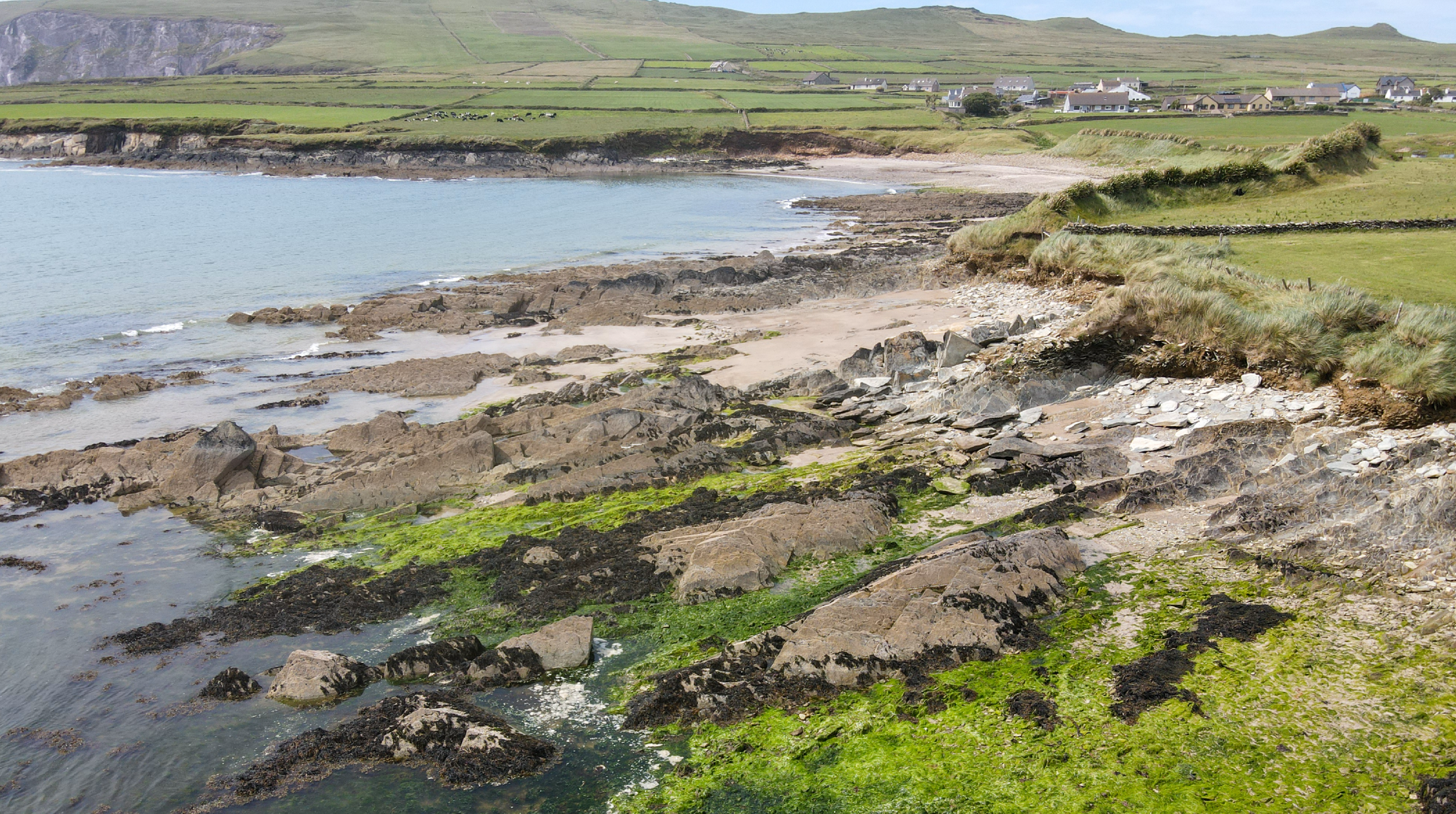
In the 1980s, excavations of a Mesolithic settlement at Ferriter’s Cove in County Kerry on the southwest coast of Ireland uncovered grindstones, mudstone axes, human remains, and—intriguingly—the splintered bones of cattle, all of which were dated to roughly 4,500 B.C.
The discovery of this “Kerry cow,” as it came to be known, pushed back the date of agricultural innovation in the Emerald Isle. Because cattle aren’t indigenous to Ireland, it also hinted that contact with more advanced European cultures occurred earlier than previously thought—until now. A new article published in the journal Past is removing the contentious Kerry cow from Ireland’s Mesolithic-Neolithic timeline (and debate) altogether.
Read more: “The Beloved Mesolithic Girl”
Archaeologists from the University College Dublin decided to take a closer look at the Ferriter’s Cove animal bones, using a process called zooarchaeology by mass spectrometry (or ZooMs). Pioneered in the late 2000s, ZooMs is capable of identifying bone fragments by analyzing the chemical fingerprint of peptides in collagen, which can survive for longer than the more fragile DNA and RNA in remains.
So what did they uncover with this new technique?
According to the team’s analysis, the splintered bones didn’t belong to cattle at all. Instead they were the remains of two indigenous mammals—a wild boar and a bear (although researchers aren’t sure if it’s a brown bear or a polar bear). Essentially, the history of agriculture in Ireland has been rewritten once again.
“For at least four millennia hunting and gathering people lived on the island, and there is a common conception that they left little trace and that we know very little about them—unlike the megaliths of Neolithic farmers, who are portrayed in ways that feel very familiar in Ireland,” archaeologist Martin Moucheron explained in a statement. “But there is much we can understand about Mesolithic people just by going back to the sites and material we have, and by looking at them with new eyes and new techniques—and an open mind.” 
Enjoying Nautilus? Subscribe to our free newsletter.
Lead image: Jim / Adobe Stock