I’d been to a lot of science and tech conferences, but it was clear right away that this fall’s World Economic Forum meeting in Tianjin would be different.
For one thing, it took place in a cruise ship-sized convention center surrounded by a sea of empty concrete and flagpoles in coastal China. A couple of at-attention soldiers could be picked out in the distance, past a fleet of black Audis and through a yellow haze. Word was that the building had been commissioned with the Forum in mind.
Then there was the limelight. The Premier of China gave the opening keynote. There were lots of CEOs and foundation chairs, and the attending roster included Hillary Clinton (though she ended up bailing). This wasn’t just science for scientists.
The context sharpened into view when, in the middle of a small session I was moderating, the founder and chairman of the Forum, Klaus Schwab, arrived to deliver a surprise speech. Technology decades ago, he told us, was important because it improved this or that aspect of our lives. Today, it is important because it is changing who we are.
This seemed simultaneously encouraging and alarming. Encouraging, because the centrality of science to our lives was being recognized at the highest levels. Alarming, for the questions it raised. Did we want to be changing ourselves? And who would decide?
Regardless, the changes are underway, and you’ll read about many of them in this Quarterly: the reversal of our evolutionary trend to have children at younger ages, the genetic engineering of intelligence, and the blurring of the line between life and death, among others. As Schwab said, it is not just a new world out there—it’s a new you.
Welcome to the Winter 2015 Nautilus Quarterly.
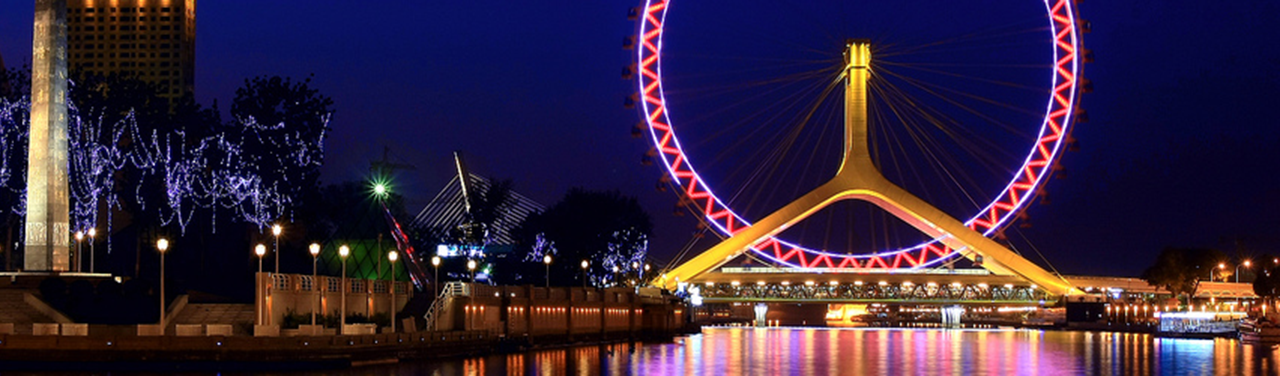
Lead image is a photograph of the Tianjin Eye, courtesy of Wikimedia. Flickr / kele_jb1984