In understanding the evolution of humans, archaeologists look back to when our exceptional abilities began. Today, the human capacity to make tools to meet our needs is unprecedented in the animal kingdom. But where did our ingenuity start setting us apart? Inventing spears to enhance hunting prowess distinguished us from other primates—and equipping them with poison arrows was next level. A study published today in Science Advances reports that we reached the poison arrow milestone earlier than previously believed.
The first definitive evidence of poisoned arrowheads came from the mid-Holocene, in an Egyptian tomb dated to about 4,400 years ago and in a South African cave dating to about 6,700 years ago. In both cases, the arrows had been tipped with toxic plant compounds in what’s considered by the study authors “a hallmark of advanced hunter-gatherer technology.”
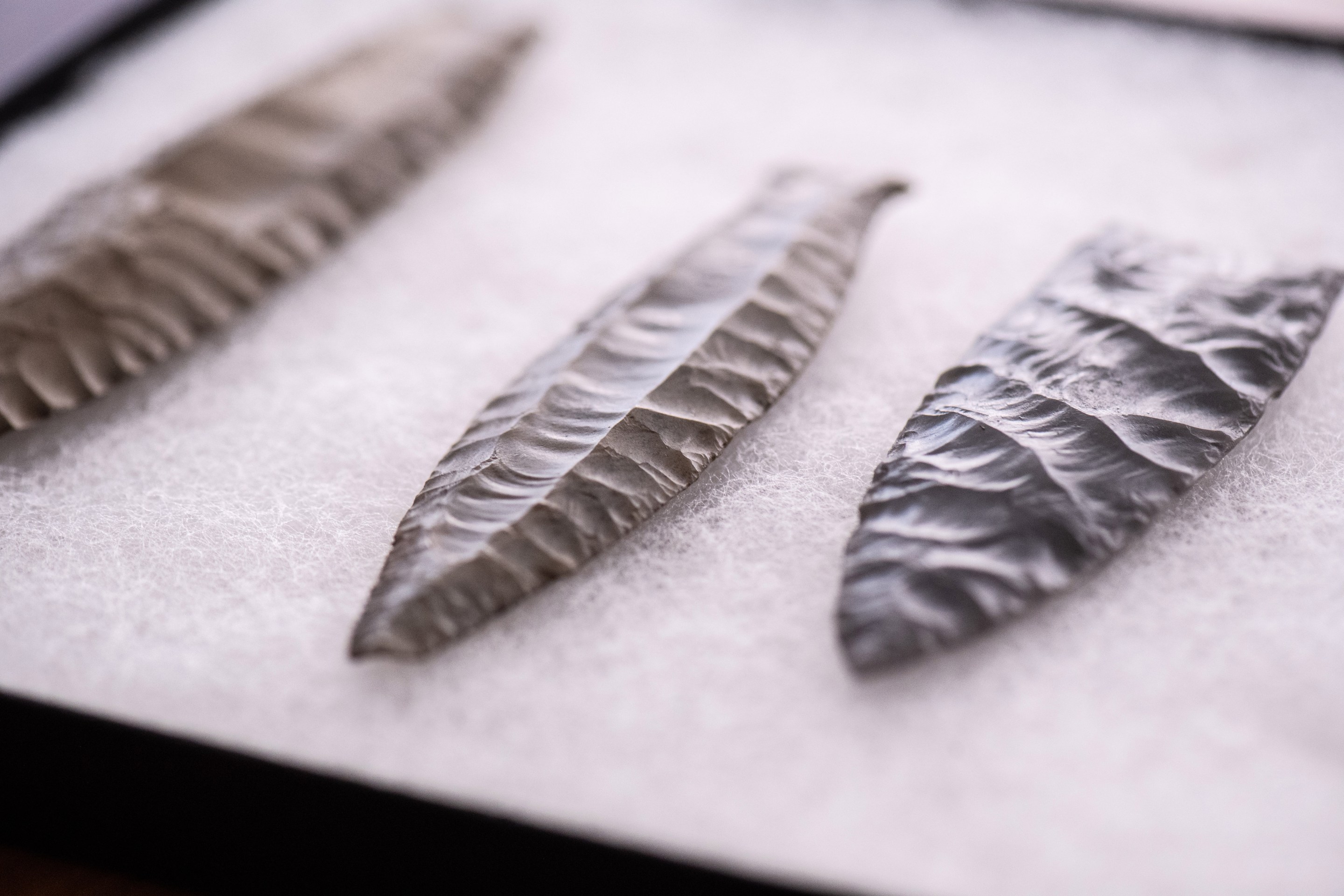
But now, researchers from the University of Stockholm and the University of Johannesburg have detected traces of natural poison on five of 10 arrow tips collected from the Umhlatuzana Rock Shelter in KwaZulu-Natal, South Africa. In the first direct evidence of poison applied to Pleistocene hunting weapons, the discovery backs up the timing of human use of poisoned arrows by orders of magnitude, to about 60,000 years ago.
“Because poison is not a physical force, but functions chemically, the hunters must also have relied on advanced planning, abstraction, and causal reasoning,” wrote the study authors.
Read more: “The Greatest Journey of All Time”
If you think about it, poisoning arrow tips requires connecting several ideas—that arrows can be flung to kill animals, that certain plant compounds are poisonous to humans and maybe to animals, and that animals will die gradually from them. The plant compound buphanidrine was found on all five arrow tips, and one of them also bore traces of epibuphanisine, both of which come from the Amaryllidaceae family of flowering plants.
Through a process of deduction, the researchers traced the alkaloid compounds to an endemic South African plant, Boophone disticha, known locally as “gifbol” (which translates to poison bulb). European explorer Carl Thunberg recorded its application in the 1770s by Indigenous hunters in the Cape of Good Hope, southern Africa, to hunt springbok, and today gifbol is recognized in southern Africa as arrow poison. The milky liquid can be used almost straight out of the plant by drying it to a gum-like consistency or heating it over a fire.
The study authors conclude that these Late Pleistocene hunter-gatherers were making their poison from the gifbol root bulb extract, demonstrating a knowledge of plant and prey ecology coupled with lethal technical abilities. 
Enjoying Nautilus? Subscribe to our free newsletter.
Lead image: maradon 333 / Shutterstock