
So in the olden time the people could not cook nor make a light at night, and they ate all their food raw.
—Start of a fire myth from the Buin people of Bougainville Island, South Pacific
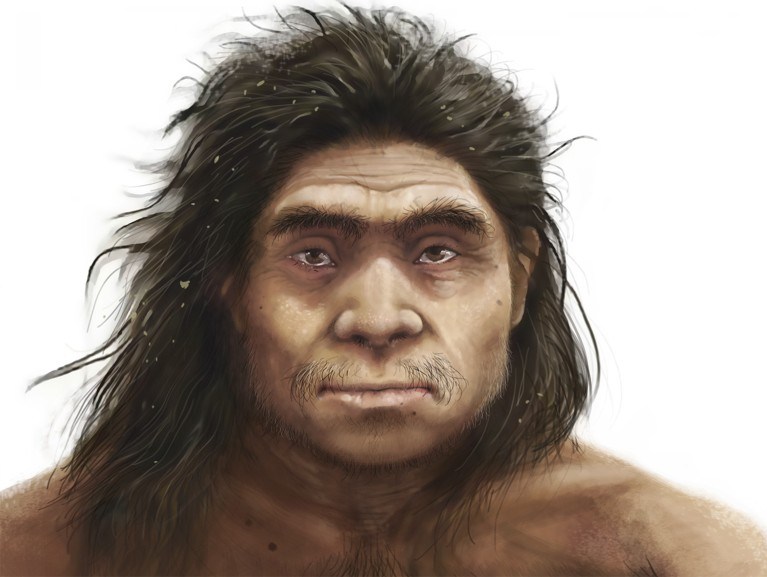
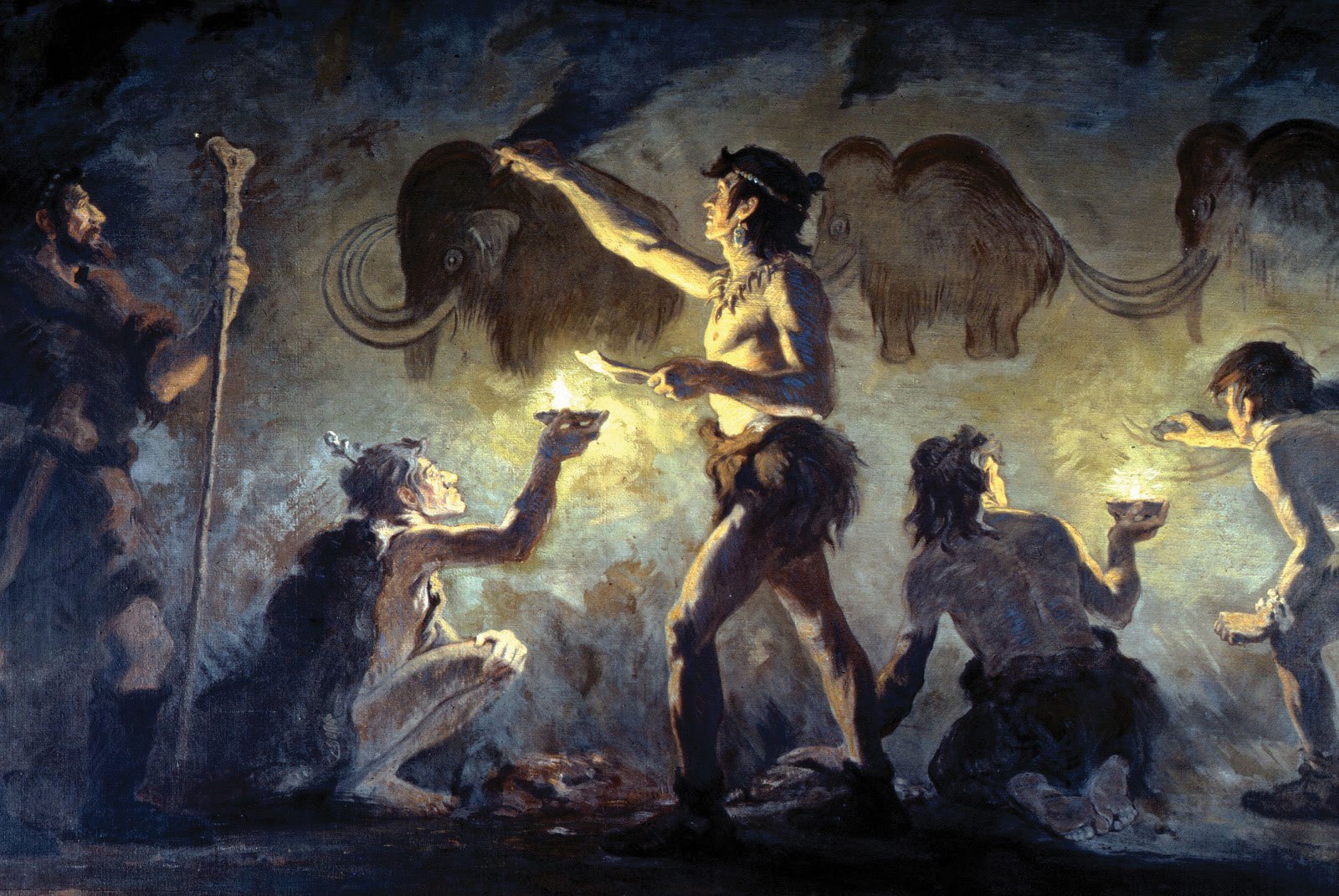
The use of fire as a source of energy begins with the evolution of a fire creature—a member of the genus Homo that started to control the use of fire, deliberately setting fires alight and using them for cooking.
No one knows when or how these habits started—or if, indeed, they started together. The dawn of the use of fire and the origins of cooking are both hard to trace. Nonetheless, there are clues. Ancient hearths—sites where fires were routinely lit—date back almost 790,000 years, and there are hints that such places may have existed even earlier. Residues of burned plants found in sediments of the Wonderwerk Cave, a vast cavern that lies in the Kuruman Hills in what is now South Africa, indicate that around one million years ago, fire creatures there were tending fires built from dry leaves and grasses. And scant but tantalizing evidence suggests that a community of fire creatures was living on a grassy floodplain in the rift valley of East Africa in the deeper past—around 1.5 million years ago.
This story is from “The Hot Issue,” the latest from Nautilus.
To get it in print, join by Nov 30.
But earlier traces of deliberate fire are more elusive. It is, after all, hard to tell the difference between a small bushfire and a fire started on purpose, unless the fire burned on the same spot regularly or in an unexpected place, like a cave. Today, sites of small, temporary fires such as campfires are soon erased by rain and wind or the growth of plants; finding such places from hundreds of thousands, let alone millions, of years ago is a quixotic quest. And while most modern cooking depends on pots and pans, such equipment is far from necessary. Meat or fish can be placed directly on flames or toasted on a stick; roots and tubers and eggs can be baked in hot ash or sand. Humanlike creatures could, therefore, have been tending fires and cooking ages before clear evidence for these activities appears in the archaeological record.
I like to imagine that long before they started cooking, our ancestors were drawn to fire. Some animals are. Birds routinely follow wildfires, often in large numbers, looking to pick off insects and other creatures that are fleeing the flames. And many animals are attracted to areas that have recently burned. Chimpanzees have been spotted sifting through ashes looking for nuts that have been roasted in the conflagration, the roasting having transformed the nuts from something hard and unpalatable to something that can be easily chewed. Rhesus monkeys have been seen eating burned coconuts. In the wake of a wildfire, baboons sometimes snack on cooked grasshoppers. Perhaps at first your ancestors and mine sought out foods that had been charred by bushfire whenever the opportunity arose.
This would not be surprising. Given a choice, chimpanzees and other great apes generally elect to eat cooked food, preferring it to the same food uncooked. Mice prefer cooked food too. Captive chimpanzees have even been observed to keep raw food in reserve, at least for a short time, so that it can be cooked later.
Which makes sense. Cooking is a kind of predigestion: The energy of the fire begins the process of breaking down food. This both increases the availability of nutrients and saves energy when you digest. Eating cooked food thus gives you more calories—more energy—than you could extract from the same food eaten raw. This is true of all foods, but the effect is particularly strong for starchy roots and tubers. Raw, such items are often indigestible. But cooking transforms starch into a far more accessible form. For potatoes, cooking makes starch about twenty times more digestible. Cooked food also requires less chewing, so it is easier and quicker to eat. As an added bonus, cooking kills troublemaking bacteria and other nuisances such as parasitic worms. In other words, cooking not only outsources some of the work of the digestive tract, it doubles as an external immune system, saving you the expense of warding off such troublemakers yourself.
Today, cooking is a feature of all human cultures. As a consequence, humans spend less energy digesting, less time chewing, and far less time eating than other primates do. In fact, humans spend a remarkably short time each day on meals. Although lingering over lunch is a modern delight, if necessary a whole day’s eating can be done in under thirty minutes. In contrast, chimpanzees spend almost seven hours a day eating; gorillas, almost eight. This is not because these animals have nothing else to do but because it’s the only way they can get enough energy from their raw diet. Given that they also sleep for upward of ten hours a day, that doesn’t leave a lot of time for much else.
Modern raw foodists—people who eat most or all of their diet raw—tend to have trouble maintaining their body weight, and also spend a great deal of time preparing food in other ways, for example by blending, pounding, soaking, fermenting, or grinding. Female raw foodists often stop menstruating—meaning that physiologically, they would not be able to support a pregnancy. Note, too, that modern raw foodists eat plants that have been domesticated to be more digestible, and have access to technologies such as electric blenders; without these advantages such a diet would be even harder to sustain.
In short, modern humans have evolved to depend on a cooked diet—and a cooked diet appears to have transformed members of one lineage of hominins into humans. Compared to our ancestors of 2.5 million years ago, humans today have smaller guts, smaller teeth, smaller mouths, weaker jaws—and much larger brains.
The extent to which all these changes coincided with and were permitted by cooking is controversial—much hinges on when cooking started, which is, as I said, unknown. Yet it is hard to see how the large increase in brain size in particular could have happened without it. Today, when you are resting, your brain gobbles up around 20 percent of your energy though it represents only around two percent of your mass. The brains of other primates are far less expensive—consuming perhaps nine percent of the energy of an animal at rest. And although humans are not the largest primates—gorillas are far larger, for example—the human brain has around three times as many neurons as that of a gorilla. Given its raw diet, a gorilla cannot eat enough to support a far bigger brain.
Early experiments with fire may have grown from the discovery that one fire can be used to ignite another: Chimpanzees have been reported to rearrange the smoldering embers of a fire so that they burst back into flame. Back in the days when captive chimpanzees were encouraged to smoke cigarettes, individuals swiftly discovered how to chain-smoke, lighting a new cigarette from the stub of the old. This is distasteful to think about, not least because the animals became nicotine addicts, but it does provide further evidence that chimpanzees can manipulate burning objects with care, precision, and intent. And in Australia today, firehawks—birds of prey such as brown falcons and whistling kites—are said to spread fires by picking up burning twigs and dropping them on unlit vegetation. It’s easy to imagine that the first hominin experiments with ignition began in a similar, fire-lights-fire sort of way.
But the full domestication of fire requires being able to light one from scratch, and that’s trickier, as Charles Darwin discovered. When he visited Tahiti in 1835, he went exploring in the company of local guides. In the evening, after the guides had built “an excellent house” out of bamboo stems, strips of bark, and banana leaves, they began to cook the evening meal. To start the fire, one of the guides rubbed two sticks together. “The fire was produced in a few seconds,” Darwin reported, “but to a person who does not understand the art, it requires, as I found, the greatest exertion.” It also requires the right ingredients. Darwin noted that, in fire making, the Tahitians use only “a peculiarly white and very light wood.”
Without the help of modern aids such as matches, cigarette lighters, or magnifying glasses, there are only two basic ways to start a fire from nothing: rubbing sticks together to generate heat by means of friction, as in Tahiti, or generating sparks by striking stones against one another. In particular, flint—which is made of silica—can be banged against iron pyrite, that mineral also known as fool’s gold. (The word pyrite comes from the Greek for “fire stone.”) The sparks can then be caught by tinder formed from certain fungi or moss or the downy feathers of birds.
Many human cultures have myths and stories to explain their possession of fire. In such accounts, fire is often delivered by an animal. The Dakota people of North America relate that fire was given to them by a mountain lion whose claws gave off sparks as it went springing up the rocks. Other legends tell how a great bison, charging across the plains, set the prairies on fire with the sparks that flew from his hooves. There are tales of toads carrying live coals in their mouths, of fire stolen from vultures, and—in Australia, indeed—of hawks dropping burning twigs. Sometimes, fire has been hidden in a tree—hence the apparently magical effect of rubbing sticks together.
In many of these stories, the benefit of fire is cooking. In some variants, the human discoverer of fire observes another animal cooking and steals an item of cooked food, which is so delicious that the thief becomes inspired to steal fire as well.
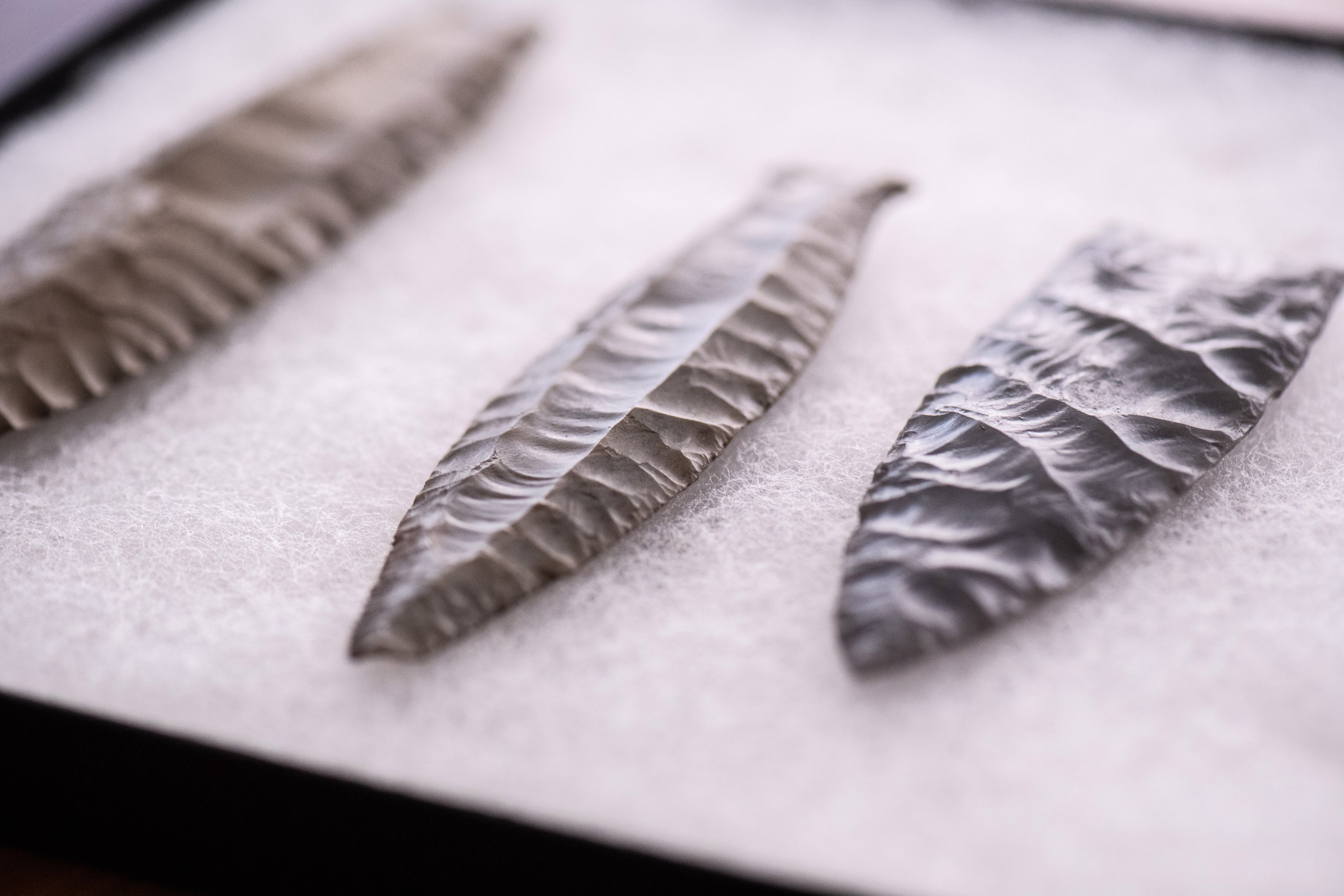
Perhaps such stories were first dreamed up around the cooking fires of long ago. But I suspect no one will ever know how or when those early fire creatures discovered reliable methods for making fire: It will forever remain a mystery. Although ancient tools crafted from flint abound, a flint struck against flint does not generate sparks. Further confusing matters, pyrites are not stable in today’s oxygen-rich air, so tangible evidence of their use in fire making may have long since vanished. 
From The Co-Creation: How Earth Made Life and Life Made Earth (Penguin Random House, 2026). Reprinted with permission of the publisher.
Enjoying Nautilus? Subscribe to our free newsletter.
Lead Image: Charles R. Knight / Wikimedia Commons