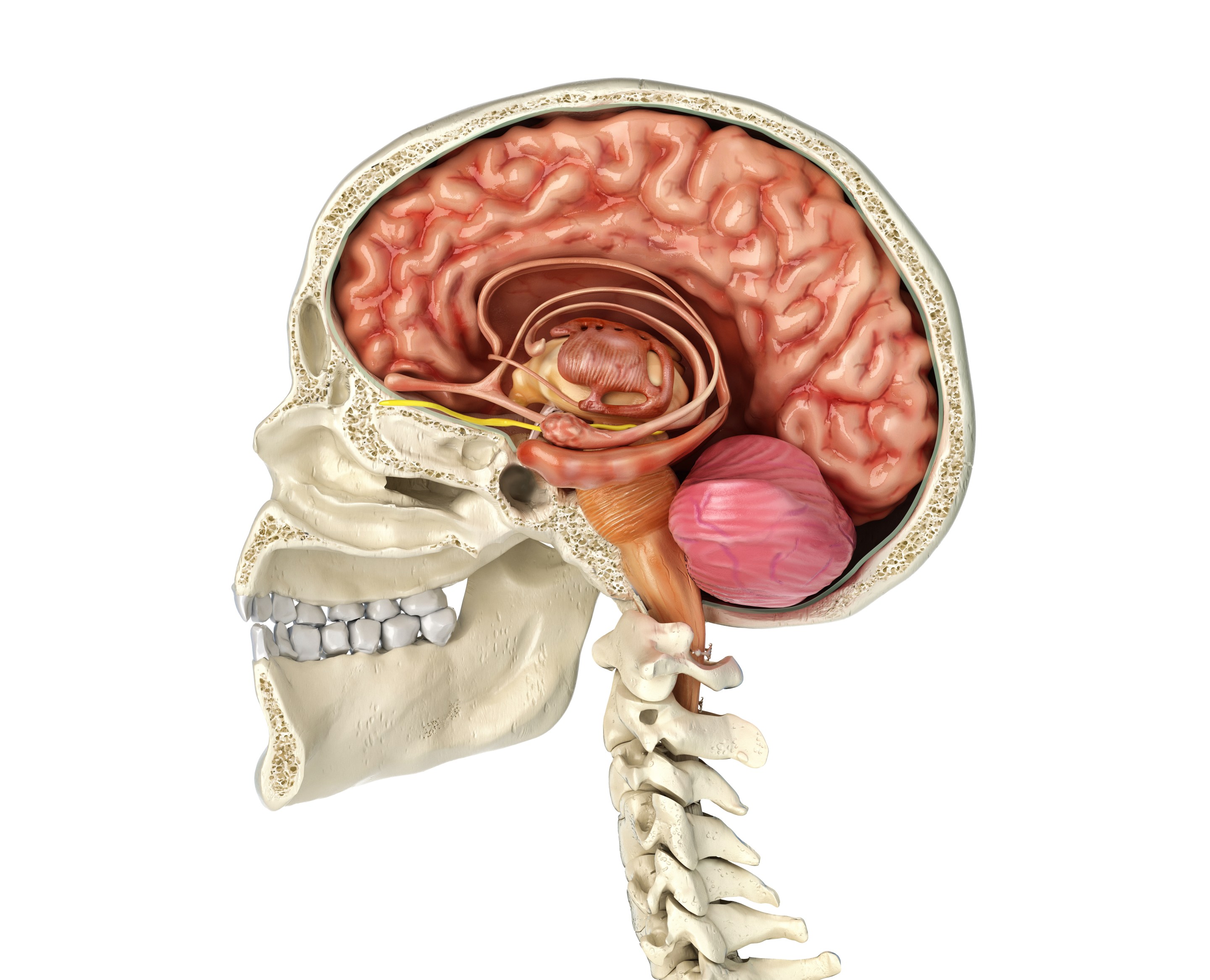
The skull has gotten pretty exciting in the last decade or so—or rather what’s inside it (and not the brain).
In 2018, researchers discovered tiny channels in the skulls of mice that allowed immune cells to migrate from the skull bone marrow to the brain tissue after a stroke. “Now we know that skull bone marrow has a special role due to its proximity to the brain and its direct connection to the meninges by microscopic channels,” study author Mathias Nahrendorf explained in a statement at the time. “These newly discovered channels constitute a migratory path for inflammatory neutrophils produced by the marrow that can actually damage the brain.”
Read more: “An Ancient Site with Human Skulls on Display”
Human skulls also contain these channels, and the discovery kick-started a flurry of investigations into skull bone marrow as a hub of immune activity in the brain. Now a new study published in the journal Science Translational Medicine finds an intriguing link between the cranium and chronic pain.
A team of researchers led by radiologists from Harvard Medical School used PET and MRI scans to image the skulls of 125 people suffering from chronic low back pain or knee osteoarthritis. Compared to healthy controls, they discovered the chronically sore had elevated levels of translocator protein (TPSO) in their skull marrow—a protein linked to neutrophil activity. The more intense the pain, the stronger the TSPO PET signal. These elevated signals were also associated with some psychological symptoms of chronic pain, like anxiety and depression, and showed a preference for the left side of the skull.
In other words, the skull bone marrow seems to be playing some role in chronic pain. The researchers think that inflammatory signals originating in the brain may propagate to the skull bone marrow through those tiny channels to activate and mobilize immune cells, but they’ll need to conduct more research to investigate. Still, if these findings bear out, the skull could become a target for chronic pain treatments, like pharmaceuticals or low-intensity ultrasound.
With a growing group of researchers taking a crack at the skull, relief could be on the way. 
Enjoying Nautilus? Subscribe to our free newsletter.
Lead Image: Pixelchaos / Adobe Stock