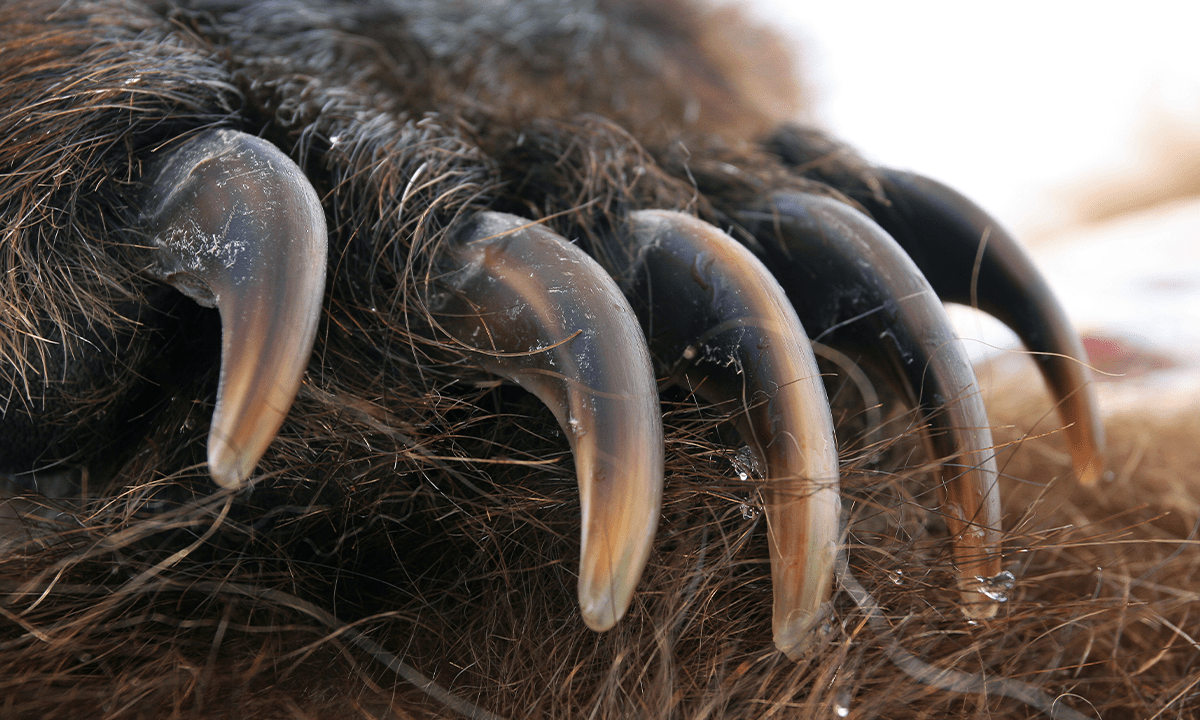
When we choose our weapon, the situation matters—a sewing needle does a great job poking through cloth, but would fail as a paper hole puncher. In a study published today in the journal Science Advances, biologists and engineers explored how other organisms “choose” their weapons. Between spines, fangs, claws, and stingers, puncturing tools are widespread and diverse across both plants and animals.
With “puncture” defined as “the use of a sharpened tool to penetrate a target while the target remains intact,” the study authors plotted shape against performance for 143 natural structures representing 133 species. They ranged from tiny ant stingers to massive elephant tusks.
The results showed that tool shapes were heavily influenced by trade-offs between buckling resistance and puncture efficiency. Pointier shapes, such as shark teeth, were better at puncturing but more vulnerable to breakage, while rounder shapes, such as walrus tusks, proved sturdier but with lower puncture performance. In short, the biological needs mold the tool, but within bounds set by mechanical constraints.
Read more: “The Wild World of Threats”
“[The patterns] reveal widespread convergence in shape and structure across kingdoms keyed into specific puncture mechanics,” wrote the study authors.
A handful of species wield elite tools that are high performers in both sharpness and sturdiness: scorpion stingers, dracula ant mandibles, peccary tusks, hoopoe beaks, mantis shrimp appendages, and thorns from the Bull’s Horn plant. When puncture efficiency is favored, you get structures like hawk claws, woodpecker beaks, and snake fangs. When sturdiness is weighted more, you get crocodile teeth and hawk beaks. And then there’s the odd category of flat, blade-like tools that seem to follow their own mechanical rules, like barracuda teeth and cone snail harpoons.
The variability, even within constraints imposed by physical laws, “highlights multiple avenues for the evolutionary adaptation of biological puncture systems,” according to the study authors.
It’s nature taking a stab at shaping the structures for groups as diverse as plants, arthropods, and mammals. 
Enjoying Nautilus? Subscribe to our free newsletter.
Lead image: okyela / Adobe Stock