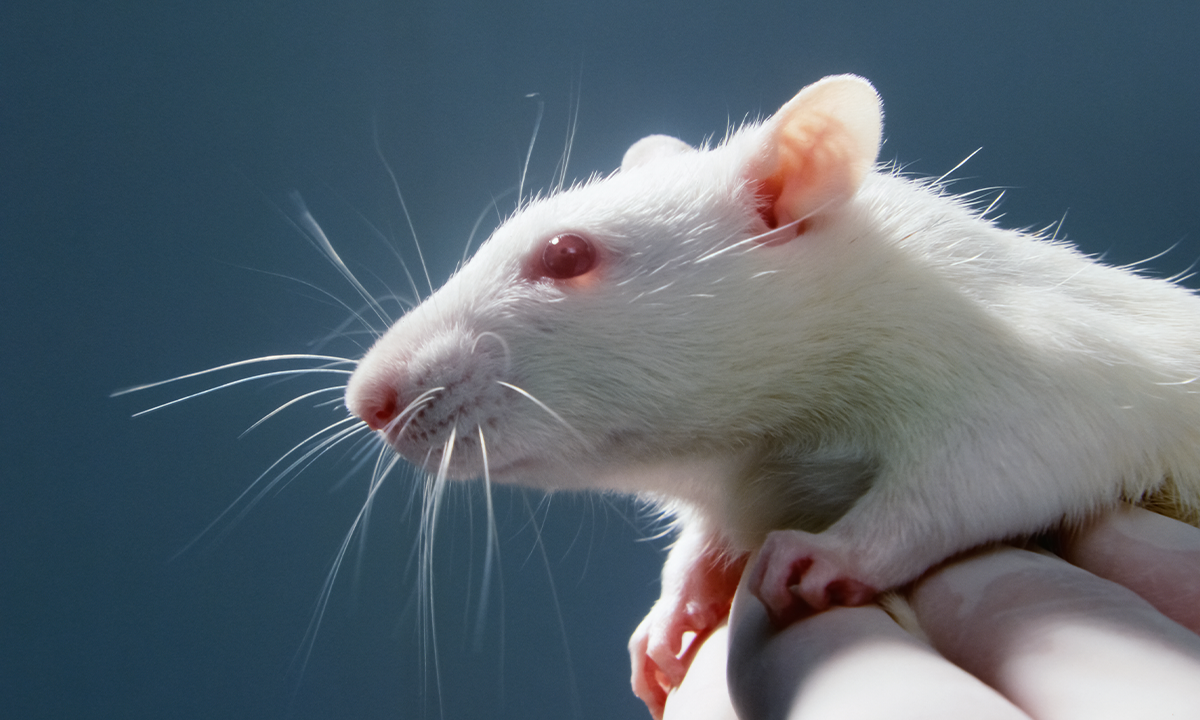
If the holidays have you stressed and desperately searching for a little “me” time to pop a THC gummy, you’re not alone. When it’s provided for them, stressed-out rats will also seek out cannabis, according to a new study published in the journal Neuropsychopharmacology.
To find out what characteristics might make a rat more likely to indulge in a little weed, Ryan McLaughlin of Washington State University subjected 48 of the critters to a battery of tests, both behavioral and biological. McLaughlin and his team used this data to work up a comprehensive behavioral profile of each rat, scoring them on traits including reward sensitivity, general arousal, cognition, and more.
McLaughlin and his students then allowed the rats a one-hour period in an enclosure where they could receive a burst of cannabis vapor every time they poked their noses in a small hole. They observed the rats over the course of three weeks, recording which ones were more likely to return to the cannabis hole. The researchers determined that rats with higher baseline corticosterone, an analog to the human stress hormone cortisol, were more likely to seek out the drug.
Read more: “The Science of Your Weed’s Stank”
Notably, the strongest predictor of whether or not a rat liked to catch a high wasn’t whether it had a particularly stressful day solving mazes or exercising. Instead, it was its baseline levels of corticosterone—sort of a “resting stress rate”—that predicted cannabis-seeking behavior.
“If you want to really boil it down, there are baseline levels of stress hormones that can predict rates of cannabis self-administration, and I think that only makes sense given that the most common reason that people habitually use cannabis is to cope with stress,” McLaughlin said in a statement.
McLaughlin hopes these new insights into rat cannabis-seeking behavior will help us develop better criteria for determining whether our fellow human beings might be at risk for drug-seeking behavior.
“Our findings highlight potential early or pre-use markers that could one day support screening and prevention strategies,” McLaughlin explained. “I could certainly envision a scenario where having an assessment of baseline cortisol might provide some level of insight into whether there's an increased propensity for you to develop problematic drug use patterns later in life.” 
Enjoying Nautilus? Subscribe to our free newsletter.
Lead image: Laurens Hoddenbagh / Shutterstock