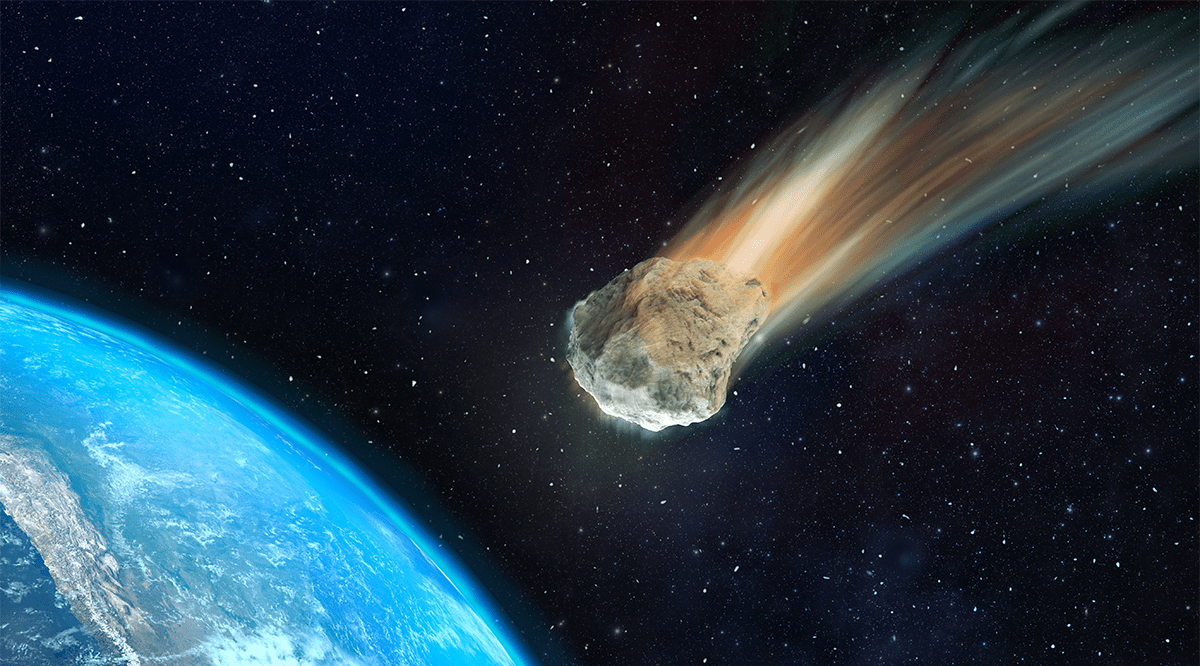
Around 66 million years ago, fallout from a cataclysmic asteroid impact ended the reign of dinosaurs on Earth. Mammals, then relative newcomers on the evolutionary scene, rapidly diversified to fill suddenly unoccupied ecological niches.
It’s a familiar story, but in reality, things were a bit messier than that. For starters, mammals had already been diversifying for tens of millions of years before the dinosaurs died out (the event that eighty-sixed dinosaurs was something of a setback for our furry forebears too). New research published in the Proceedings of the National Academy of Sciences describes a trio of these resilient prehistoric critters for the first time.
A team of paleontologists recently discovered three new species of multituberculates—small, rodentlike mammals that lived for more than 100 million years—in a 70-million-year-old formation located in Alaska. They named the three species Camurodon borealis (“northern curved-tooth”), Qayaqgruk peregrinus (“the little wandering hero”), and Kaniqsiqcosmodon polaris (“polar frost ornamented tooth”). If you’re wondering why two of the three names refer to teeth, it’s because multituberculates all had massive lower premorals that tended to survive and become part of the fossil record.
Read more: “The Mother of All Accidents”
“There’s a lot of diversity in the multituberculate group,” study author Sarah Shelley of the University of Lincoln in the United Kingdom said in a statement. “They lived for an incredibly long time, and I think they can reveal a lot about the resilience of mammals, not just to the mass extinction, but also to climatic stresses that many organisms are facing today.”
The researchers say their adaptation to the extreme arctic environment, which was–then and now–shrouded in darkness for much of the year, may have allowed the mammals to thrive in the post-mass-extinction world. The different shapes of the species’ fossil teeth indicate that they occupied different ecological niches. C. borealis ate mostly vegetation while Q. peregrinus snacked on insects as well. K. polaris was an omnivore, but most likely got the bulk of its nutrition from plants. Patchy sprouts of ferns, horsetails, and Equisetites (which looked like a cross between ferns and bamboo) were among the plants they likely ate.
“While the polar regions don’t host the same level of biodiversity as the tropics, they were still very active places for life to flourish, extending far back into deep time,” Shelley said.
The study also highlights the role the arctic played in migration. Q. peregrinus was discovered to be closely related to another species that lived in Mongolia, and likely dispersed to Alaska via the Bering Land Bridge between Alaska and Russia, making it one of the first known mammals to make the journey. 
Enjoying Nautilus? Subscribe to our free newsletter.
Lead image: Marcos Silva / Adobe Stock