It’s not often that you find the prehistoric food chain dramatically captured in a single fossil, but according to a new study published in the journal Gondwana Research, it definitely happens.
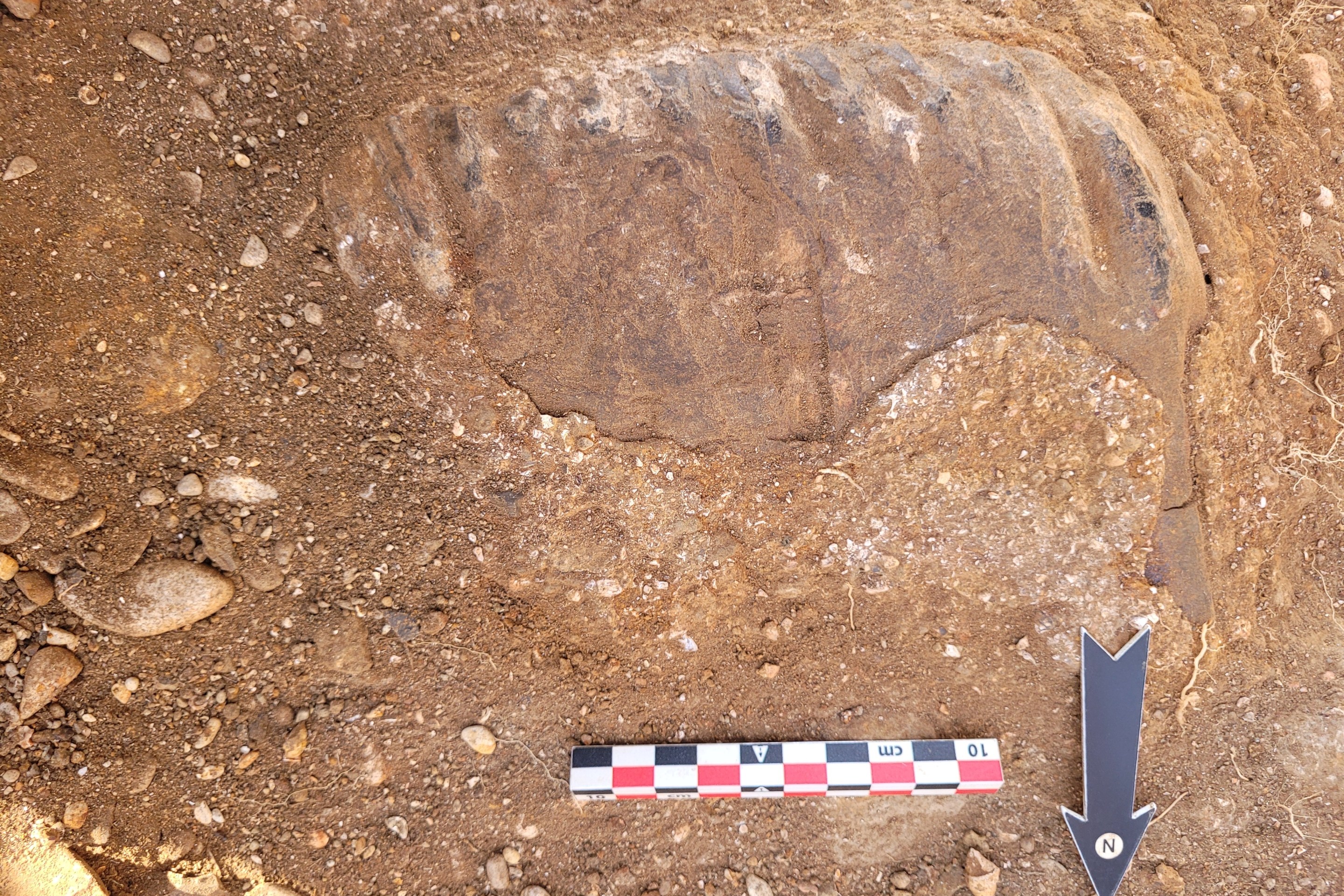
In 2019, fossil hunters digging in Queensland, Australia discovered the remains of an ichthyosaur, a 20-foot long marine reptile that once swam the prehistoric Eromanga Sea, an inland waterway that covered much of Australia during the Cretaceous period. Upon closer inspection, a team led by paleontologist Matt White of the University of New England noticed a compact mass of concreted material near the cranium. A scan of the mass with 3-D neutron tomography revealed it was the reptile’s stomach contents.
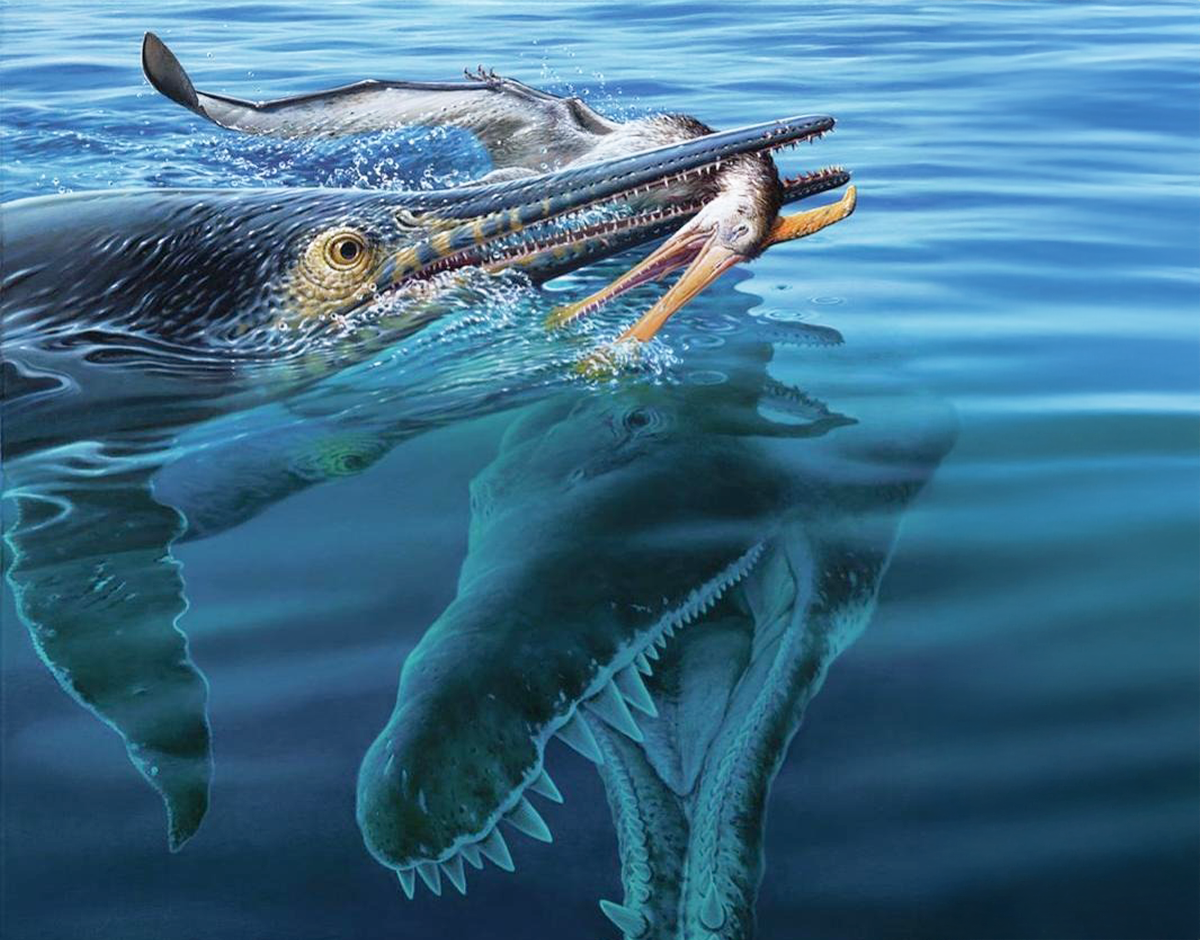
According to the team, the ichthyosaur’s final meal consisted mostly of seafood—fish bones, broken shells, the remnants of cephalopods—the kind of thing you’d expect to find inside a prehistoric ocean predator. But there was one surprise. They also discovered a fragment from the jaw of an unidentified pterosaur. Essentially, before this ichthyosaur met its demise, it seems to have snatched a low-flying reptile right out of the sky. As the first known instance of a marine reptile preying on a flying reptile, it’s a big deal.
Read more: “What Hurt This Jurassic Sea Monster?”
And that’s not all. The ichthyosaur’s skeleton was itself in pretty bad shape. “What startled me wasn’t only the size of the animal, but the way its skeleton had been damaged,” White said in a statement. “The vertebrae were split; ribs were missing and numerous bones displayed large crushing bite marks. One vertebra even preserved a rib jammed against a broken margin, strongly suggesting forceful jaw processing rather than simple post-mortem damage.”
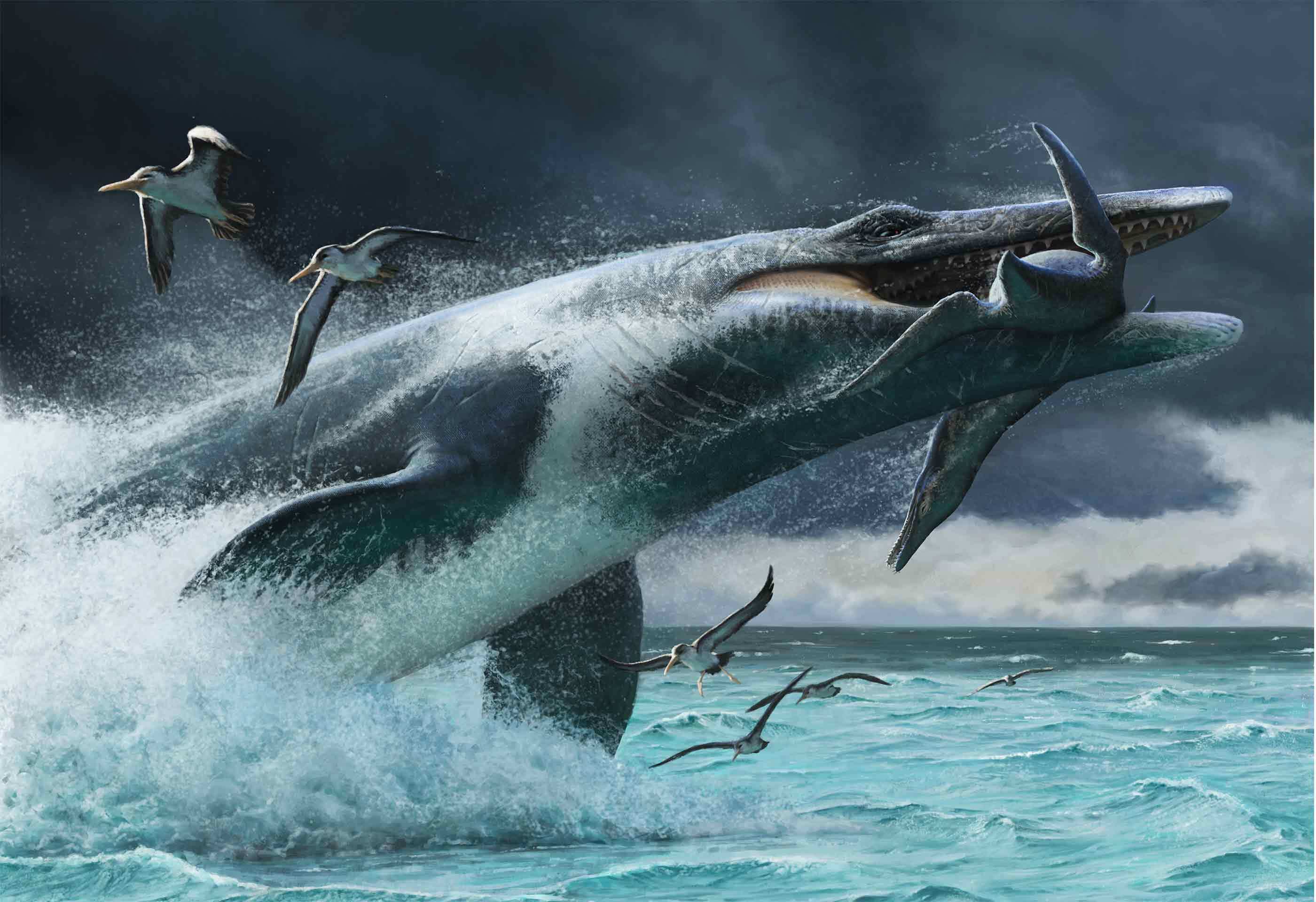
In other words, after the ichthyosaur dined, something dined on it. “The only predator known from the Eromanga Sea capable of producing injuries of this magnitude is the giant pliosaur Kronosaurus queenslandicus,” White explained. Kronosaurus, named after the Greek titan Kronos, was a short-necked plesiosaur with sharp teeth and powerful jaws. Measuring more than 40-feet long, it was also an apex predator of its day, and seems to have made at least a partial meal of the ichthyosaur.
It just goes to show: There’s always a bigger reptile in the prehistoric seas. 
Enjoying Nautilus? Subscribe to our free newsletter.
Lead image: White, M.A., et al. Gondwana Research (2026).